
Anyone who gets migraines knows the difference between a bad one and a wrong one. The trouble is that at three in the morning, in a dark room, with the pain at its worst, that distinction gets very hard to hold onto.
Our migraine emergency room in Arlington exists for the nights when nothing is working and you need to be certain. We treat the pain properly, and where the pattern is unfamiliar we have a CT scanner on site to rule out the causes that are not migraine at all.
Go to the ER for a migraine when the headache is the worst you have ever had, when it arrives suddenly at full force, when nothing you normally rely on is touching it, when it comes with fever or a stiff neck, or when it brings weakness, confusion, or vision loss. Any of those changes the question entirely.
A familiar migraine that is running its usual course, however miserable, is generally something you can manage at home. What brings people here is either a migraine that has broken every rule it normally follows, or a headache that was never a migraine to begin with.
If you have never been diagnosed with migraine and this is your first severe headache, that alone is worth an evaluation. A first episode has no track record to compare against.


That exact phrase is one of the most important things a patient can say in an emergency room. A headache that reaches maximum intensity within about a minute, described as the worst ever experienced, can signal bleeding around the brain, and it is treated as an emergency until imaging proves otherwise.
Physicians call this a thunderclap headache, and the name captures it well. It does not build the way a migraine builds. It is simply there, at full volume, and people often remember the precise second it started and exactly what they were doing.
The reason it is taken so seriously is that a bleed around the brain can present with nothing else at all in the first hour. No weakness, no vision change, no fever. Just a headache unlike any other, sometimes easing afterward, which is exactly when people decide not to come in.
If that description fits what you are feeling right now, please stop reading and call 911. Everything else on this page can wait; that cannot. Most people who come in with this turn out not to have a bleed, and that is a very good outcome rather than a wasted trip.
A migraine builds gradually, follows a pattern you recognize from previous episodes, and tends to sit on one side with light and noise sensitivity. A dangerous headache is usually new, sudden, or different from anything you have had before, and it often brings company.
Familiarity is the most useful test available to you at home. Migraine sufferers can generally say this feels like my usual one, only worse. That sentence carries real weight, because it means the headache is following a script the body has run many times.
What should concern you is a headache that departs from the script. Pain in a new location. A different quality altogether. Symptoms that have never accompanied your migraines before. Or a headache in someone who simply does not get headaches. A headache that starts after a blow to the head is a different question, and is handled as a concussion.
Age matters as well. A first severe headache after fifty deserves a lower threshold, because the balance of likely causes shifts with age. So does any headache that started after a blow to the head, which is a head injury question rather than a migraine one.

A few things make the visit shorter and the treatment safer. The second column is where migraine sufferers most often go wrong, usually from long practice at coping alone.
| Do this | Never do this |
|---|---|
| Note the exact time the headache started | Estimate it later once the pain has settled |
| Write down everything you have already taken today | Leave that out because you feel judged for it |
| Bring someone who can drive you home | Drive yourself while your vision is affected |
| Say plainly how this differs from your usual one | Downplay it because you get headaches often |
| Bring sunglasses, and keep the room dark on the way | Push through bright light and screens to get here |
| Come in for a sudden, worst-ever headache | Wait it out because it eased for a while |
That second row matters more than people expect. Knowing exactly what you have already tried, and when, directly shapes what your physician can safely offer next. Nobody here is going to lecture you about it.
The fourth row is the one we would ask you to take most seriously. People who live with migraines become very good at minimizing them, and that habit works against you in a triage conversation. Describe it honestly.
Your physician confirms the pattern is genuinely a migraine, moves you into a quiet darkened space, treats the pain and the nausea together, gives fluids if vomiting has left you dry, and orders imaging only where something about the presentation warrants it.
How this episode compares with your usual ones is the single most useful piece of information you can give us.
A structured check of vision, strength, speech, and balance, which is what separates migraine from the conditions that mimic it.
Lights down and noise kept away. This is treatment, not courtesy, and it is part of why an ER can help when home has stopped working.
Treating one without the other rarely works. Both are addressed, and delivered through a vein when your stomach has stopped cooperating.
Hours of vomiting leave people dehydrated, and dehydration keeps the headache going. Fluids often help as much as anything else.
Most migraines need no scan at all. Where the presentation raises a concern, our CT scanner answers it in minutes.
Yes, in both directions, and this is one of the harder judgments in emergency care. A migraine with aura can produce visual disturbance, numbness, and speech difficulty that look convincingly like a stroke. A stroke can also present with a headache that looks convincingly like a migraine.
Aura usually offers one useful clue: it tends to spread over several minutes, drifting across the vision or creeping along an arm. Stroke symptoms are typically there all at once, at their worst from the first moment. That difference is helpful but it is not reliable enough to bet on at home.
What settles it is an examination and, where indicated, a scan. If you develop weakness down one side during a migraine for the first time, that is a stroke evaluation, not a migraine visit, regardless of how the headache feels.
People who get aura regularly know their own version well, and that familiarity counts for a lot. But a new neurological symptom during a headache is never something to talk yourself out of. Come in and let it be checked.
People with migraines are used to being doubted. You will not be here. Severe pain is treated as severe pain.
Bleeding, infection, and pressure problems are considered before anyone settles on migraine as the answer.
Imaging follows a clinical reason. A textbook migraine with a normal exam rarely benefits from radiation.
Frequent severe migraines belong with a neurologist. We treat tonight and point you toward stopping the next one.
A migraine visit is billed as an emergency visit plus whatever treatment and testing your physician provides. We bill most major private insurance plans and file the claim for you. Arlington ER is out-of-network for all private plans, but under the federal No Surprises Act an emergency visit is still processed at your in-network cost-sharing, so your share depends on your own deductible and coinsurance.
Migraine raises a cost question that other conditions do not, and it deserves an honest answer. This is a recurring condition, which means some people find themselves in an emergency room several times a year for the same problem. Each visit bills as its own emergency visit. Nobody should discover that pattern from a stack of statements.
The more useful conversation is about reducing how often you need us. If severe migraines are sending you here regularly, that is a signal for a neurologist and a preventive plan rather than a signal to keep absorbing emergency visits. We will say that plainly at discharge and help you get pointed in the right direction. An ER is the right place for the migraine that will not break; it is an expensive way to manage a condition month after month.
The federal No Surprises Act protects patients from surprise bills for emergency care. Our Patient Billing Advocates will go through your Explanation of Benefits with you, and our Financial Support and Care Relief Program can reduce or remove out-of-pocket costs for patients who qualify. Details sit on our Billing Disclosure page.
For billing questions: 817-973-7406 or info@arlingtoner.com
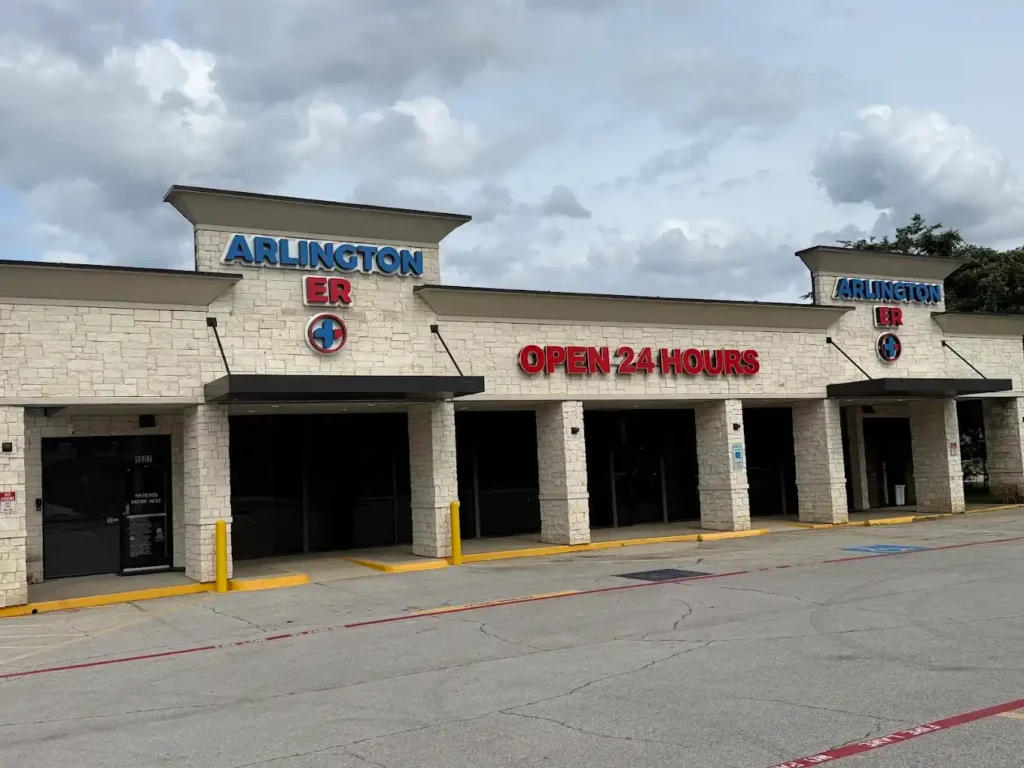
Arlington ER serves Arlington, Texas from 1607 S. Bowen Rd., on the west side of Bowen just south of Pioneer Parkway. Parking is directly outside the door, and the lights in our treatment rooms can be turned down as soon as you arrive.
We are minutes from central Arlington and the Parks Mall, and a short drive from Dalworthington Gardens, Kennedale, Grand Prairie, and Mansfield. From I-20, exit at Bowen Road and head north. From Highway 303 or Pioneer Parkway, turn south onto Bowen and we are on your right. Our Contact Us page has everything else.
Please do not drive yourself if your vision is affected. We are open every hour of every day, holidays included, with no appointment or referral required.
If this one has broken every rule your migraines normally follow, stop trying to manage it alone. Walk in and let us treat it properly. And if this is the worst headache of your life, call 911 rather than reading any further.
Plan on one to three hours. Treatment often needs time to work, and your physician will want to see genuine improvement before discharging you rather than sending you home mid-episode.
Emergency rooms can offer treatment through a vein, which works differently from anything taken by mouth and helps when nausea has made swallowing pointless. Your physician decides what suits your history.
Usually not. A migraine that matches your established pattern with a normal neurological exam rarely needs imaging. A scan is ordered when something about this episode is genuinely new or different.
Yes. Children do get migraines, and a first severe headache in a child always deserves evaluation. Treatment is adjusted for age and weight throughout.
Very. Many people describe a hungover, foggy day after a bad migraine breaks. It is a recognized part of the cycle and not a sign that anything went wrong with treatment.
A photo ID and insurance card if handy, sunglasses, and a note of everything you have already taken today and when. That last item genuinely changes what can be offered next.
If migraines are severe enough to bring you to an emergency room, yes. A neurologist can work on prevention, which is a different job from treating one bad night. We can point you toward one.
Yes. Alongside Arlington we regularly treat people from Pantego, Dalworthington Gardens, Kennedale, Grand Prairie, and Mansfield. No referral is needed from anywhere.
Medically reviewed by Rahman Mohammed, MD | Last Updated: September 23, 2026