
Booking an ultrasound normally means waiting days for an appointment, then waiting again for someone to read it. That works for a routine question. It does not work when the pain is happening tonight.
Our ultrasound is on site and staffed around the clock, performed and interpreted here by the physician treating you. No appointment, no referral, and an answer before you leave the building.
Ultrasound shows soft tissue, organs, and moving blood in real time. In an emergency room that makes it the fastest way to check the gallbladder, kidneys, the deep veins of the legs, the abdomen for free fluid, and a pregnancy, all without radiation.
What sets it apart from other imaging is that it is live. Rather than capturing a still picture, your physician watches structures move and blood flow as it happens, which answers certain questions almost immediately.
Two of those change the plan more often than the rest. Gallbladder disease is among the most common causes of severe upper abdominal pain we see, and ultrasound confirms it faster and more reliably than anything else available. And in early pregnancy, ultrasound is the only way to establish whether a pregnancy is sitting where it should be, which is an emergency question rather than a reassurance exercise.
What ultrasound does not do well is worth knowing too. Sound waves cannot pass through air or bone, so it is a poor choice for the lungs, for bowel full of gas, and for anything inside an adult skull. Understanding those limits is part of using the tool properly.

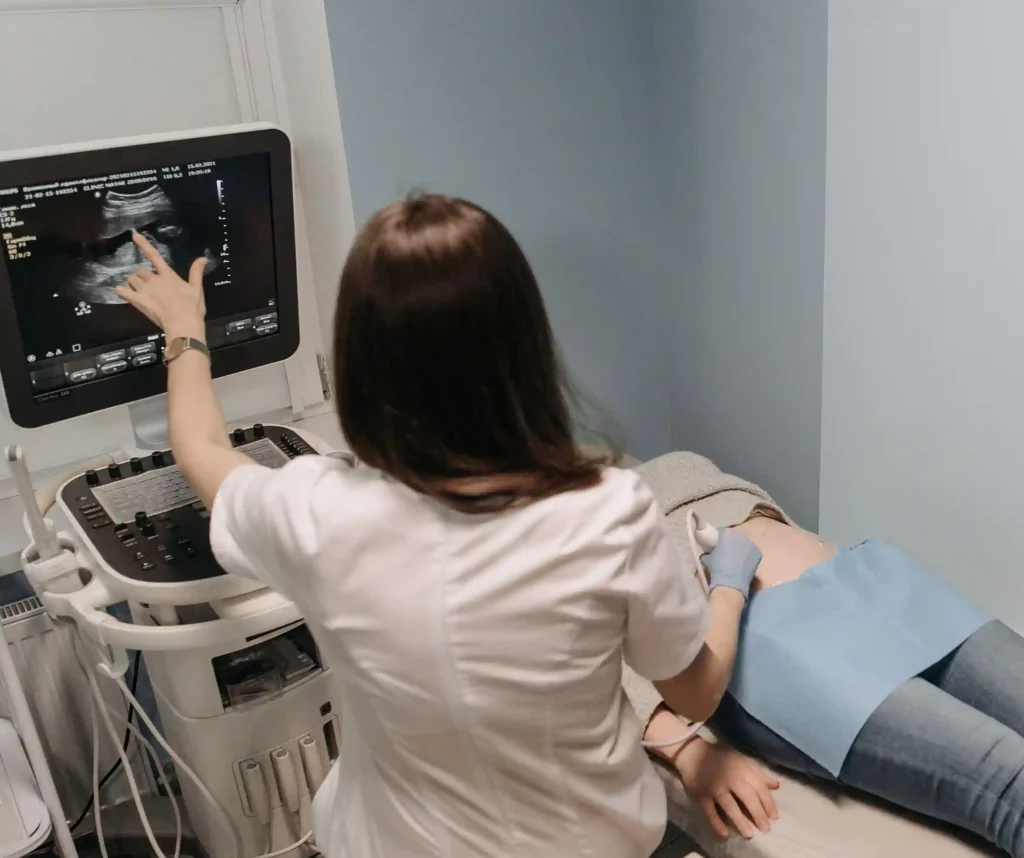
Ultrasound is the better choice for gallbladder problems, leg clots, pregnancy, and for children, because it uses no radiation and shows movement. CT is better for the lungs, for bone, for bleeding inside the skull, and for a broad look at the abdomen when the cause is unclear.
They are not competing tests, and neither is superior in general. Sound waves pass beautifully through fluid and soft tissue, which is why ultrasound excels at gallbladders and pregnancies. Those same waves are blocked by air and bone, which is why it is a poor tool for the lungs.
The clinical rule we follow is simple: if ultrasound can answer the question, it goes first. That is especially true for anyone pregnant and for children, where avoiding radiation genuinely matters. Our CT imaging page explains where the balance tips the other way.
Sometimes both are needed, and that is not duplication. An ultrasound may confirm a gallstone while a CT is still required to explain a second finding. Your physician will say why before ordering anything.
Yes. Walk in at any hour and, if a physician determines your symptoms call for it, the scan happens during that visit. There is no booking, no referral, and no waiting for a radiology department to open on Monday.
The honest caveat is the same one that applies to all our imaging: an emergency room assesses you first and images when there is a clinical reason. We are not a scheduled imaging center, and we do not run scans on request.
Where an emergency room earns its place is when the answer changes what happens tonight. Sudden severe pain, a swollen leg, bleeding in early pregnancy, or an injury with internal concerns are all situations where waiting for an appointment is the wrong plan.
There is a second advantage that is easy to overlook. At an imaging center, a technologist performs the scan and a radiologist reads it later, often the next day, and neither of them examined you. Here, the physician holding the probe is the one who took your history and felt where it hurt. That context genuinely changes what they look for and what they make of what they find.
It also means the scan can adapt as it happens. If your physician spots something unexpected, they simply keep scanning rather than scheduling a second appointment to answer the new question.
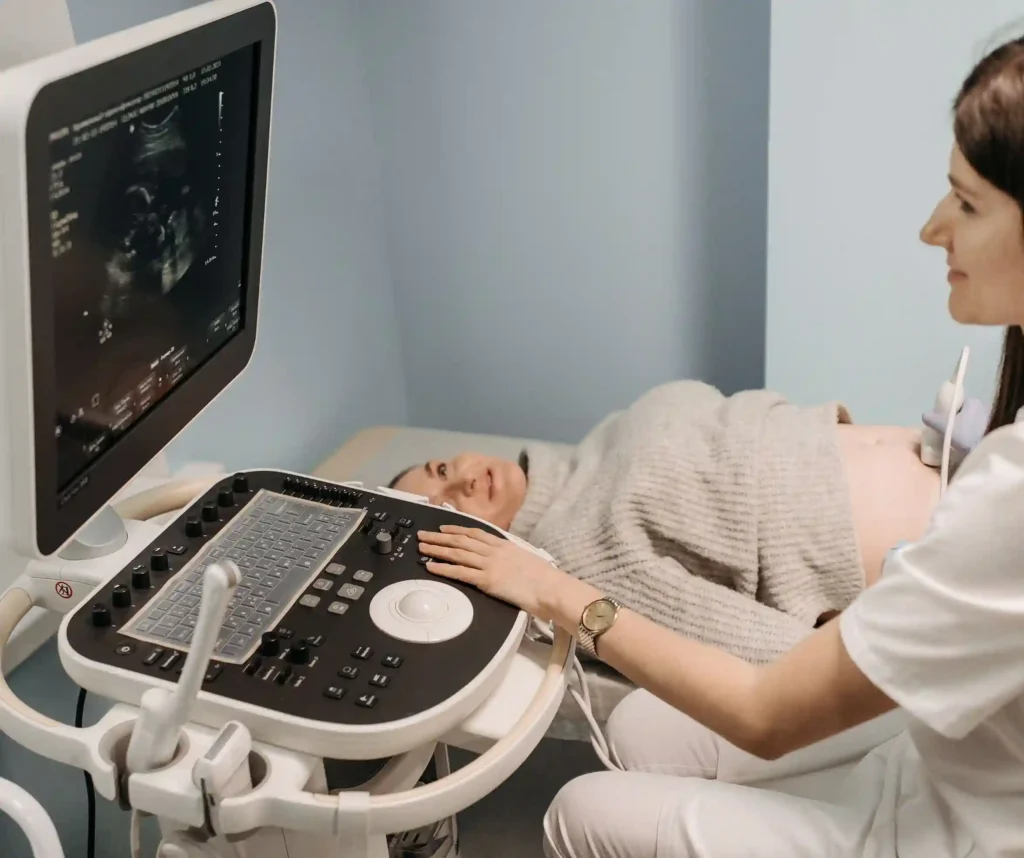
There is very little to prepare for, which is part of the appeal. A few small things still help, and the right-hand column covers the misunderstandings we hear most.
| Do this | Never do this |
|---|---|
| Wear clothing that is easy to lift or move aside | Assume you will need to undress completely |
| Tell us if you are or might be pregnant | Hold that back because ultrasound feels harmless |
| Mention any previous abdominal surgery | Leave out an operation from years ago |
| Say clearly where the pain is worst | Point vaguely and hope the scan finds it |
| Expect cool gel and some pressure on the area | Expect it to hurt, because it should not |
| Ask questions while the scan is happening | Read the screen and draw your own conclusions |
The pregnancy question still matters even though ultrasound uses no radiation. It changes which scan is performed and how the findings are interpreted, so please answer it even when you are unsure.
On that last row: images on the screen are genuinely hard to read without training, and the shapes that alarm patients are usually normal anatomy. Ask what you are looking at rather than guessing.
A physician examines you and decides what question the scan needs to answer, warm gel goes on the skin, a probe is moved over the area for a few minutes, and the images are interpreted here before you leave. Nothing is sent away to be read later.
Your physician decides exactly what the scan needs to answer. A focused scan beats a general sweep every time.
You lie on the bed and only the area being scanned is uncovered. Most scans happen right in your treatment room.
Gel helps sound waves pass into the body. The probe glides over the skin with light pressure and no needles.
Your physician sees organs and blood flow moving in real time, which is something a still image cannot provide.
Most emergency scans take ten to twenty minutes. A focused check of one question can take considerably less.
Findings are explained in plain language during the visit, along with whatever happens next.
Yes. Ultrasound uses sound waves rather than radiation, which is why it has been used safely in pregnancy for decades and why it is our first choice for children whenever it can answer the question at hand.
That safety profile changes how we sequence imaging. For a child with abdominal pain, we start with ultrasound and reach for a CT only if the picture stays unclear. Repeated radiation matters more over a lifetime that is only just beginning.
In pregnancy the same reasoning applies with even more weight, and ultrasound also happens to be the right tool for most pregnancy questions anyway. Bleeding or pain in early pregnancy is exactly what it was designed to assess.
Being honest about the limits: ultrasound does not see everything. Bowel gas can obscure the view, and a larger body habitus makes the images harder to interpret. When it cannot answer the question, we say so rather than pretending a difficult scan was a reassuring one.
That is worth stating plainly. A scan that could not visualize what we needed is not a negative result, and it should never be presented as one.
The physician treating you does the scan and interprets it, so nothing is lost in a handover between departments.
For children and in pregnancy we ask whether ultrasound can answer it before reaching for a CT scan.
A limited view is reported as a limited view. It is never dressed up as a clear result.
A routine scan your own doctor ordered belongs at an imaging center. We will tell you so rather than scanning anyway.
An ultrasound here is billed as part of an emergency visit rather than as a standalone imaging fee. We bill most major private insurance plans and file the claim for you. Arlington ER is out-of-network for all private plans, but under the federal No Surprises Act an emergency visit is still processed at your in-network cost-sharing, so your share depends on your own deductible and coinsurance.
Ultrasound has a cost quirk worth naming, because it runs opposite to what people assume. Ultrasound is generally the cheaper scan, and patients sometimes ask for it specifically hoping to avoid a costlier CT. That instinct is understandable and occasionally backfires: a scan that cannot answer the question means a CT follows anyway, and you have then paid for both.
This is why we let the clinical question choose the test rather than the price list. Where ultrasound genuinely answers it, that is what you get, and it costs less as a happy consequence. Where it will not, going straight to the right test is cheaper than working up to it.
The federal No Surprises Act protects patients from surprise bills for emergency care. Our Patient Billing Advocates will go through your Explanation of Benefits with you, and our Financial Support and Care Relief Program can reduce or remove out-of-pocket costs for those who qualify. Details are on our Billing Disclosure page.
For billing questions: 817-973-7406 or info@arlingtoner.com
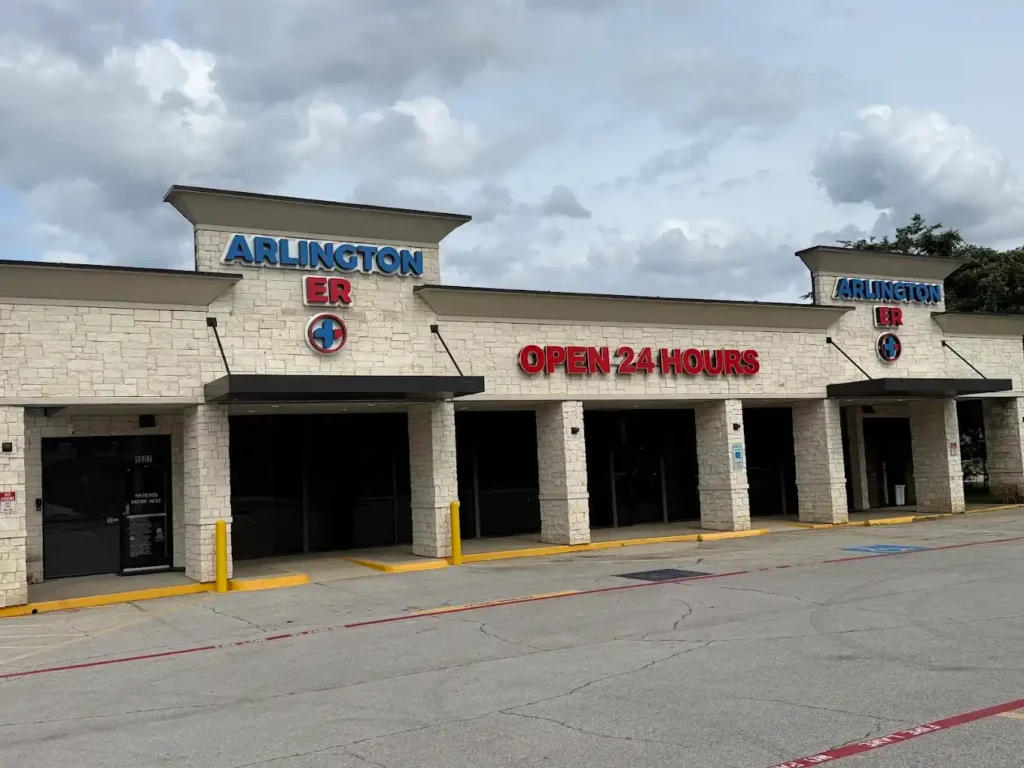
Arlington ER serves Arlington, Texas from 1607 S. Bowen Rd., on the west side of Bowen just south of Pioneer Parkway. Parking sits directly outside the entrance, and the scan happens in the same room you are treated in.
We are minutes from central Arlington and the Parks Mall, and an easy drive from Dalworthington Gardens, Kennedale, Grand Prairie, and Mansfield. From I-20, exit at Bowen Road and head north. From Highway 303 or Pioneer Parkway, turn south onto Bowen and we are on your right. Our Contact Us page has the rest.
We are open every hour of every day, holidays included, and no appointment or referral is ever required.
If the pain is new, severe, or getting worse, waiting days for a scheduled scan is the wrong plan. Walk in, get assessed, and if ultrasound is the right test it happens in the same room, minutes later.
No. You feel cool gel and light pressure from the probe. If the area is already tender, that pressure can be briefly uncomfortable, and your physician will work around it.
Not for emergency scans. Scheduled ultrasounds sometimes ask for a full bladder or an empty stomach, but in an emergency we work with you exactly as you arrive.
Yes, within the same visit. The physician performing the scan interprets it as it happens and explains what it shows before you leave.
Yes. Sound waves are blocked by air and bone, so bowel gas or body habitus can limit the view. When the scan cannot answer the question, we say so and order the test that can.
Yes. There is no radiation and no cumulative exposure to track, which is why repeat scans are used freely to watch how something changes over time.
We are an emergency room rather than a scheduled imaging center, so a routine order is better taken to an imaging facility. If your symptoms are urgent, come in and be assessed here.
Yes. Ask at discharge and we forward the images and report to your specialist or primary care physician, and give you a copy to take with you.
Arlington primarily, along with Pantego, Dalworthington Gardens, Kennedale, Grand Prairie, and Mansfield. Our S. Bowen Rd. location sits between north and south Arlington.
Medically reviewed by Rahman Mohammed, MD | Last Updated: August 22, 2026