
A severe allergic reaction can go from a rash to a closing airway in minutes. It is one of the few emergencies where the difference between a good outcome and a catastrophe is measured in how quickly someone acted.
Arlington ER treats allergic reactions around the clock, with the ability to protect an airway immediately and to keep watching you afterward, which matters more than most people realize.
A reaction is severe when it involves breathing, blood pressure, or two body systems at once. A rash alone is usually mild. A rash plus vomiting, or a rash plus a tight throat, is not.
That two-system rule is the one most worth remembering, because it catches reactions early, before the dramatic signs appear.
The last one sounds vague, but it is taken seriously in emergency medicine. Patients who say something is badly wrong, without being able to explain what, are frequently right, and it often precedes the collapse by a few minutes.
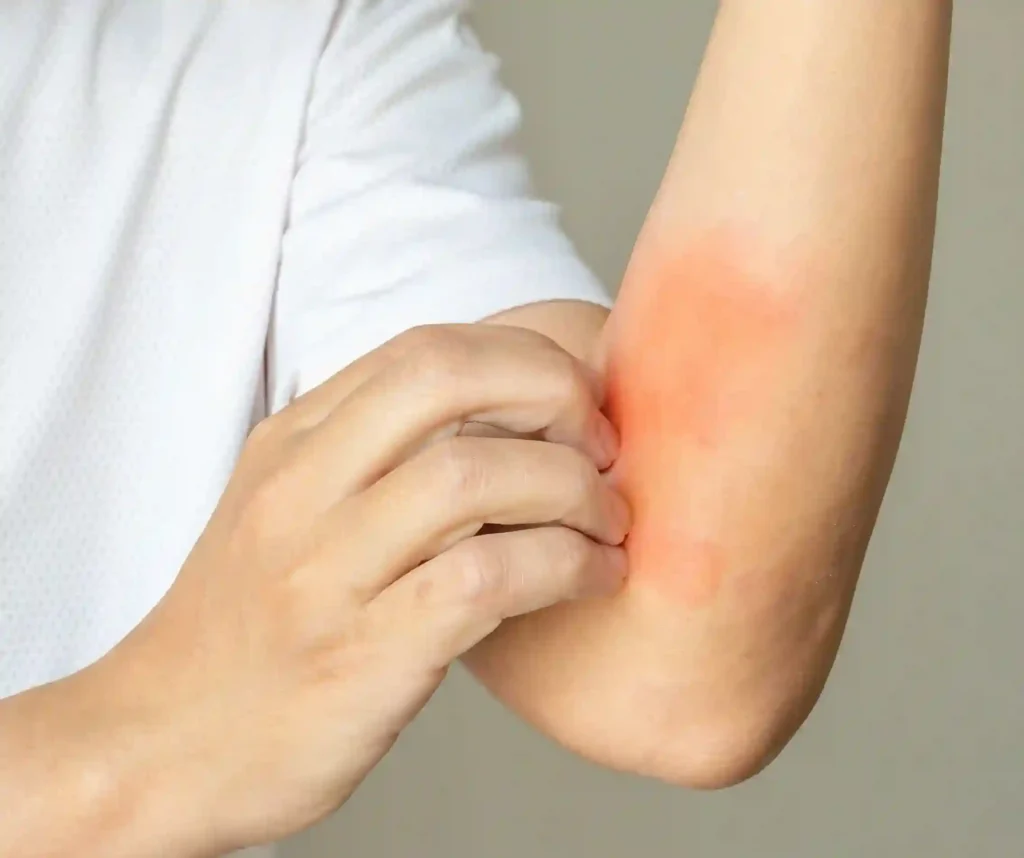

Anaphylaxis is a whole-body allergic reaction that affects breathing and circulation at the same time. Most cases begin within five to thirty minutes of exposure, and the dangerous ones tend to be the fastest ones.
What happens physically is worth understanding, because it explains why it is treated so aggressively. The immune system releases a flood of chemicals that make blood vessels leak and airways tighten. Fluid moves out of the bloodstream into the tissues, which is why the face swells and the blood pressure falls at the same moment.
Speed of onset predicts severity. A reaction that starts within minutes of a sting or a mouthful of food is generally more serious than one that appears an hour later, and it should be treated with more urgency, not less.
Food, insect stings, and drug reactions cause most cases. Latex and exercise-induced reactions are less common but real. In a meaningful number of cases the trigger is never identified at all, which is frustrating but does not change how it is treated.
The moment breathing, the throat, or consciousness is involved. This is one of the few conditions where we would rather you called an ambulance than drove to us, and it is worth explaining why.
In anaphylaxis the airway can close faster than a car journey takes. An ambulance carries the treatment and can give it in your driveway, several minutes before you would have arrived here. Those minutes are the whole game.
Driving yourself is the specific thing to avoid. People have lost consciousness at the wheel during a reaction, and a passenger who is deteriorating needs someone watching them rather than watching the road.
If someone has an auto-injector prescribed for them, it should be used at the first sign of a severe reaction rather than held back to see whether things settle. Waiting is the most common mistake, and hesitation is far more dangerous than using it when it later turns out not to have been needed.
Come to us directly for reactions that are uncomfortable but stable: a spreading rash, mild swelling with normal breathing, or a known mild allergy that is behaving worse than usual. We can treat those quickly and watch you properly.
The right-hand column contains two things that have genuinely killed people during allergic reactions. They are worth knowing before you ever need them.
| Do this | Never do this |
|---|---|
| Use the auto-injector at the first severe sign | Wait to see whether it settles on its own |
| Lay the person flat with their legs raised | Stand them up or walk them to the car |
| Sit them up instead if breathing is the problem | Leave them alone at any point |
| Call 911 even after the injector has worked | Assume the injector has ended the reaction |
| Keep the packaging or note the trigger | Give anything by mouth if the throat is tight |
| Bring the used injector in with you | Drive yourself while symptoms are active |
The second row deserves particular attention. Standing someone up during a severe reaction can cause a sudden fatal drop in blood pressure, because their circulation is already struggling to fill a system that has become leaky. Keeping them flat with the legs raised helps blood reach the heart and brain. The exception is when breathing is the main problem, in which case sitting upright is easier.
The fourth row is the one that surprises people most. An auto-injector is a bridge, not a cure. It buys perhaps fifteen to twenty minutes, and its effect wears off while the underlying reaction may still be running.
The priority is the airway, then blood pressure, then stopping the reaction itself. After that comes the part people underestimate: watching you for long enough to be confident it is genuinely over.
Before anything else. A swelling airway is the thing that kills, and it is far easier to protect early than late.
The reaction is stopped rather than waited out. This is time-critical and happens before paperwork or questions.
Fluids through a drip if circulation has dropped, because the reaction pulls fluid out of the bloodstream.
Heart rhythm, oxygen and blood pressure watched constantly rather than checked occasionally.
Several hours of watching after you feel better, because reactions can return once the first treatment wears off.
What the likely trigger was, replacement injectors, allergy referral, and written signs that mean returning.
Because a severe allergic reaction can come back in a second wave hours after the first one appears to have resolved, without any further exposure to the trigger. This is called a biphasic reaction, and it is the single most important thing on this page.
The pattern is deceptive by design. Someone is stung, uses their auto-injector, feels dramatically better within minutes, and reasonably concludes the emergency is over. Somewhere between one and twelve hours later, most often around four to eight, the symptoms return. The second wave can be as severe as the first, and occasionally worse.
The reason is that the treatment and the reaction run on different clocks. An auto-injector works fast and wears off within about twenty minutes. The immune cascade underneath it can continue for hours, so the visible improvement outlasts neither the reaction nor the danger.
This is the entire argument for the observation period, and it is why we will ask you to stay for several hours even when you feel completely well. It is not caution for its own sake, and it is not about billing for a longer visit. It is the specific window in which a second wave is most likely, and being here when it happens changes the outcome completely.
It is also why going home after using an auto-injector, without being seen at all, is genuinely dangerous. The injector treated the symptoms in front of you. Nobody has yet treated the reaction behind them.
Allergic reactions are triaged straight through. Nobody with a swelling face waits behind anything else.
Because of the second-wave risk. We will explain why rather than simply telling you to stay.
Doses for children are calculated on weight, not estimated. Small bodies leave no room for approximation.
A likely trigger identified where possible, replacement injectors arranged, and allergy follow-up organized.
An allergic reaction visit is billed as an emergency visit plus the treatment given. What makes it different from every other page on this site is that the largest part of the bill is often the time, not the treatment.
The observation period is the honest complication here, and it is worth saying plainly. Being watched for four to six hours costs more than being treated and discharged in forty minutes. It is a real cost and we understand why it stings when you feel perfectly well by hour two and want to go home.
We will not shorten it to reduce your bill, and we would rather tell you that directly than have you feel misled afterward. The second-wave window is precisely the period you would be paying to skip.
What we will do is explain the charge before it accumulates rather than after, so you are never surprised by it. If cost is a genuine barrier, say so at the desk. That is a conversation our Patient Billing Advocates have every day and it is not an awkward one.
The federal No Surprises Act protects patients from surprise bills for emergency care. Our Financial Support and Care Relief Program can reduce out-of-pocket costs substantially for those who qualify, and our Billing Disclosure page sets out the full detail.
For billing questions: 817-973-7406 or info@arlingtoner.com
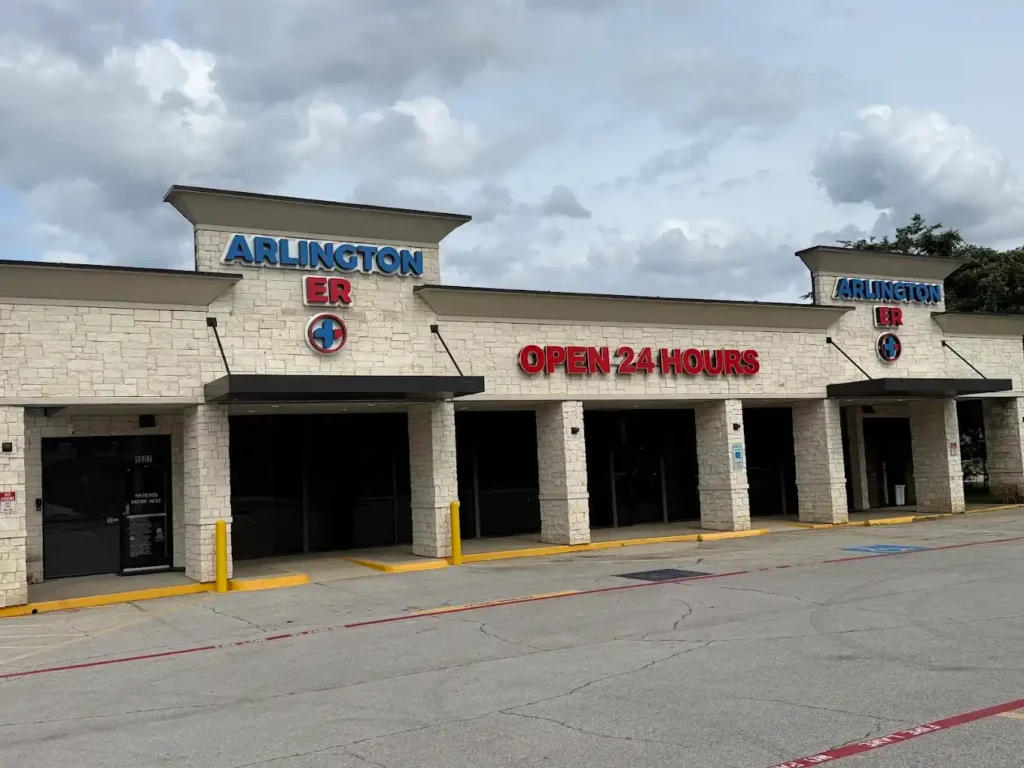
Arlington ER serves Arlington, Texas from 1607 S. Bowen Rd., on the west side of Bowen just south of Pioneer Parkway. Parking is directly outside the entrance, and the door is a few steps from the car.
We are minutes from central Arlington and the Parks Mall, and a short drive from Dalworthington Gardens, Kennedale, Grand Prairie, and Mansfield. From I-20, exit at Bowen Road and head north. From Highway 303 or Pioneer Parkway, turn south onto Bowen and we are on your right. Our Contact Us page has anything else you need.
If breathing or the throat is affected, call 911 rather than driving here. An ambulance can begin treatment where you are, which is faster than any journey. For reactions that are stable, we are open every hour of every day with no appointment needed.
If an injector has been used, you need to be seen even if you feel completely well. The reaction can return hours later, and being watched during that window is the whole point. We are open 24/7 with no appointment needed.
Usually four to six hours after the reaction is controlled, and longer if it was severe or slow to settle. Your physician will tell you the plan early so you can arrange the rest of your day around it.
Yes, always. The injector wears off in around twenty minutes while the reaction underneath can run for hours. Feeling better afterward is expected and is not evidence that the danger has passed.
Yes, and it happens more often than people expect. You can react to something you have eaten safely for decades. A first reaction in adulthood is not unusual and does not mean something was missed earlier.
Tell us immediately on arrival. It may have been given into the wrong place, the device may have misfired, or the reaction may simply be severe enough to need more. All three change what we do first.
Often we can identify the likely trigger from the timing and what you were exposed to, but confirming it properly needs allergy testing weeks later, once your immune system has settled. We will arrange that referral.
A mild local rash usually is not. Come in if it is spreading quickly, if it appeared within minutes of a food or sting, or if anything else has joined it such as vomiting, swelling or a tight chest.
We will make sure you leave with a prescription so you are never without one. Nobody should walk out of here having used their only injector with no way to replace it.
Not necessarily, and this is a common misunderstanding. Severity varies with the dose, how it entered your body, and your state at the time. A mild reaction last year does not guarantee a mild one next time, which is why an injector is carried regardless.
Medically reviewed by Rahman Mohammed, MD | Last Updated: August 10, 2026