
A dog bite rarely looks as serious as it is. The skin closes over, the bleeding stops, and it seems like something a bandage will handle. Two days later the area is hot, swollen and far more painful than it was on the day.
What matters with a bite is not how much it bled. It is what went into the tissue underneath. Our dog bite treatment in Arlington cleans the wound at the depth the teeth actually reached, checks the tendons and joint spaces beneath it with imaging where a hand or a joint is involved, and settles the tetanus question before you leave.
Come in if the wound is deeper than a scratch, if it is on the hand, face, foot or over a joint, if it will not stop bleeding after ten minutes of firm pressure, if the animal was a stray or acting strangely, or if the person bitten is very young, elderly or has a weakened immune system.
Location matters more than size on a bite. A small puncture on the back of the hand is a bigger problem than a longer tear on a forearm, because the hand has tendons and joint spaces with very little tissue in between.
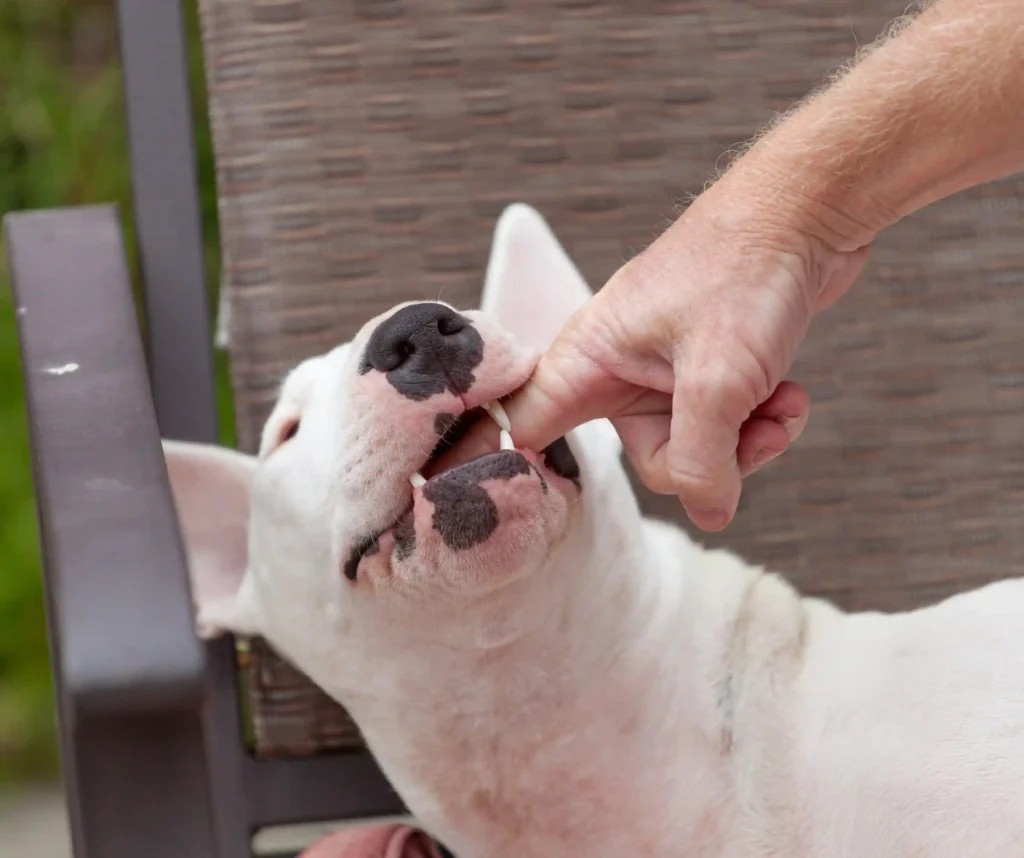
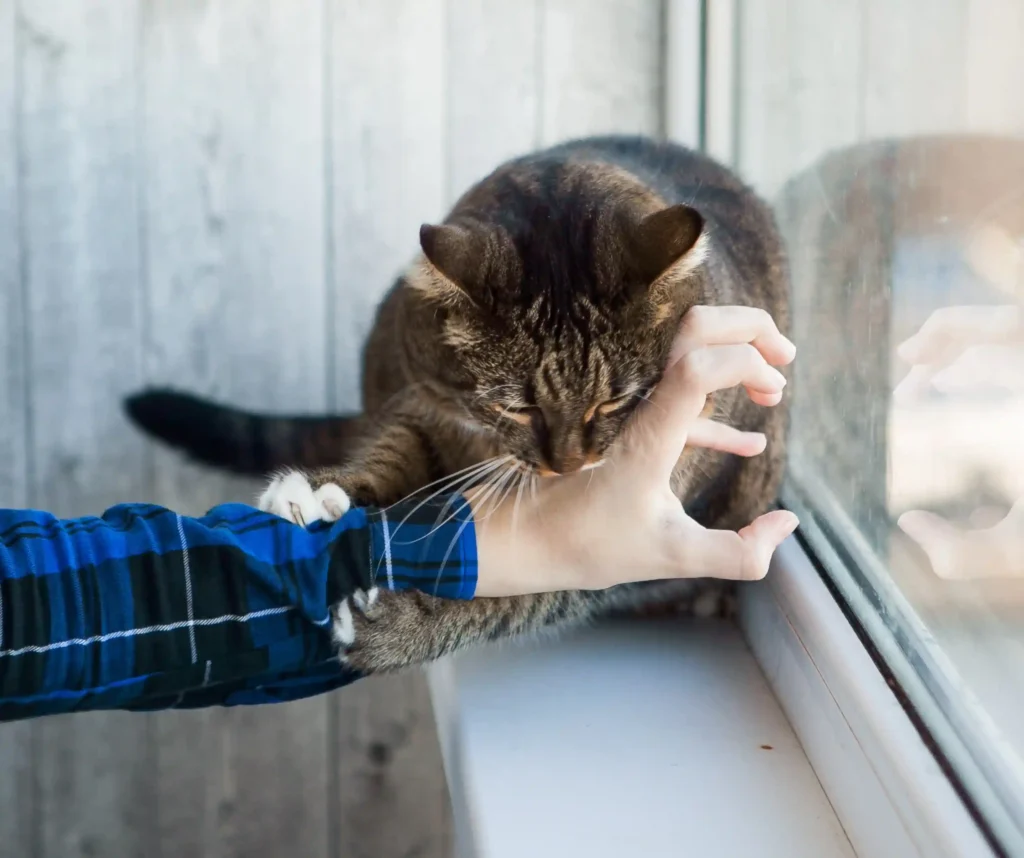
Because a bite is a contaminated wound by definition. A knife cut is clean tissue divided cleanly. A bite crushes tissue, tears it, and deposits bacteria from the animal mouth at the deepest point of the wound. Infection rates for bites are far higher than for cuts of the same size.
There is also a crushing element people underestimate. A dog jaw damages tissue well beyond the visible puncture, and damaged tissue with a poor blood supply is harder for the body to defend. That is why a bite that looks closed can still be in trouble underneath.
Dog bites cause more visible damage. Cat bites cause more infections. A cat has narrow, sharp teeth that behave like needles, driving bacteria deep and leaving a tiny entry wound that seals almost immediately. The cat bite looks trivial and is the more dangerous of the two.
| Dog bite | Cat bite | |
| Wound shape | Tearing and crushing, ragged edges | Narrow deep puncture, small opening |
| How it looks | Obviously an injury | Often looks minor, closes fast |
| Main risk | Tissue damage, bleeding, scarring | Infection reaching joint or tendon |
| Usual site | Arms, legs, face in children | Hand and forearm, from defensive grabs |
| When trouble shows | Within two to three days | Often within twelve to twenty four hours |
A cat bite on the hand that looks like nothing is one of the most reliable ways to end up with a serious hand infection, and it is the injury people most often leave for a few days.
Most bites take under an hour. The visit is about the wound itself rather than about the animal, and the cleaning is the part that does the work.
The animal, the circumstances and your own health all change what the wound needs.
How deep it goes, and what sits underneath it. Depth matters more than width.
Far more than a cut needs, because the goal is to physically remove what was deposited.
A digital X-ray on site where the bite sits over a joint or near bone.
Run where there are signs the infection has moved beyond the wound itself.
Not every bite gets stitched. Closing a contaminated wound can trap infection inside it.
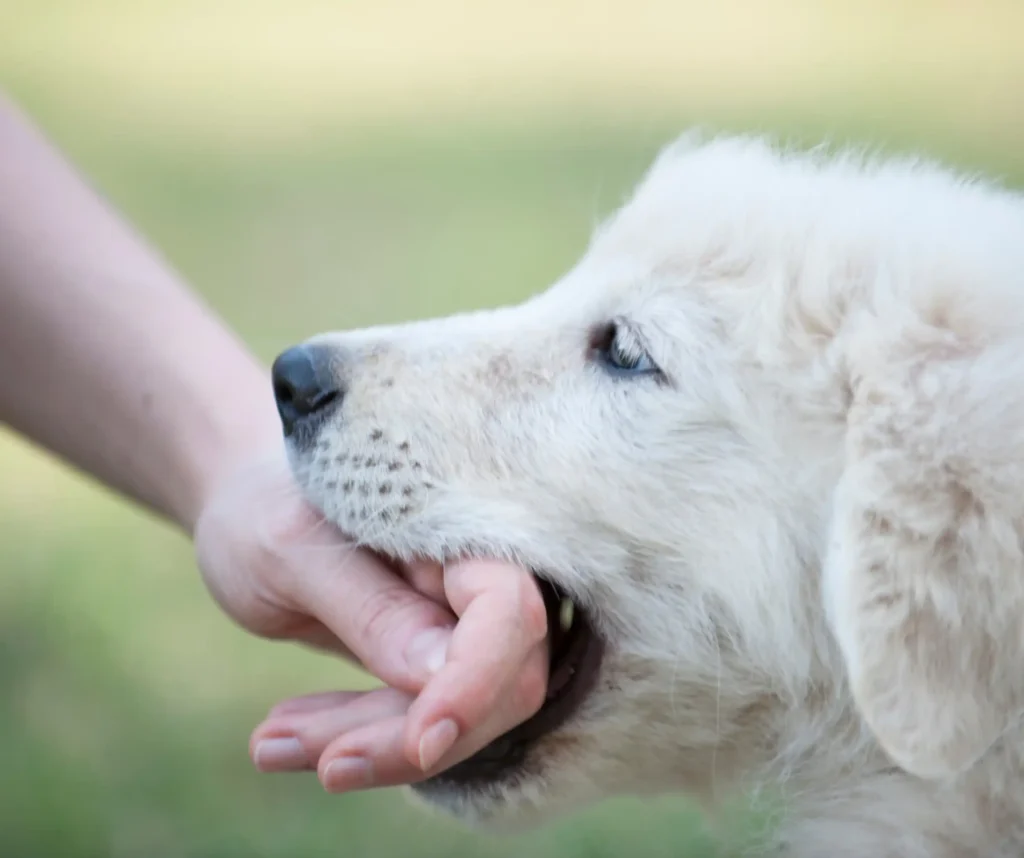
A bite should be at its most painful on day one and should ease from there. Pain that is worse on day two than day one is the single most useful warning sign there is, and the one most people talk themselves out of.
A red line running up the arm or leg deserves particular attention. That is infection moving along the lymphatic channels rather than staying local, and it changes the urgency of the situation considerably.
Home cleaning cannot reach the depth of a puncture. That is exactly where the problem sits.
A tooth fragment or joint involvement changes the whole plan, and only an image shows it.
Some bites heal better left open. That looks like less treatment and is usually more.
Bites rarely happen at a convenient hour, and the first few hours are the ones that count.
Not every contact with a pet is an emergency, and we would rather say so than have you drive over for a graze.
A surface scratch from your own healthy, vaccinated dog, where the skin is barely broken, the wound is nowhere near a joint, and the person bitten is a healthy adult.
Any bite to a hand or face, an animal you do not know, a wound deeper than a graze, a young child or anyone whose healing is affected, or anything worse on day two.
Several minutes. This one action does more to reduce infection risk than anything else available to you before you arrive.
Firm pressure with a clean cloth if it is bleeding. Never scrub inside a puncture or pour anything but water into it.
Do not tape a bite closed. Sealing a contaminated wound shut is the opposite of what it needs. Keep the limb raised.
Owner name, phone, and whether vaccinations are current. Tracing an animal afterwards is far harder than asking at the time.
Both are assessed during the visit, and the answers depend on the animal rather than on the wound. For rabies, what matters is the species, whether the animal is known and vaccinated, whether it can be observed, and how the bite happened. For tetanus, what matters is when your protection was last updated.
A bite from a household pet with current vaccinations, which can be watched for the following ten days, is a very different situation from a bite by a stray, a bat or any wild animal. The second is time sensitive, which is a good reason not to leave it until the weekend has passed.
Bats deserve particular mention, because a bat bite can be small enough to go unnoticed, and any contact with a bat is treated seriously for that reason. Raccoons, skunks, foxes and coyotes are handled the same way. Rodents and rabbits are a much lower concern, though the wound still needs the same cleaning and the same watch for infection.


Most of what determines how a bite heals happens in the days after the visit, not during it. The wound will be dressed before you go, and you will be told how often to change it and what the dressing should look like when you do.
Watch the edges rather than the center of the wound. Redness that stays within a finger width of the puncture is ordinary healing. Redness that is spreading outward each day is not. Mark the edge of the redness with a pen on the first evening, and you will know the next morning whether it has moved, which is far more reliable than trying to remember how it looked.
Pain is the other measure. It should be worst on the first day and should ease steadily. If day three hurts more than day two, come back. That is true even if the wound looks clean, because a deep infection can be well underway before anything shows on the surface.
A wound check two or three days later is genuinely useful for bites in a way it is not for most cuts, because infection declares itself on a delay. Ask before you leave whether one is recommended for your particular bite, and keep the limb raised when you are sitting still.
Children are bitten on the face and head far more often than adults, simply because of height, and those bites carry both a higher infection risk and a cosmetic consideration. A facial bite in a child should always be seen, even when it looks small, and ideally on the day it happens.
The other difference is that children often cannot describe what they felt, so a bite over a joint has to be assessed by examining movement rather than by asking. Pediatric emergency care differs from adult care in exactly that way. If the wound needs closing, how it is closed on a face matters more than it does elsewhere, and laceration repair on a face is a different job from the same repair on a shin.
We welcome all private insurance plans, and we bill your insurance directly. What a bite visit involves varies more than most complaints, because a wound that needs cleaning and a dressing is a different visit from one that needs imaging, repair and a follow-up check.
The thing worth asking about at the time is follow-up. Bites are one of the few injuries where a second look a couple of days later is genuinely useful, because infection declares itself on a delay. Ask before you leave whether a wound check is recommended for your bite and where it should happen.
If the bite happened at work, or involved an animal belonging to someone else, say so at check in. It does not change the care you get, but it changes how the visit is recorded, and that is far easier to set up at the time than to correct afterwards. Our published charges are available on our billing page, and if you are uninsured or paying yourself it is worth asking about the options when you check in. Other injuries we treat are listed on our emergency services page.
Arlington ER treats animal bites around the clock at 1607 S Bowen Rd in Pantego, a few minutes from central Arlington and straight off Bowen. No appointment and no referral are needed, and the wound gets cleaned properly on the day rather than at the weekend.
The first few hours are the ones that change how the next week goes. If the skin is broken and the wound is anything more than a graze, come in and have it cleaned properly.
Ideally within a few hours, and sooner for the hand or face. Infection risk rises with time because bacteria are already in the tissue. If more than a day has passed and the area now looks worse, that is a reason to come in rather than to wait longer.
Animal bites are generally reportable to local animal services, and we can advise on that during your visit. Reporting is also what allows the animal to be observed, which is part of how the rabies question gets answered without anybody guessing.
Often some mark remains, because bite wounds involve crushed tissue rather than a clean edge. How it is managed in the first hours makes a real difference, particularly on the face.
The wound still needs the same care. A familiar, vaccinated animal usually removes the rabies question, but it has no bearing on the infection risk from the bite itself.
For a surface scratch from a known pet, washing under running water is reasonable. For anything that punctures the skin, home cleaning cannot reach the bottom of the wound, which is exactly where the problem sits.
Yes, more than almost anywhere else. The hand has tendon sheaths and joint spaces close to the surface. An infection that would be minor on a thigh can affect function permanently on a hand.
Medically reviewed by Rahman Mohammed, MD | Last Updated: October 25, 2026