
Cuts rarely happen at a convenient hour. Something slips in the kitchen, a fall opens up a knee, and suddenly you are holding a towel against it trying to decide whether this needs stitches or a bandage.
There is a time limit on that decision, which most people do not know. We repair lacerations around the clock, with no appointment, and we close wounds with an eye on how the scar will look in a year rather than just tonight.
A cut needs stitches when the edges do not come together on their own, when it is deeper than a quarter inch, when you can see fat or anything below the skin, when bleeding continues after ten minutes of firm pressure, or when it crosses a joint or sits on the face.
The practical test is simple. Clean the wound, then look at it with the skin relaxed. If the edges sit neatly against each other, it will usually heal well on its own. If they gape open, they need help to meet.
That last line is the one people overlook. Numbness or weakness past the cut can mean a nerve or tendon has been damaged, and that matters far more than the skin does.
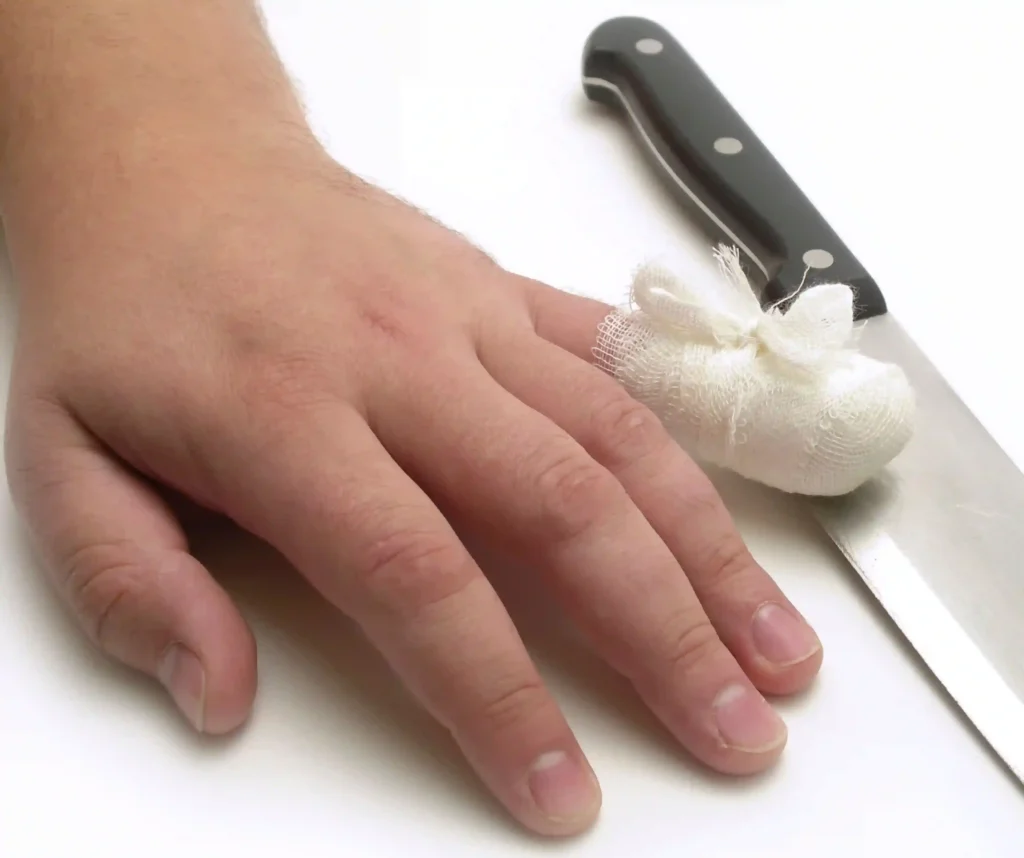
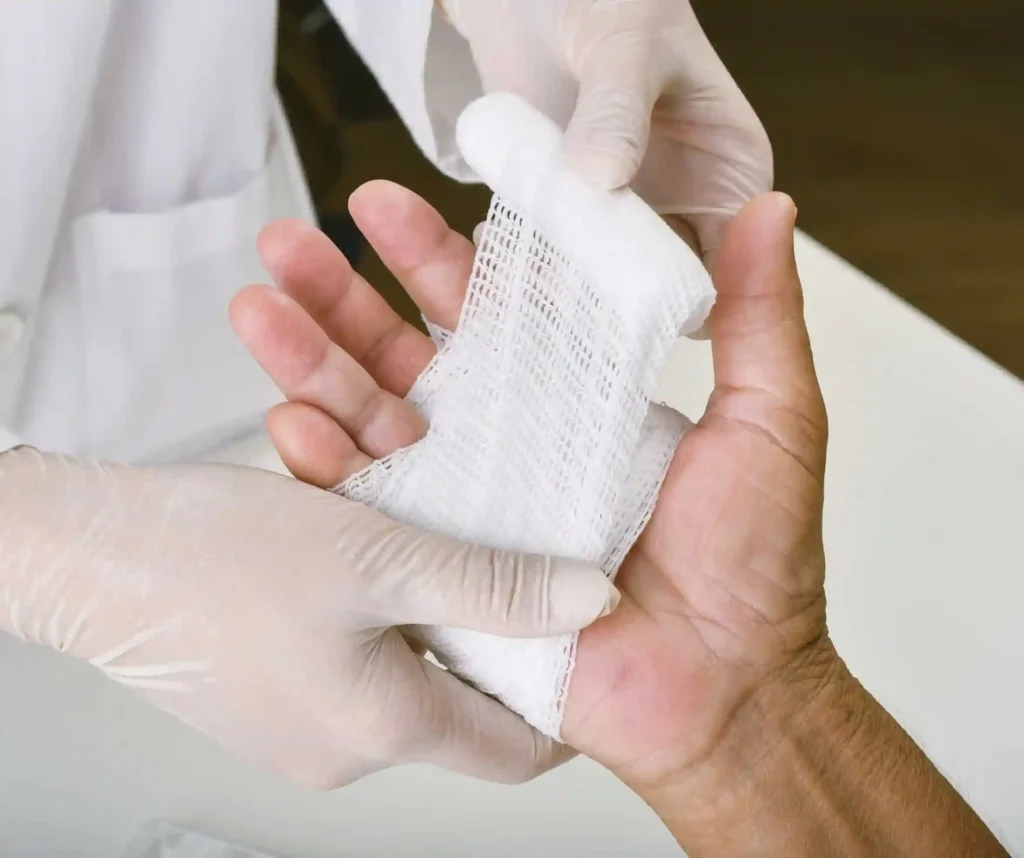
Generally within six to eight hours for most cuts, and up to about twelve to twenty-four hours for wounds on the face. After that window, closing a wound traps bacteria inside it, and the risk of infection outweighs the benefit of stitching it.
This is the single most useful thing on this page, and almost nobody knows it. People decide to wait and see how it looks in the morning, and by morning the option to close it neatly has usually gone.
What happens after the window is that the wound is cleaned and left open to heal from the base upward. That works, and it is considerably slower and leaves a wider scar than closing it would have done.
The window is shorter for wounds that are dirty, caused by a bite, or on the hand or foot, because those carry more bacteria to begin with. If you are weighing it up at hour five, that is your answer: come in now rather than deciding later.
Call 911 for bleeding that will not stop with firm pressure, blood that spurts rather than flows, a cut to the neck or chest, or any wound where something is still embedded. Those are different from a cut that simply needs closing.
Spurting blood means an artery, and it needs pressure held hard and continuously while someone else calls for help. Do not lift the cloth to check it every thirty seconds, which is the instinct and which restarts the bleeding each time.
Leave embedded objects exactly where they are. Glass, metal, a knife, anything. The object may be the only thing preventing heavier bleeding, and removing it at home can turn a controlled situation into an uncontrolled one.
Deep hand cuts deserve their own mention. The hand packs tendons and nerves immediately beneath the skin, so a cut that looks minor can have divided something that will not repair itself. If a finger will not bend or feels numb, that is a today problem regardless of how the skin looks.
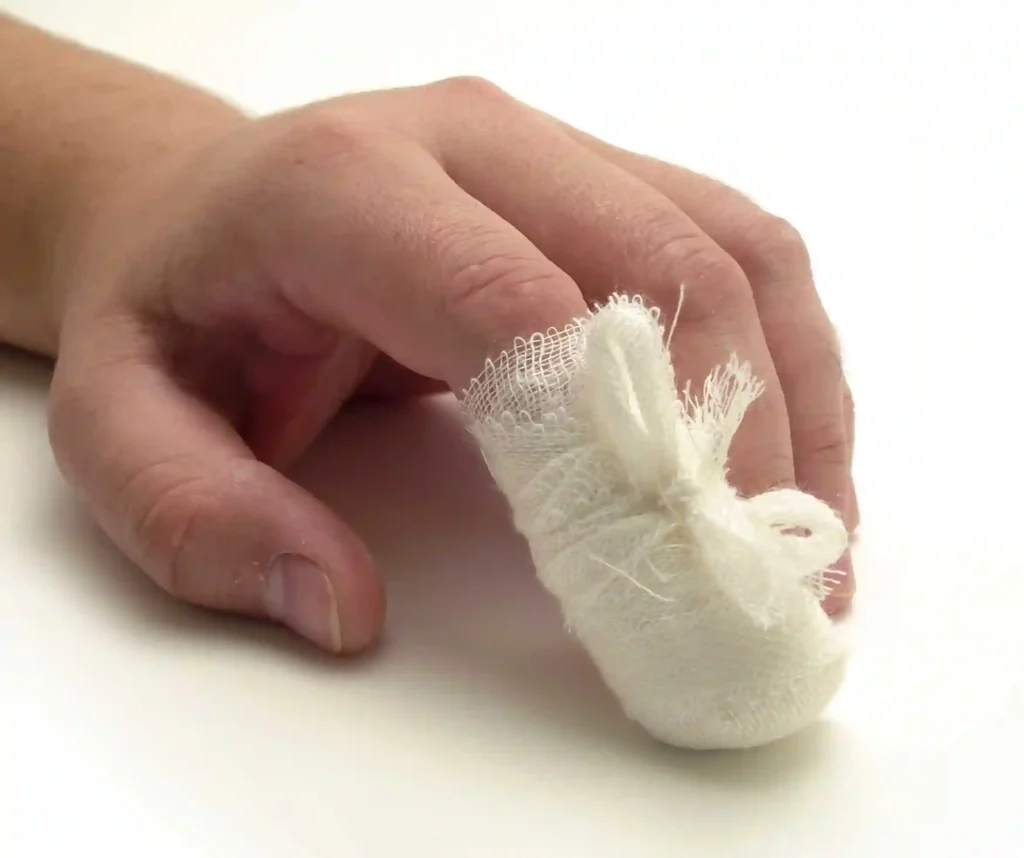
A few minutes of sensible first aid makes a real difference to how the repair goes. The right-hand column includes two things that actively damage the tissue.
| Do this | Never do this |
|---|---|
| Press firmly with a clean cloth for ten full minutes | Lift the cloth every minute to check |
| Rinse gently under clean running water | Pour hydrogen peroxide into the wound |
| Raise the cut above heart level if you can | Apply a tourniquet unless a limb is severed |
| Cover with a clean dry dressing | Remove anything embedded in the wound |
| Note the time it happened and what caused it | Wait until morning to decide about stitches |
| Remove rings before the hand swells | Close it yourself with household glue or tape |
Hydrogen peroxide is the one worth changing your habits over. It kills the healthy cells trying to heal the wound alongside the bacteria, and it slows healing measurably. Clean running water is genuinely better.
The first row matters too. Ten uninterrupted minutes of pressure stops most bleeding; ten interrupted minutes stops almost none, because each check tears away the clot that was forming.
Two rows deserve a word of explanation. Leaving embedded glass, metal or grit exactly where it is feels wrong, but pulling it out can restart bleeding that the object itself was holding back, and it often breaks a fragment off deeper in the tissue. Bring it in as it is and let it be removed under proper light with the right instruments.
Removing rings early is the row people wish they had read. Hands swell quickly after any injury, and a ring that slides off easily in the first ten minutes can need cutting off two hours later. The same applies to bracelets and watches on an injured wrist.
Your physician stops the bleeding, checks the nerves and tendons beneath the cut, numbs the area, cleans it thoroughly, closes it using the method best suited to that wound, and makes sure your tetanus protection is up to date.
Pressure, elevation, and where needed direct measures. Nothing else happens until the field is dry enough to see.
Movement and sensation are tested beyond the cut. A divided tendon is easy to miss and hard to fix late.
Numbing comes before cleaning, because a wound cannot be cleaned properly while it still hurts.
The step that most determines whether it becomes infected. Grit left behind also tattoos the skin permanently.
Stitches, staples, skin adhesive or strips. The wound decides the method, not habit or convenience.
Tetanus protection checked and updated if due, plus written instructions and a date for removal.
Any cut that goes through the full thickness of skin will leave some mark. What is within your control is how noticeable it ends up, and three things influence that more than anything else: how soon it was closed, how well it was cleaned, and how you care for it afterward.
Closing a wound within the window matters most. Edges brought together neatly heal as a fine line. Edges left to close on their own heal as a wider band, because the body fills the gap with new tissue rather than knitting the original edges back together.
Aftercare in the following months does more than most people expect. Keeping the healing scar out of direct sun for a year is the single most effective thing you can do; new scar tissue darkens permanently with sun exposure, and that discoloration does not fade the way a tan does.
On the face, tell us if you are concerned about appearance. It changes the material, the technique and the time spent, and it is a reasonable thing to ask for rather than an imposition.
Realistic expectations help. A well-repaired scar looks red and raised for several weeks, then fades gradually over twelve to eighteen months. Judging the result at week three will always disappoint you.
Location matters as much as technique. Skin over a joint, such as a knee or a knuckle, is pulled apart every time you bend it, so those scars tend to widen no matter how neatly the repair was done. Skin on the face, by contrast, has an excellent blood supply and usually heals better than anywhere else on the body.
Adhesive suits a clean straight cut on a child's forehead. A knee that bends needs stitches. We match them properly.
It is the least glamorous step and the one that decides whether the wound gets infected. We take the time.
Where skin adhesive will hold, we use it. No needles and no removal visit is worth a great deal to a frightened child.
Glass fragments hide easily and show on film. Better found now than working their way out for months.
A laceration visit is billed as an emergency visit plus the repair itself, and an X-ray only if something may be embedded. We bill most major private insurance plans and file the claim for you. Arlington ER is out-of-network for all private plans, but under the federal No Surprises Act an emergency visit is still processed at your in-network cost-sharing, so your share depends on your own deductible and coinsurance.
Lacerations have a billing feature specific to them: repairs are priced by the length and complexity of the wound, not as one flat charge. A two-inch cut through several layers costs more to repair than a half-inch nick, because it genuinely takes more work and more time. That is why nobody can quote you a number over the phone without seeing it.
One thing that is not a separate charge: the removal visit. Coming back to have stitches taken out is part of the original repair, and you should not receive a second bill for it. If you do, call our billing team and we will correct it.
The federal No Surprises Act protects patients from surprise bills for emergency care. Our Patient Billing Advocates will work through your Explanation of Benefits with you, and our Financial Support and Care Relief Program can reduce or remove out-of-pocket costs for those who qualify. See our Billing Disclosure page.
For billing questions: 817-973-7406 or info@arlingtoner.com

Arlington ER serves Arlington, Texas from 1607 S. Bowen Rd., on the west side of Bowen just south of Pioneer Parkway. Parking is directly outside the door, which helps when you are holding a dressing in place.
We are minutes from central Arlington and the Parks Mall, and a short drive from Dalworthington Gardens, Kennedale, Grand Prairie, and Mansfield. From I-20, exit at Bowen Road and head north. From Highway 303 or Pioneer Parkway, turn south onto Bowen and we are on your right. Our Contact Us page has anything else you need.
Remember the clock: most cuts should be closed within six to eight hours. We are open every hour of every day, holidays included, with no appointment needed.
Most cuts can only be stitched within six to eight hours. If the edges are gaping, if it is deep, or if you simply are not sure, come in now rather than seeing how it looks tomorrow.
The numbing is the only part you feel, and it stings briefly. After that the repair itself is painless, and most people are surprised how little there is to it.
It depends on location: about five days on the face, seven to ten on arms and body, and ten to fourteen over joints. You leave knowing your exact date.
Usually after twenty-four to forty-eight hours, briefly and without scrubbing. Pat it dry afterward. Soaking in a bath or pool needs to wait until the stitches are out.
Spreading redness, increasing pain after day two, warmth, swelling, pus, a red streak running away from the wound, or a fever. Any of those means come back and be seen.
Not every cut. It depends on how dirty the wound is and how long since your last tetanus protection. Your physician checks and updates it if you are due.
Always come in. Bites carry a much higher infection risk, are often deliberately left open rather than closed, and need a different approach entirely. Do not treat one at home.
Often yes, for clean straight cuts on areas that do not move much, like a forehead. It will not hold on hands, joints, or anywhere under tension, and we will explain which applies.
Usually an hour to ninety minutes. Cleaning takes longer than closing, and a wound needing an X-ray or a careful facial repair takes a little more.
Medically reviewed by Rahman Mohammed, MD | Last Updated: September 18, 2026