
Waiting weeks for a scan is normal in most of healthcare. It is not normal here. Our CT scanner is on site, staffed around the clock, and read by a board-certified emergency physician in the same building rather than sent somewhere and waited on.
Arlington ER images on a GE VCT 64-slice CT scanner. The number of slices is how finely the scanner sees; 64-slice is the standard used for emergency imaging of the head, chest and abdomen, and it produces a diagnostic-quality study in seconds rather than minutes. If your symptoms need imaging today, you can walk in and have answers within the hour. No appointment, no referral, and no wait behind next week’s scheduled patients.
Yes. At Arlington ER you can walk in and be scanned the same day, with no appointment and no referral, provided a physician determines the scan is medically necessary for your symptoms. That last part is the honest caveat, and it matters.
An emergency room is not an imaging center. We do not run scans on request the way a scheduled radiology clinic does. What we do is assess you first, and if your symptoms warrant imaging, the scanner is a few steps away rather than a few weeks away.
If you are simply due a routine scan your own doctor ordered for something non-urgent, a scheduled imaging center will serve you better and cost you less. We will tell you that rather than scan you anyway.

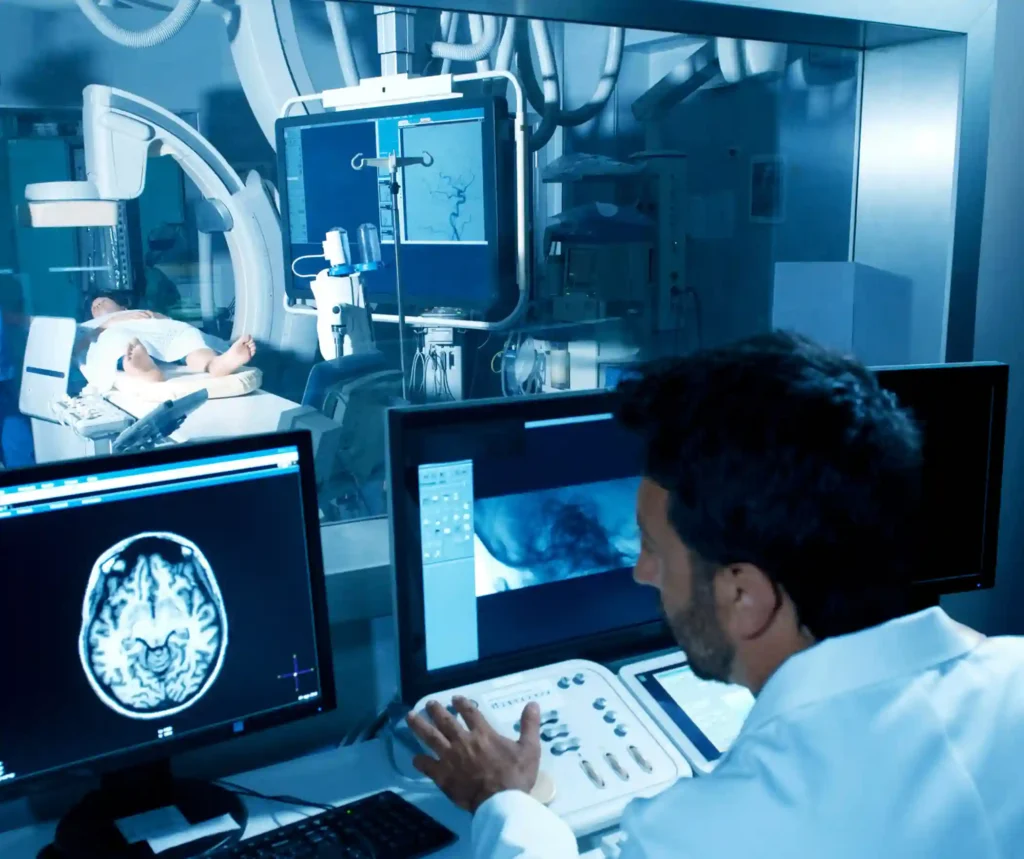
A CT scan shows soft tissue, organs, and bleeding that an X-ray simply cannot see. An X-ray produces one flat shadow of everything stacked together; a CT builds cross-sections, so your physician can look through the body a slice at a time.
The practical difference is what each one answers. An X-ray is excellent at what it does, which is mainly bone and lungs, and it is faster and cheaper. But it cannot show bleeding inside the skull, it cannot reliably show an inflamed appendix, and it will miss a small stone that a CT finds immediately.
That is why a suspected stroke goes straight to CT: only a scan can separate a blockage from a bleed, and the two need opposite treatment. It is also why a kidney stone is measured with CT, since size and position decide whether it will pass on its own.
Neither test is better in the abstract. Your physician picks the one that answers your question, and sometimes that is the X-ray.
The scan itself takes a few minutes, and often less than one. Lying down, being positioned, and getting up again accounts for most of the time you spend in the room. Your physician usually has an answer within the hour of you arriving.
People expect something far longer, and that expectation comes from MRI, which is a different machine entirely. An MRI can take the best part of an hour inside a narrow tube. A CT is a wide ring you pass through, and the imaging is over before most people have settled into being nervous about it.
What takes the remaining time is everything around the scan: the assessment beforehand, the physician reviewing the images afterwards, and the conversation about what they show. That is the part worth waiting for, and it is the part a standalone imaging center does not include.
For genuinely time-critical situations, that whole sequence moves faster still. A suspected stroke is scanned within minutes of walking through the door.
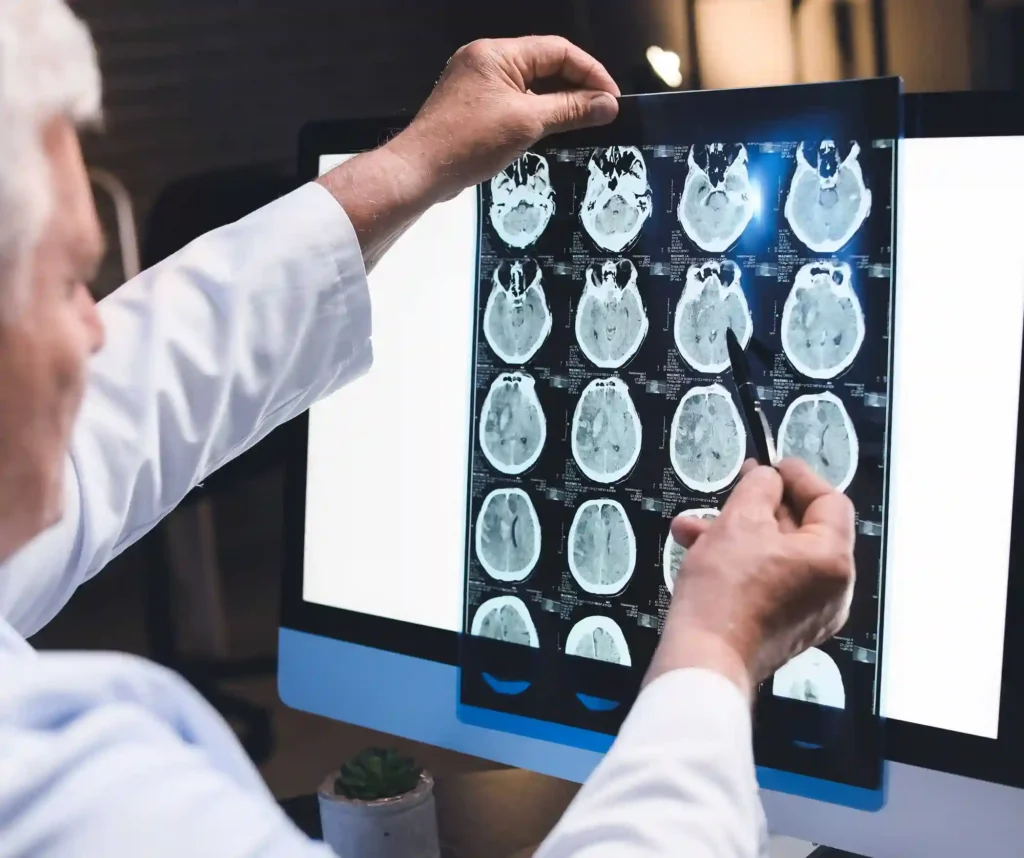
When the answer is hidden inside the head, chest, or abdomen and getting it wrong would be serious. These are the situations that send patients to our scanner most often.
Suspected stroke. The scan separates a blockage from a bleed, and the two need opposite treatment. Nothing meaningful happens until that question is answered, which is why imaging leads rather than follows.
Head injury with worrying signs. Vomiting, confusion, worsening headache, or a loss of consciousness after a knock to the head all raise the question of bleeding inside the skull, which only a scan can rule out.
Severe abdominal pain. Appendicitis, obstructions, and several other causes look alike from the outside. A CT distinguishes between them, and often prevents an unnecessary operation as readily as it identifies a necessary one.
Suspected kidney stone. The scan measures the stone exactly. That single measurement decides whether you go home to wait it out or need a urologist.
Significant trauma. After a fall or a serious accident, internal injury can be present with very little to see on the surface. Imaging finds what an examination cannot.
Chest pain in certain patterns. When a physician needs to rule out specific causes involving the blood vessels, a CT is what settles it.
A short conversation before the scan keeps it safe and useful. The right-hand column lists the things people leave out, usually because they seem irrelevant.
| Do this | Never do this |
|---|---|
| Tell us if you are or might be pregnant | Assume we will ask if it matters |
| Mention any kidney condition you have | Leave out history that feels unrelated |
| Say if you have had a bad reaction to imaging before | Stay quiet because it was years ago |
| Tell us about implants, pins, or metal in your body | Forget older surgical hardware |
| Bring records of any recent scan elsewhere | Delay coming in to go and find them |
| Ask anything you are unsure about | Sit with a worry you never voiced |
The pregnancy question is the one that genuinely changes the plan. Please answer it honestly even if you are only unsure, because there are other ways to get the same answer when it matters.
A physician assesses you and decides whether imaging is warranted, the technologist positions you on the table, the scan runs in minutes, your physician reviews the images here, and you are told what they show before you leave. Nothing gets posted off to be read next week.
A physician examines you and decides whether a scan will actually answer the question. Imaging follows a reason, never a request.
A short check covering pregnancy, kidney history, and metal implants. It takes a minute and it keeps the scan safe.
You lie on a table that slides slowly through a wide open ring. It is not a tunnel, and you can see out the whole time.
A few minutes at most, often under one. You will be asked to stay still and sometimes to hold your breath briefly.
Your emergency physician reviews the images here, in this building, within minutes of the scan finishing.
You are told what the scan shows and what happens next, in plain language, before you leave the building.
A CT scan is safe for the situations it is used in, and it does involve a small amount of radiation. Both halves of that sentence are true, and you deserve to hear them together rather than only the reassuring one.
The exposure from a single scan is low. It is more than a chest X-ray and far less than most people picture. For any one scan, the added lifetime risk is very small, and it is measured against a question that could be serious right now.
Which is the real point. When a physician orders a CT, they are weighing a small, distant risk against a present one: bleeding inside the skull, an appendix about to rupture, an injury that cannot be seen from outside. Declining the scan does not remove risk, it just moves it somewhere less visible.
Where genuine care is needed is with children, with pregnancy, and with people who have had many scans already. In those cases your physician will consider whether an ultrasound would answer the same question, use the lowest workable settings, or explain plainly why a CT is still the right call. That conversation happens before the scan, not after.
If you are worried, say so. A scan you understand is easier than one you simply endure.
Images are reviewed on site by the physician treating you, so the result arrives in minutes rather than days.
Imaging follows a clinical reason. If a scan will not alter what happens next, we say so instead of running one.
For children and in pregnancy, we ask whether ultrasound answers the same question before reaching for CT.
Ask at discharge and we send the scan and report to your own doctor, and give you a copy to keep.
A CT scan here is billed as part of an emergency visit rather than as a standalone imaging fee. We bill most major private insurance plans and file the claim for you. Arlington ER is out-of-network for all private plans, but under the federal No Surprises Act an emergency visit is still processed at your in-network cost-sharing, so your share depends on your own deductible and coinsurance.
Imaging carries a billing distinction worth understanding before you choose where to go. A scheduled imaging center bills you for a scan. An emergency room bills for the visit, the imaging, and the physician who interprets it and acts on the result, which is why the totals are not comparable line for line.
That difference is worth paying for in an emergency and not worth paying for otherwise. If your own doctor has ordered a routine scan for something that has been going on for months, book it at an imaging center. If your symptoms are new, severe, or getting worse, the emergency room is where the scan and the decision happen in the same hour.
The federal No Surprises Act protects patients from surprise bills for emergency care, so nobody should be weighing network status while in pain. Our Patient Billing Advocates will work through your Explanation of Benefits with you, and our Financial Support and Care Relief Program can reduce or remove out-of-pocket costs for those who qualify. Full details sit on our Billing Disclosure page.
For billing questions: 817-973-7406 or info@arlingtoner.com
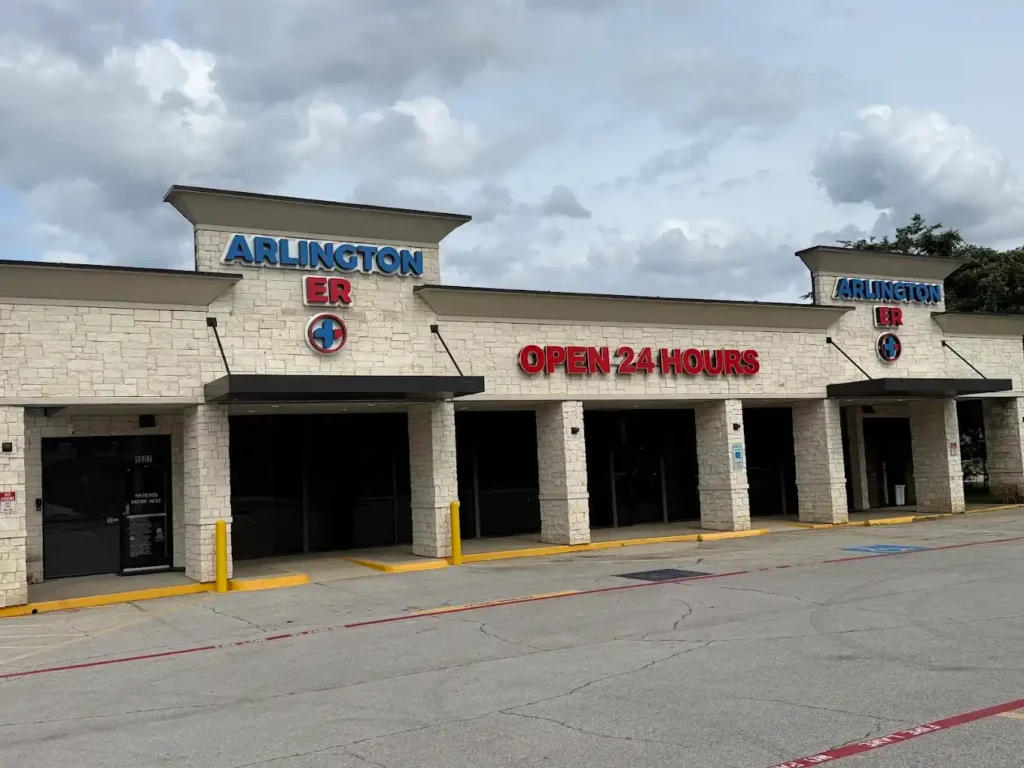
Arlington ER serves Arlington, Texas from 1607 S. Bowen Rd., on the west side of Bowen just south of Pioneer Parkway. Parking sits directly outside the entrance, and the scanner is a few steps from the door.
We are minutes from central Arlington and the Parks Mall, and an easy drive from Dalworthington Gardens, Kennedale, Grand Prairie, and Mansfield. From I-20, exit at Bowen Road and head north. From Highway 303 or Pioneer Parkway, turn south onto Bowen and we are on your right. Our Contact Us page covers anything else you need.
We are open every hour of every day, holidays included, and no appointment or referral is required.
If your symptoms are new, severe, or getting worse, waiting weeks for imaging is the wrong plan. Walk in, get assessed, and if a scan is what you need, it is a few steps away and read before you leave.
Yes, within the same visit. Your physician reviews the images here and explains what they show before you leave, usually within minutes of the scan finishing.
No. Our physician assesses you and orders imaging if your symptoms call for it. You do not need anything arranged in advance by another doctor.
No. A CT is a wide open ring rather than a long tunnel, and you can see out throughout. It is also over in minutes, which is where it differs most from an MRI.
Yes, when it is genuinely needed. For children we first consider whether an ultrasound answers the same question, and if a CT is required we use settings suited to their size.
Tell us straight away, even if you are only unsure. Your physician will weigh whether another form of imaging can answer the question, and will explain the reasoning either way.
Yes. Ask at discharge and we will send the images and report to your primary care physician or specialist, and hand you a copy so your follow-up never waits on paperwork.
Comfortable clothing without metal fastenings where possible, plus a photo ID and insurance card if they are to hand. You may be asked to remove jewellery for the scan.
The scanner sits at our S. Bowen Rd. facility, which carries a Pantego postal address while being surrounded entirely by Arlington. For anyone searching for imaging in Arlington, this is a few minutes from the centre of town.
Medically reviewed by Rahman Mohammed, MD | Last Updated: September 23, 2026