
What you do in the first ten minutes affects how a burn heals for the rest of your life. Cool running water for twenty minutes genuinely changes the outcome, and most people stop far too soon.
Arlington ER treats burns around the clock, with proper pain control, wound care, and honest advice about which burns need a specialist center rather than us.
When it is larger than the palm of your hand, when it goes deeper than the top layer of skin, or when it lands anywhere that has to keep moving or has to look right afterward.
Depth and location decide almost everything. A small burn in the wrong place is a bigger problem than a larger one on the thigh.
The third item is the one that misleads people most. A burn that does not hurt is usually worse, not better, because the nerve endings that would report pain have been destroyed. Painlessness in a burn is a warning sign rather than a relief.
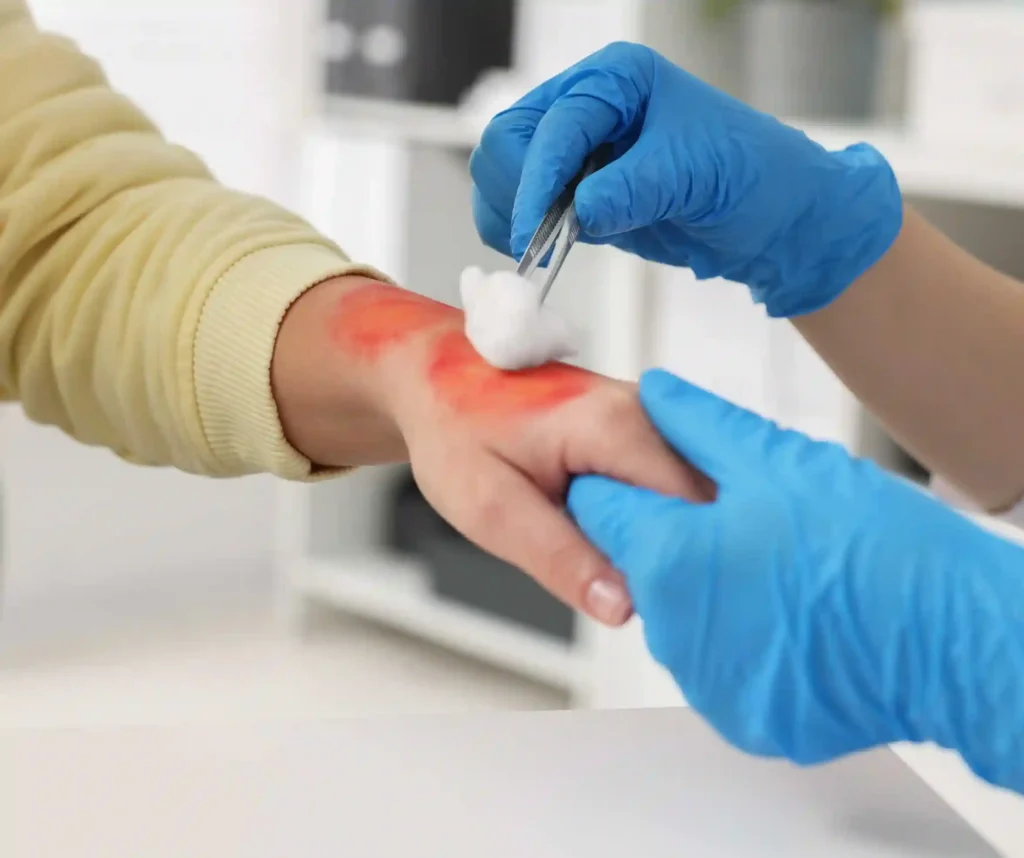
Cool running water, for twenty full minutes. This is the single most effective thing anyone can do for a burn, and it still works up to three hours afterward. The right-hand column contains remedies that make burns worse.
| Do this | Never do this |
|---|---|
| Cool running water for twenty full minutes | Ice, ice water, or anything from the freezer |
| Remove rings, watches and tight clothing early | Peel off clothing that is stuck to the burn |
| Cover loosely with plastic wrap or a clean dry sheet | Apply butter, oil, toothpaste, or ointment |
| Keep the rest of the person warm while cooling the burn | Put a child in a cold bath to cool a large burn |
| Leave blisters intact | Burst blisters or pick at loose skin |
| Note what caused it and at what time | Assume a painless burn is a minor one |
Twenty minutes feels like a very long time when you are standing at a sink, and almost nobody manages it without watching a clock. It is worth persisting. Cooling limits how deep the burn travels, and a burn that stops at the second layer instead of the third is the difference between healing on its own and needing a graft.
Ice is the mistake worth unlearning. It constricts the blood supply to skin that is already injured and can deepen the burn, turning a survivable layer of tissue into a dead one. Cool tap water, not cold, and certainly not ice.
The fourth row matters for children specifically. A small child cooled in a cold bath can lose body heat dangerously fast, because their surface area is large relative to their size. Cool the burn, keep the child warm.
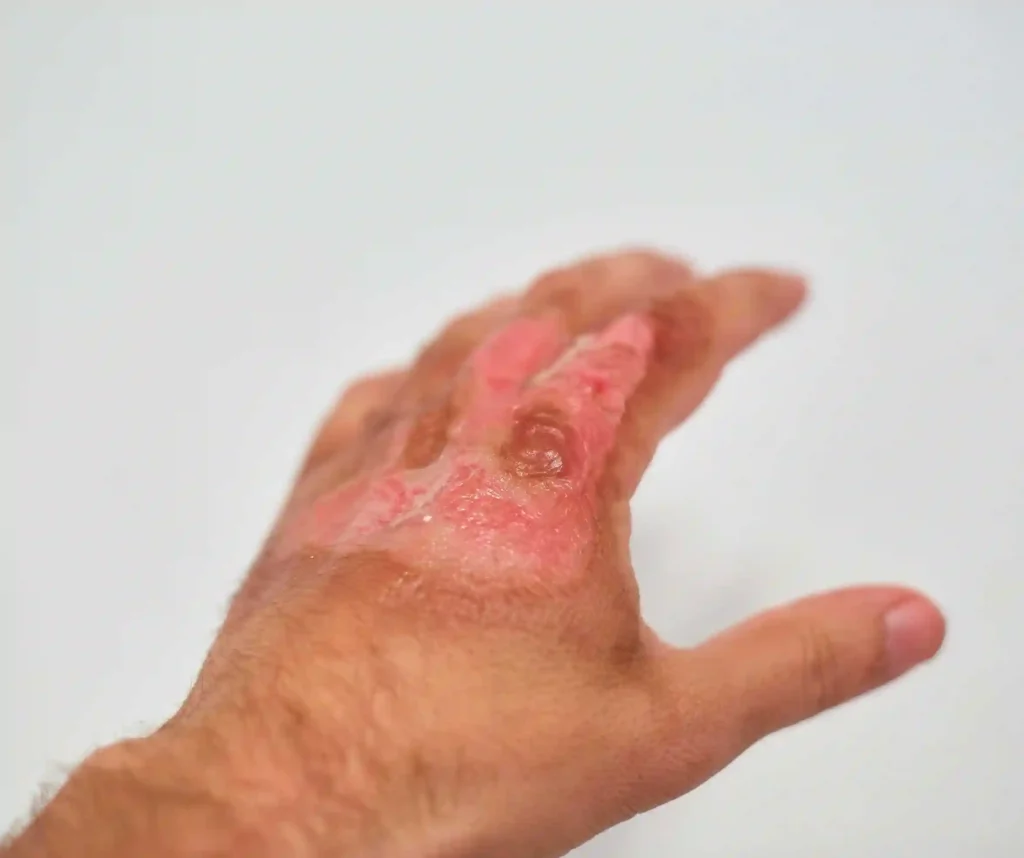
Degree describes how deep the burn goes, not how large it is. Depth decides whether skin can regrow on its own, which is the question everything else follows from.
First degree affects only the outer layer. Red, painful, no blisters, like most sunburn. It heals in three to six days and leaves no scar.
Second degree reaches the layer beneath. Blisters, wet or shiny skin, and severe pain. Shallow ones heal in two to three weeks. Deeper ones take longer and can scar.
Third degree destroys the full thickness of skin. It looks white, brown, or leathery, and it is typically painless in the center because the nerves are gone. Skin cannot regrow across it, so it usually needs grafting.
Here is the part almost nobody is told: a burn keeps changing for up to forty-eight hours. What looks like a shallow second-degree burn on the first evening can declare itself as something deeper by the second day, as the damaged tissue at the edges dies back. This is not a missed diagnosis. It is how burns behave, and it is exactly why a follow-up look matters even when the first assessment was reassuring.
Because some areas have to keep moving, some have to keep working, and some have to look right for the rest of your life. A coin-sized burn on the hand can be more disabling than a palm-sized one on the back.
Hands and fingers come first. Scar tissue contracts as it heals, and a contracting scar across a knuckle can permanently limit how far the finger bends. Hands are also how most people earn a living.
The face matters for appearance and for the airway. Burns near the nose and mouth raise the question of whether hot air was inhaled, which can swell the airway hours after the injury.
Feet are easy to underestimate because they are out of sight. They also carry your weight, heal slowly because of poor circulation, and are the burns most likely to become infected.
Anything crossing a joint, at the elbow, knee, neck or armpit, risks the same contracture problem as the hand. These often need specialist follow-up even when they look unimpressive.
Burns that go all the way around a finger, arm or leg are their own emergency. As the tissue swells beneath a rigid burned surface, the swelling has nowhere to go and can cut off the blood supply to everything below it. That needs assessing urgently, whatever the size.
We will tell you honestly if a burn belongs at a specialist burn center rather than here, and arrange it. Large burns, deep facial burns, and significant electrical injuries all belong in that category, and pretending otherwise would not serve you.
Stop the burning, control the pain properly, work out how deep it goes, dress it so it heals well, and make sure someone looks at it again in forty-eight hours when its true depth becomes clear.
If twenty minutes was not achieved at home, we finish it here. It still helps for up to three hours after the burn.
Burns are among the most painful injuries there are. Nothing useful can be assessed or dressed until the pain is handled.
How deep it goes and what percentage of the body it covers, which together decide where you are treated.
Loose dead skin removed, blisters managed appropriately, and a dressing chosen to suit the depth and location.
Burns break the skin barrier. Your tetanus status is checked and updated if it has lapsed.
Arranged before you leave, because a burn's true depth only becomes clear once it has finished evolving.
When the pain increases after day two instead of easing, when redness spreads outward from the edges, or when a fever appears. Burns are unusually prone to infection because the skin barrier that normally keeps bacteria out has been removed across an open area.
Pain that is getting worse is the earliest and most reliable sign. A healing burn hurts most in the first day or two and then steadily improves. A burn that was settling and has become painful again over twenty-four hours has changed, and that change is worth showing someone.
Spreading redness is the second. Some redness immediately around a burn is normal and expected. Redness that advances outward day by day, particularly with warmth and swelling beyond the burn itself, is not.
Other signs are a green or foul-smelling discharge, new blisters appearing at the edges after the first day, a fever, or simply feeling generally unwell when the burn itself is small. Any burn that has not healed within three weeks should also be reassessed rather than waited out.
Feet, hands, and burns in anyone with diabetes carry the highest risk and deserve a lower threshold for coming back. So does any burn that got dirty at the time it happened.
Burns hurt more than almost any other injury. Nobody is examined or dressed while in severe pain.
Large, deep or electrical burns belong at a specialist center. We arrange it rather than keep the visit.
Scald burns from hot drinks are the most common childhood burn. Our pediatric team handles them calmly.
Because depth declares itself over forty-eight hours, a second look is planned rather than left to chance.
A burn visit is billed as an emergency visit plus wound care and dressings. What makes burns different from every other injury on this site is that one visit is rarely the whole cost, and nobody should be surprised by that later.
Burns need dressing changes, often several over two to three weeks, and each of those is its own appointment and its own charge. A burn that needs specialist follow-up adds more. Comparing a burn to a single-visit injury like a cut will always understate what the whole course of treatment comes to.
We would rather set that expectation at the first visit than have it arrive as a series of unwelcome bills. Ask us at the outset roughly how many dressing changes to expect, and where the cheapest place to have them done is. Often that is not here, and we will say so.
The other honest point is about sunburn and very minor scalds. A small first-degree burn with no blistering does not need an ER at all. Cool water, and time. Please do not spend an emergency visit on one.
The federal No Surprises Act protects patients from surprise bills for emergency care. Our Financial Support and Care Relief Program can substantially reduce out-of-pocket costs for those who qualify, and our Billing Disclosure page sets out the detail.
A burn that has also split the skin open may need stitches, and we handle both in the same visit.
For billing questions: 817-973-7406 or info@arlingtoner.com
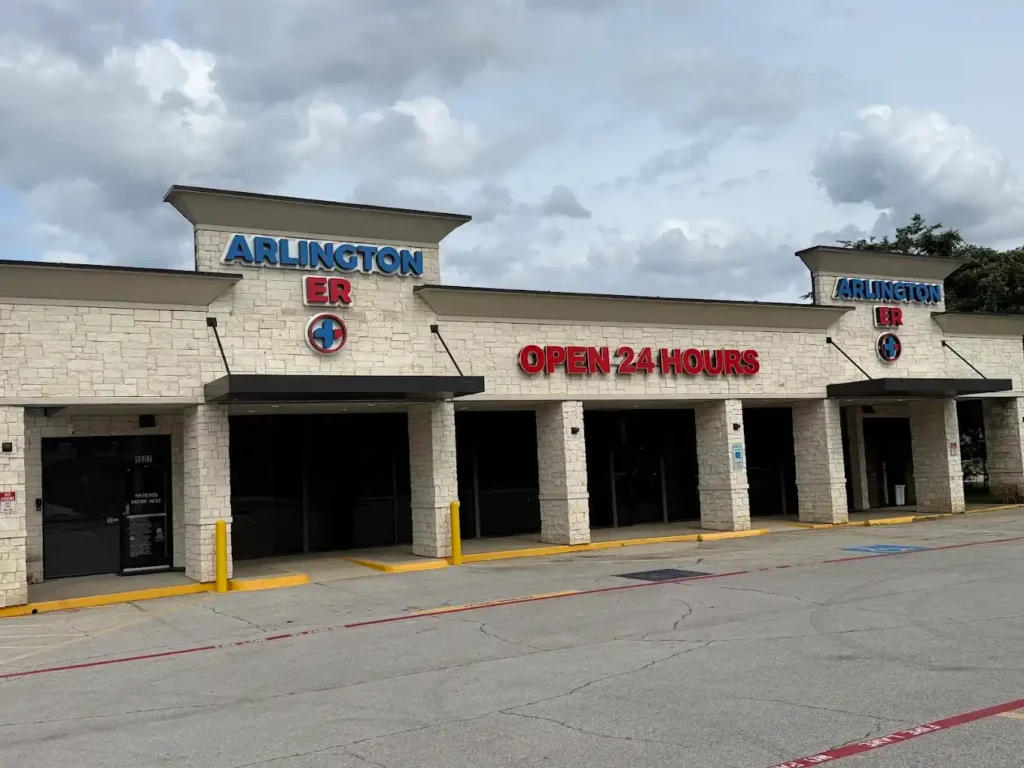
Arlington ER serves Arlington, Texas from 1607 S. Bowen Rd., on the west side of Bowen just south of Pioneer Parkway. Parking is directly outside the entrance, a few steps from the door.
We are minutes from central Arlington and the Parks Mall, and a short drive from Dalworthington Gardens, Kennedale, Grand Prairie, and Mansfield. From I-20, exit at Bowen Road and head north. From Highway 303 or Pioneer Parkway, turn south onto Bowen and we are on your right. Our Contact Us page has anything else you need.
Start cooling under running water before you leave the house, and keep going for twenty minutes. Call 911 instead of driving for large burns, burns with smoke inhalation, or any electrical injury. We are open every hour of every day with no appointment needed.
Cool it now, then come in. Cooling still helps up to three hours after the burn, so start at the sink and keep going on the way. Never use ice. We are open 24/7 with no appointment needed.
No. Intact blister skin is a sterile natural dressing and the burn underneath heals faster and cleaner beneath it. Large or awkwardly placed blisters are sometimes drained here under sterile conditions, which is a different thing entirely.
A shallow one usually heals in two to three weeks with little or no scarring. A deeper one takes three to six weeks and is more likely to scar. Any burn not healed by three weeks should be looked at again.
No. Cooling still provides benefit for up to three hours afterward, so it is worth doing even if the burn happened a while ago. Twenty minutes of cool running water, not ice.
Rarely, but yes when it covers a large area with blistering, or comes with fever, chills, confusion, vomiting or fainting. That combination is heat illness alongside the burn, and it is the part that needs treating.
Because electricity travels through the body between where it entered and where it left, and can damage muscle, nerves and heart rhythm along the way. The skin marks show almost nothing about what happened in between.
First-degree burns do not scar. Shallow second-degree burns usually heal with little mark. Deeper burns generally leave something. Early cooling, keeping it clean, and healing within three weeks all reduce how visible the result is.
Rinse continuously with running water for at least twenty minutes while removing contaminated clothing, and bring the container or a photograph of the label with you. Do not try to neutralize an acid with an alkali or the reverse, because that reaction generates heat and adds a thermal burn.
Keep it out of direct sun for a full year and cover it when you cannot. New scar tissue darkens permanently with sun exposure, and that discoloration does not fade the way a tan does.
Medically reviewed by Rahman Mohammed, MD | Last Updated: September 23, 2026