A CAT scan and a CT scan are the same test. Same machine, same procedure, same images. The only thing that changed is the name, and both versions are still in everyday use, which is why the question comes up so often.
If your doctor said CAT scan and the paperwork says CT, nothing has been switched. Nobody made a mistake. You’re getting the scan you were told about.
Where the Names CAT Scan and CT Scan Came From
CAT stood for computerized axial tomography. Axial described how the original machines worked: they took images in a single flat plane, slice by slice, like cutting a loaf of bread and photographing each slice.
Newer scanners stopped working that way. They gather data in a continuous spiral around you and a computer reconstructs it into any plane the radiologist wants to look at. Axial no longer described what the machine did, so the word was dropped and computed tomography, or CT, became the accepted term.
The name changed decades ago. It stuck around in conversation because CAT scan is easier to say and it made it into films and television, which is where most people first heard it.
What Happens During a CT Scan
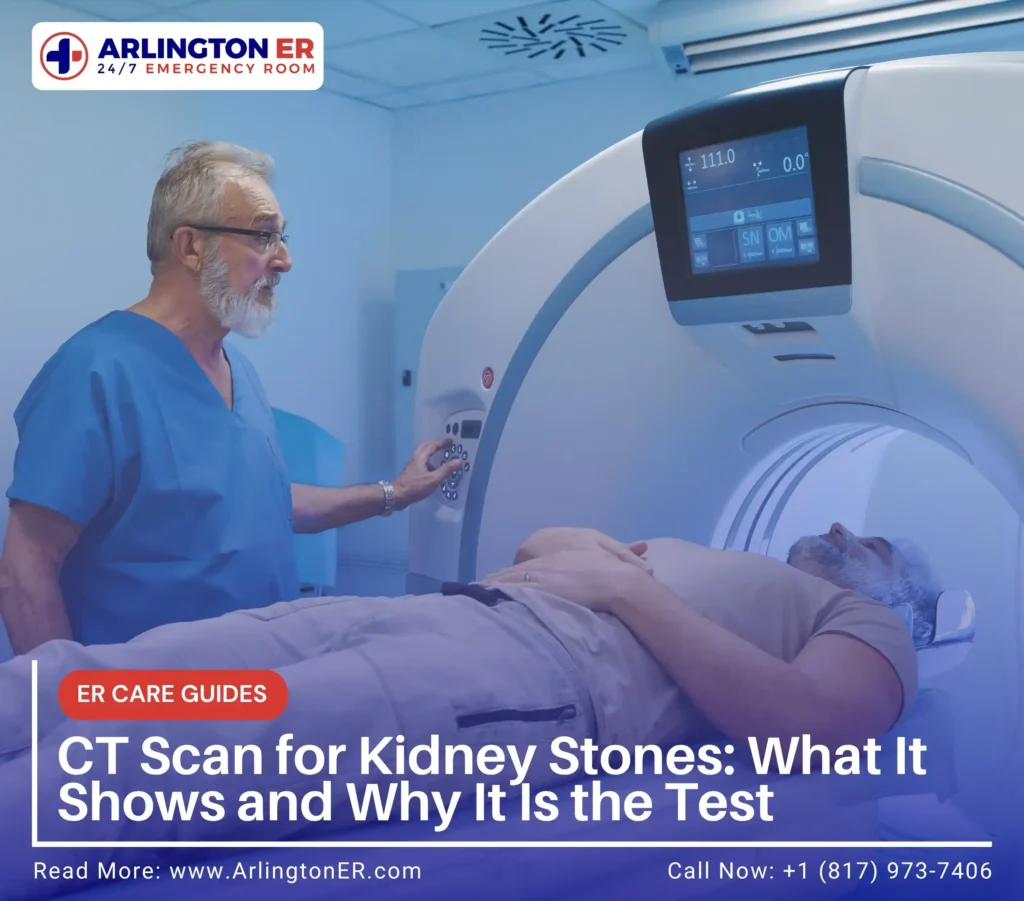
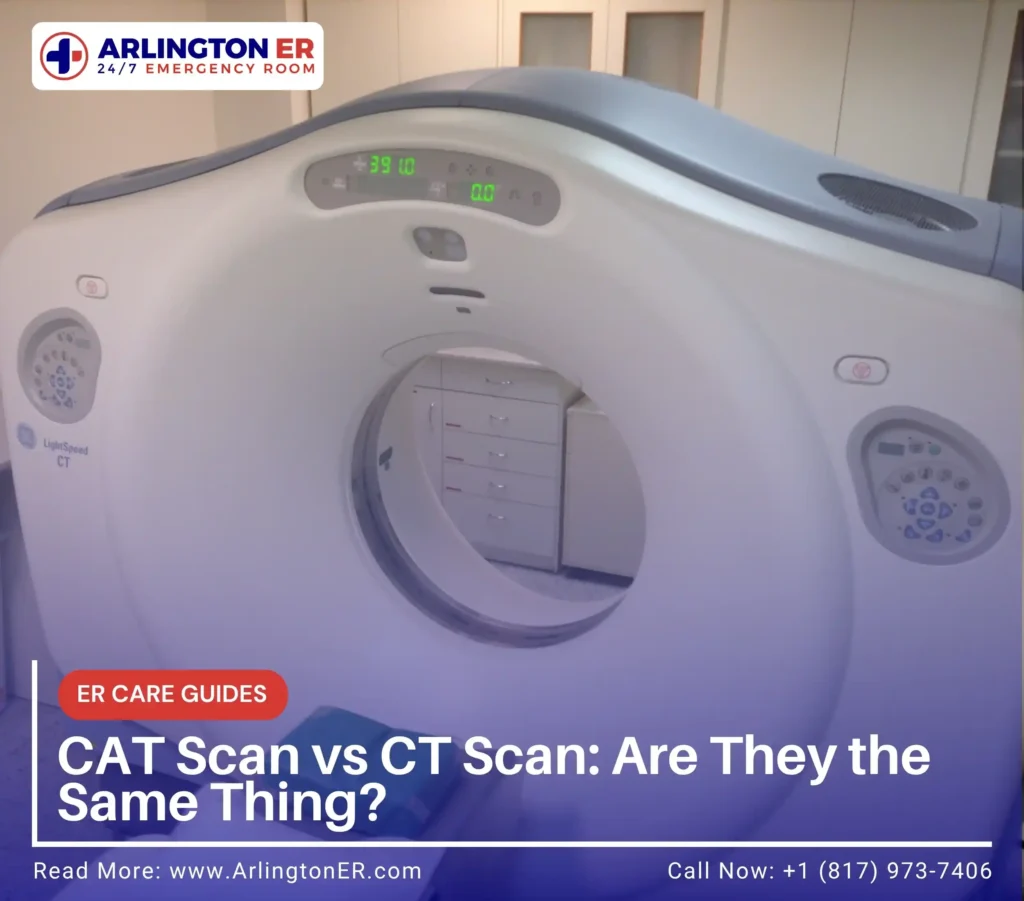
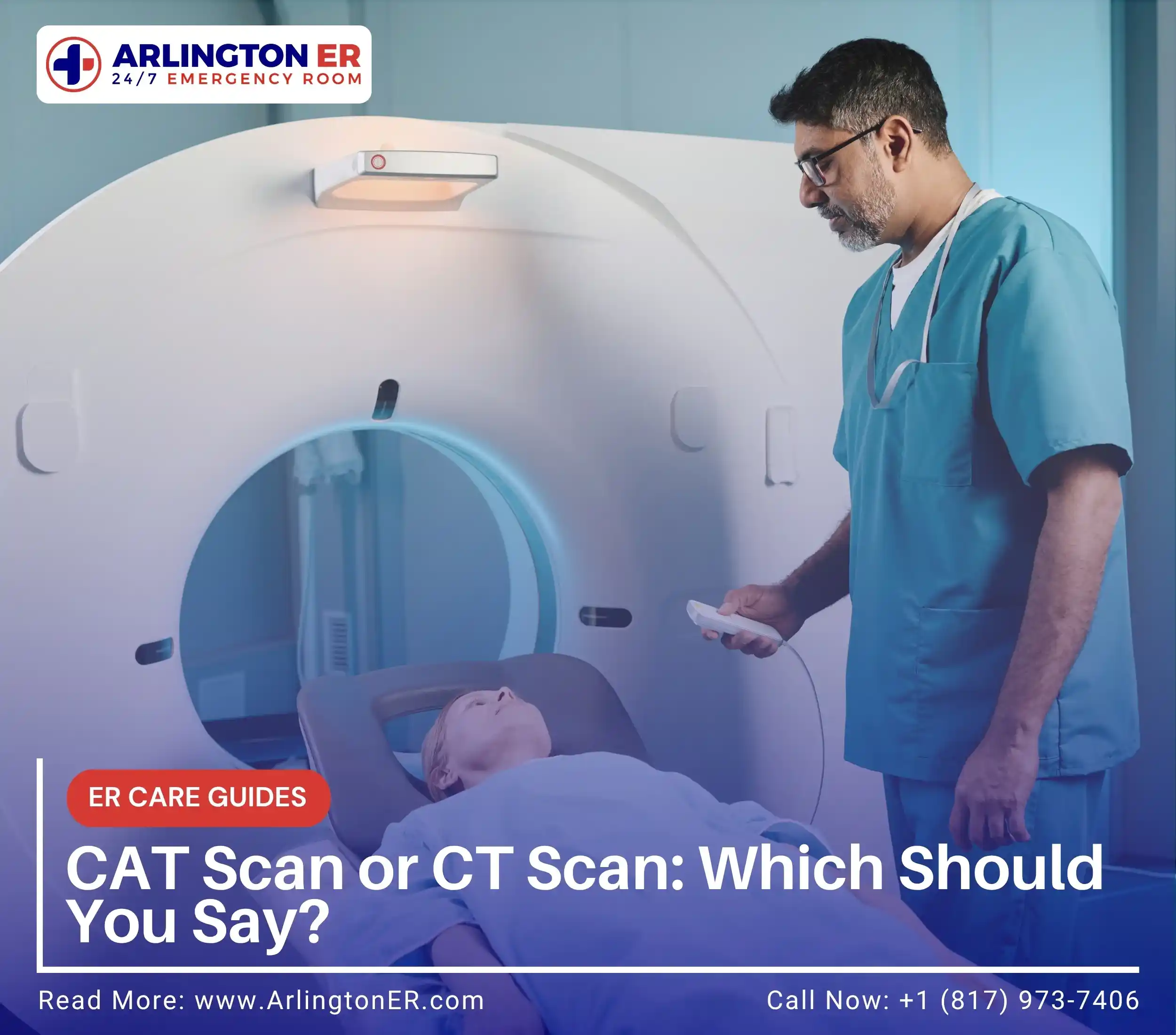
You lie on a table that moves slowly through a ring. The ring is open on both sides, so it’s nothing like the long enclosed tube people picture when they think of an MRI. An X-ray source rotates around you inside that ring, taking hundreds of measurements from every angle.
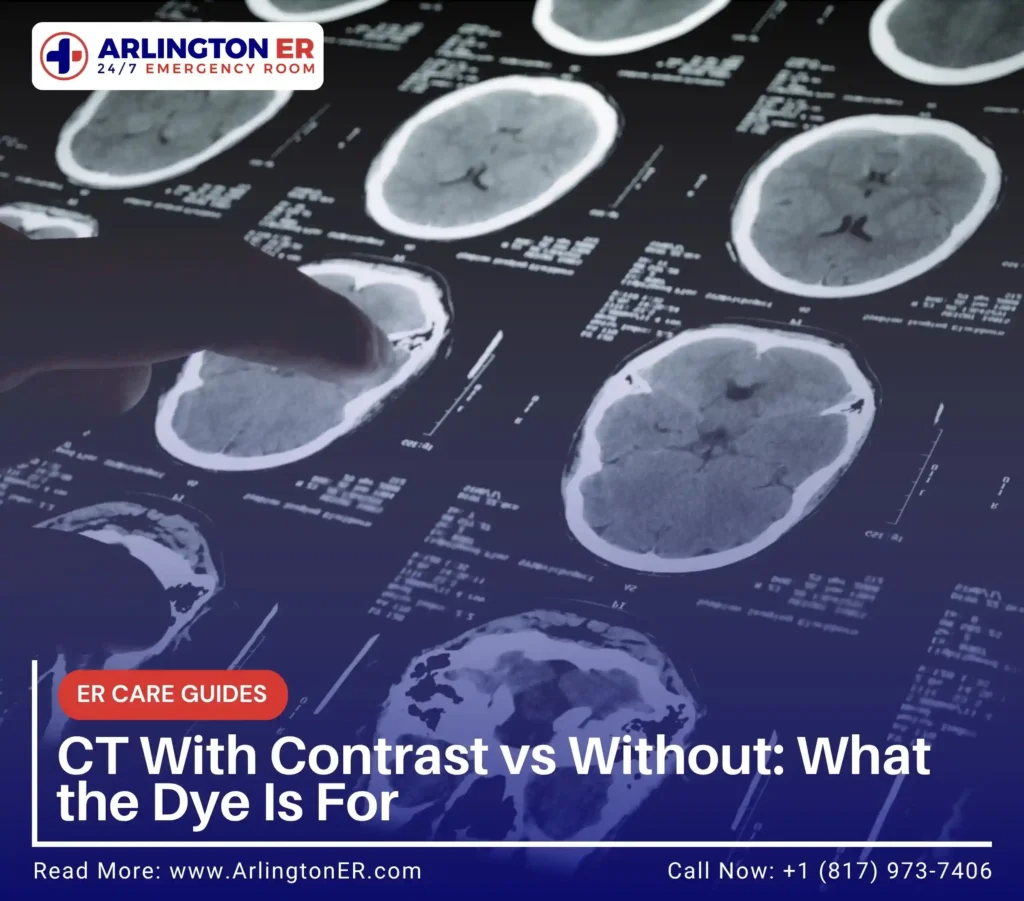
A computer turns those measurements into cross-sectional images. Where a plain X-ray flattens everything into a single overlapping picture, a CT separates the body into layers, so a radiologist can look at one structure without everything in front of it getting in the way.
The scan itself takes seconds. Most of the time in the room is positioning and instructions. You’ll be asked to lie still, and for a chest or abdomen scan, to hold your breath for a few seconds so that breathing doesn’t blur the picture.
What a CT Scan Shows Best
CT is the workhorse of emergency imaging because it’s fast, widely available and very good at the things that need answering quickly.
- Bleeding in the head after an injury
- Fractures, including ones a plain X-ray misses
- Kidney stones
- Appendicitis and other causes of severe abdominal pain
- Blood clots in the lungs
- Internal injuries after a car accident
It’s less useful for soft tissue detail like ligaments, cartilage and the spinal cord, which is where an MRI does better. We cover that comparison in more detail in CT scan vs MRI.
How Much Radiation Is in a CT Scan?
A CT scan uses more radiation than a plain X-ray, and that’s a fair thing to ask about. The honest framing is that the dose is small, the risk from any one scan is very low, and it’s weighed against the risk of not knowing what’s wrong.
When a physician orders a CT in an emergency, the question being answered is usually one where a delay carries real danger: is there bleeding in the brain, is the appendix about to rupture, is there a clot in the lung. Against that, the radiation from one scan is the smaller concern.
If you’re pregnant or think you might be, say so before the scan. It changes the calculation and sometimes changes the test, and an emergency ultrasound can answer some questions without radiation at all.
CAT Scan or CT Scan: Which Should You Say?
Either. Say CAT scan to a radiologist and they’ll know exactly what you mean. CT is the current professional term and the one you’ll see on your paperwork, your bill and your results, but nobody is going to correct you.
The more useful question is not what the scan is called but whether it’s the right test for your symptoms. At Arlington ER the CT scanner is in the building and staffed around the clock, so that question gets answered and acted on in the same visit rather than across two appointments.
Frequently Asked Questions
Yes, exactly the same test. CAT stood for computerized axial tomography, which was shortened to computed tomography as the technology moved past single-plane imaging. Only the name changed.
CT is the current term and the one used on medical records and billing. CAT scan isn’t wrong, just older, and it remains common in everyday conversation.
No. A CT uses X-rays and takes seconds, while an MRI uses magnets and takes much longer. They’re good at different things, and an emergency department reaches for CT far more often.
The scan itself takes seconds to a couple of minutes. Positioning, instructions and the results being read add to that, but the time inside the machine is short.
No. The scan is painless and nothing touches you. You’ll hear the machine working and be asked to lie still, and sometimes to hold your breath briefly.