
Pneumonia is the reason a chest cold is worth taking seriously. It usually arrives on the back of something else, a cold or the flu that seemed to be improving, and it can move from a nuisance to a hospital admission in a day.
We have chest X-ray and laboratory testing on site, which is the only reliable way to tell pneumonia from the illnesses that mimic it. Walk in at any hour, no appointment and no referral required.
The symptoms of pneumonia are a cough producing colored or bloody phlegm, fever with shaking chills, breathlessness, sharp chest pain that worsens when you breathe in, and a tiredness far beyond a normal cold. In older adults it can arrive as confusion with barely any cough at all.
The detail that separates pneumonia from a chest cold is usually the chest pain. A cold makes you cough; pneumonia often makes it hurt to take a deep breath, because the lining of the lung has become inflamed.
That last line matters. An older adult with pneumonia may have no fever, little cough, and simply seem confused or unsteady. It is one of the most commonly missed presentations we see.
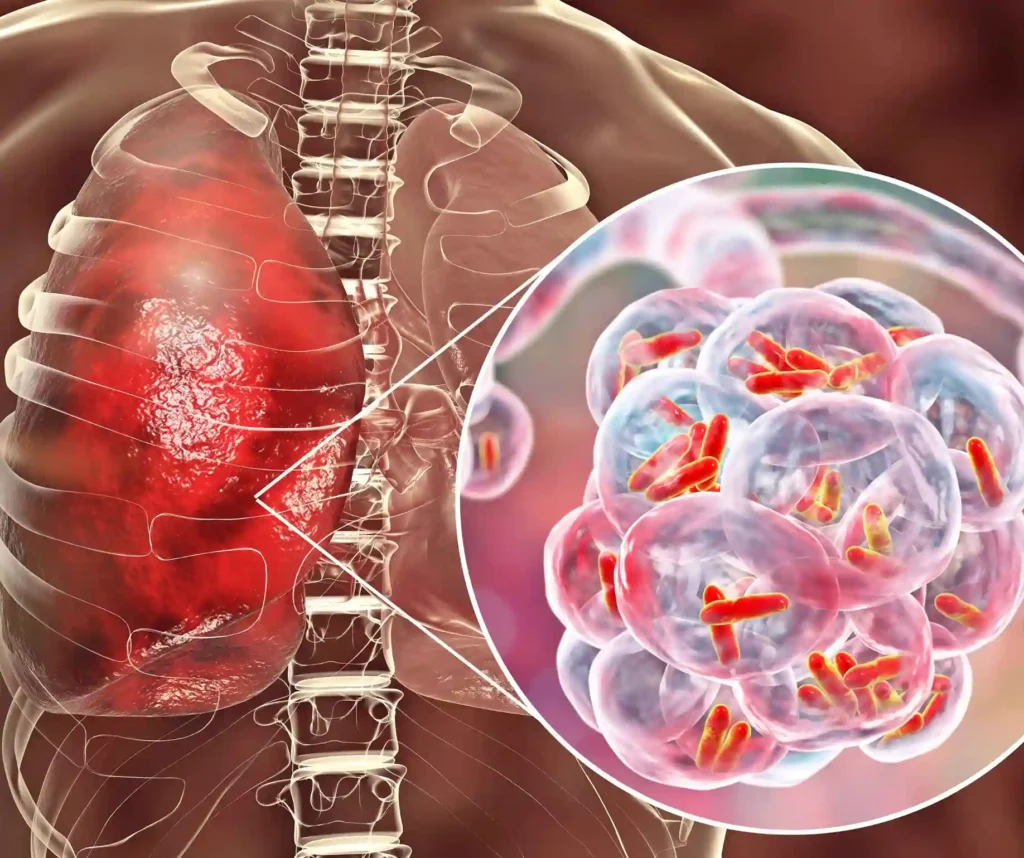

Go to the ER for pneumonia when you are breathless at rest, when your lips or fingertips look blue or gray, when you are confused, when chest pain is severe, or when a fever will not come down. Those signs mean the lungs are struggling to keep oxygen up.
Not all pneumonia needs an emergency room. A younger, otherwise healthy person with a mild case is often managed by their own doctor with treatment at home. What decides the answer is how well the lungs are keeping up, and that is measurable rather than something you can judge by feel.
Breathing rate is the most useful thing to check yourself. Someone breathing noticeably faster than normal while sitting still is working harder than they should have to, even if they insist they feel alright.
Come in the same day if you cannot finish a sentence without stopping for breath, if you are getting worse rather than better after several days, or if you belong to any of the higher-risk groups further down this page.
Bronchitis is inflammation of the airways leading into the lungs. Pneumonia is infection of the lung tissue itself. Bronchitis makes you cough; pneumonia interferes with getting oxygen into your blood, which is why one is usually a nuisance and the other can be dangerous.
From the outside they overlap enough that guessing is unreliable. Both bring a cough, both can bring a fever, and both leave you exhausted. The features that lean toward pneumonia are breathlessness, chest pain on breathing in, shaking chills, and a fever that stays high.
The honest answer is that a chest X-ray is what separates them, and that is exactly why this question sends people to an emergency room. Bronchitis shows nothing on the film. Pneumonia shows an area of lung that should be dark and is not.
That distinction changes the treatment completely. Most bronchitis is viral and gets better on its own. Pneumonia usually needs antibiotic treatment and sometimes needs oxygen, which makes getting the answer right worth more than a guess.

Pneumonia in a healthy thirty-year-old is usually a bad two weeks. In the groups below it carries genuine risk, and the threshold for coming in should be much lower.
Adults over sixty-five. Risk rises steeply with age, and the presentation is often quieter. Confusion, unsteadiness, or a fall can be the first sign, with the cough barely registering.
Children under two. Small airways and small reserves. Watch the breathing rather than the cough: fast breathing, ribs pulling in with each breath, or nostrils flaring means come in now.
Anyone with an existing lung condition. Asthma and chronic lung disease leave less spare capacity to lose, so the same infection produces more breathlessness.
Heart conditions. The heart works harder when oxygen levels drop, and pneumonia is a recognized trigger for cardiac events in people already at risk.
Diabetes or a weakened immune system. Infection is harder to contain and slower to clear, and blood sugar becomes difficult to control at the same time.
Smokers. Smoking damages the mechanism that clears the lungs, which both raises the risk of pneumonia and slows the recovery.
If you recognize yourself here, do not wait for the situation to become clearly serious before being seen. The whole point of coming in early is that treatment is simpler when the lungs are still coping.
A few details make the visit faster. The right-hand column covers the habits that delay a diagnosis or make the illness harder to manage.
| Do this | Never do this |
|---|---|
| Note when the cough started and how it changed | Describe it as just a cough and leave it there |
| Count breaths per minute while resting | Judge breathing by how you feel alone |
| Mention any recent cold or flu that preceded this | Treat the two illnesses as unrelated events |
| Bring a list of your lung and heart conditions | Assume we will find it all in your records |
| Keep drinking, even without an appetite | Stop fluids because eating feels impossible |
| Come in the same day if breathing is affected | Wait for the weekend to pass |
The breathing count in row two is genuinely useful and takes thirty seconds. Sit still, watch the chest rise, and count for a full minute. A resting adult breathing more than about twenty times a minute is working harder than they should be, and that number tells a physician more than any description of how bad the cough sounds.
Row three matters because the sequence is diagnostic. Pneumonia that follows a flu or a cold behaves differently from pneumonia that arrived on its own, and it changes what your physician is looking for.
Your physician measures your oxygen level, listens to your chest, takes an X-ray on site to confirm the diagnosis, runs bloodwork to judge severity, starts antibiotic treatment, and decides whether you are safe to recover at home or need hospital admission.
A clip on the finger shows how well the lungs are transferring oxygen. It is the single most important number here.
Listening reveals where air is not moving normally, and often points to which part of the lung is affected.
The test that confirms pneumonia and rules out bronchitis. Taken and read here, not sent away.
Blood testing shows how hard the body is fighting and whether the infection has spread beyond the lungs.
Antibiotic treatment begins during the visit, with oxygen and fluids where they are needed.
A structured assessment decides whether recovery at home is safe or admission is the right call. We arrange either.
Walking pneumonia is a milder form that leaves people well enough to carry on with their day, which is exactly where the name comes from. It is a genuine lung infection, just a less aggressive one, and it often goes unrecognized for weeks.
The pattern is distinctive. A dry, nagging cough that will not clear, a low fever, headache, and a tiredness people put down to being busy. Nobody feels ill enough to stop, so nobody gets it checked, and the cough drags on for a month.
It spreads easily in schools, offices and households, and a family where several people have had the same lingering cough over a few weeks is a recognizable picture.
Most walking pneumonia does not need an emergency room. It usually needs a diagnosis and treatment from your own doctor, and it clears steadily once identified. What brings it here is when breathlessness appears, when a high fever develops, or when someone in a higher-risk group is affected.
The reason it is worth naming at all is that people wait far too long, assuming a cough that mild cannot be a lung infection. Weeks of feeling half-well is a good enough reason to have your chest listened to.
Pneumonia and bronchitis sound similar through a stethoscope. The film is what actually separates them.
A structured score weighs age, oxygen, bloodwork and other conditions to judge whether home is safe.
Pneumonia in an older patient can present as confusion alone. We investigate that rather than explaining it away.
Pneumonia should clear on imaging as well as in how you feel. We tell you when that repeat film is due.
A pneumonia visit is billed as an emergency visit plus the chest X-ray and laboratory work your physician orders. We bill most major private insurance plans and file the claim for you. Arlington ER is out-of-network for all private plans, but under the federal No Surprises Act an emergency visit is still processed at your in-network cost-sharing, so your share depends on your own deductible and coinsurance.
Pneumonia has a cost consideration worth understanding, because it is the one condition here where the decision made at the end of the visit matters more financially than anything during it. If you are well enough to recover at home, the visit ends and the cost stops there. If admission is needed, the hospital stay is billed separately by that hospital and is by far the larger figure.
That is precisely why coming in earlier tends to be cheaper as well as safer. Pneumonia caught while oxygen levels are still normal is usually treated at home. The same infection three days later, with the lungs struggling, is much more likely to need admission. The visit that felt premature is often the one that avoided a hospital bill.
The federal No Surprises Act protects patients from surprise bills for emergency care. Our Patient Billing Advocates will go through your Explanation of Benefits with you, and our Financial Support and Care Relief Program can reduce or remove out-of-pocket costs for those who qualify. See our Billing Disclosure page.
Arlington ER runs the BioFire SpotFire respiratory panel on site. It is a molecular test that checks for up to 15 respiratory infections from a single swab, with results in about 15 minutes. Most clinics still use an older antigen test that checks for one or two infections and misses more cases.
For billing questions: 817-973-7406 or info@arlingtoner.com

Arlington ER serves Arlington, Texas from 1607 S. Bowen Rd., on the west side of Bowen just south of Pioneer Parkway. Parking is directly outside the entrance, which matters when walking any distance leaves you short of breath.
We are minutes from central Arlington and the Parks Mall, and a short drive from Dalworthington Gardens, Kennedale, Grand Prairie, and Mansfield. From I-20, exit at Bowen Road and head north. From Highway 303 or Pioneer Parkway, turn south onto Bowen and we are on your right. Our Contact Us page has anything else you need.
If breathing is difficult, call 911 rather than driving. We are open every hour of every day, holidays included, with no appointment or referral required.
If you are short of breath at rest, if a fever will not come down, or if a chest cold has turned into something that hurts to breathe through, walk in and let us take the X-ray that settles it.
Most people feel meaningfully better within a week of starting treatment, but the tiredness and cough often linger for a month or more. That slow tail is normal and not a sign treatment failed.
The germs that cause it can spread, though catching them does not always lead to pneumonia. Usual precautions apply: cover coughs, wash hands, and keep away from anyone frail while you are unwell.
Not necessarily. Many people recover at home once treatment has started. Admission is for low oxygen, significant other conditions, or an inability to keep treatment down.
Occasionally, particularly very early or in someone dehydrated. If the examination and bloodwork point to pneumonia, your physician treats it and may repeat imaging rather than relying on one film.
To confirm the lung has cleared, and because occasionally something else was hiding behind the infection. It is a routine safety check rather than a sign anything is wrong.
Yes, at any age. In children we watch breathing rate, chest movement and feeding closely, since those change before a child looks obviously unwell.
A photo ID and insurance card if handy, a list of your lung and heart conditions, and the date this illness started. Any recent chest imaging is useful for comparison.
Yes. Ask at discharge and we send the X-ray and results to your primary care physician, which matters here because they will be arranging your follow-up imaging.
Medically reviewed by Rahman Mohammed, MD | Last Updated: August 26, 2026