
An EKG shows what your heart is doing at this exact moment. A cardiac enzyme test shows what it has been through over the last several hours. That difference is why both are run together, and why one normal result is not always the end of the conversation.
Arlington ER runs cardiac enzyme testing in our own laboratory, with results back in minutes rather than sent out and waited on. If you are having chest symptoms right now, call 911 rather than driving here.
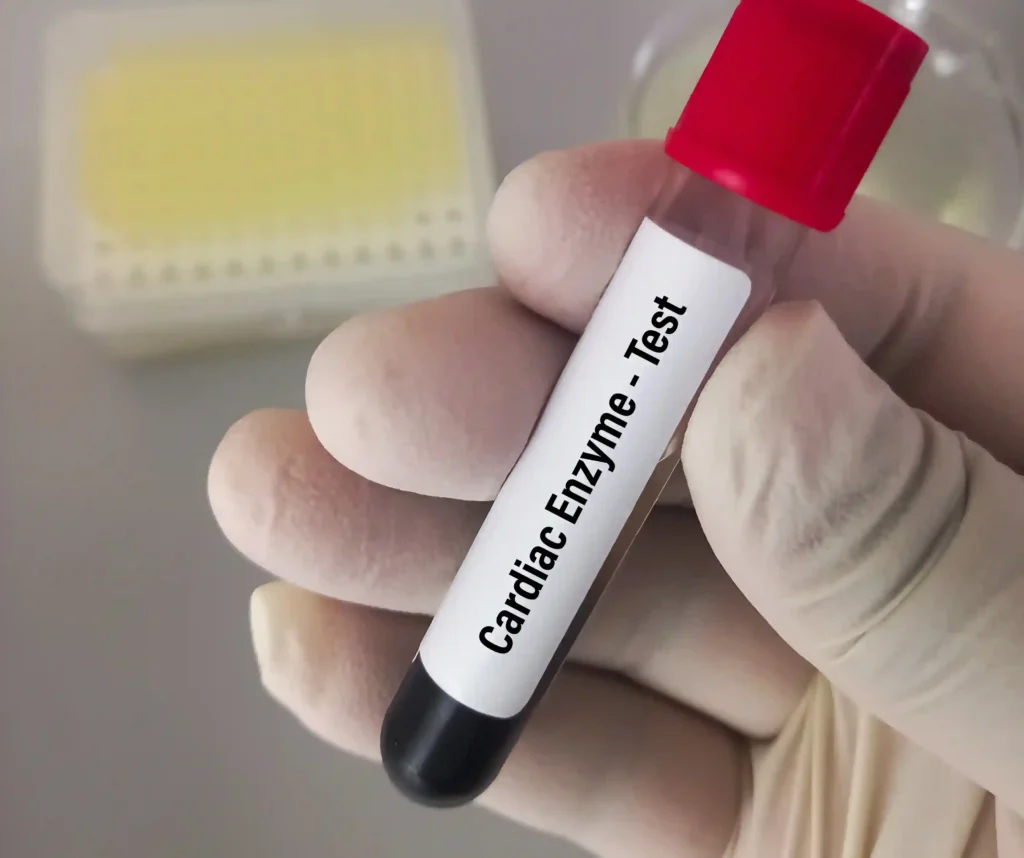
A cardiac enzyme test is a blood test that measures proteins released into the bloodstream when heart muscle is damaged or strained. The main one measured today is troponin, and it is the most reliable single indicator that heart muscle has been injured.
The principle is simple. Healthy heart muscle keeps these proteins inside its cells. When cells are starved of blood and begin to die, the proteins leak out and appear in the blood, where a laboratory can measure them in very small quantities.
This test is ordered by a physician as part of an evaluation, not requested from a menu. It only means something when read alongside your symptoms, your history, and your EKG.
Because these proteins take time to appear in the blood. If your symptoms started an hour ago, the first sample may be completely normal even during a genuine cardiac event. The second draw shows whether the level is climbing, and the trend matters more than any single number.
This is the part patients find most frustrating, and it is worth understanding rather than resenting. A single normal result taken early proves only that the level was normal at that moment. It does not prove your heart is fine.
Watching the trend answers a different question. A level that is flat and normal across two draws is genuinely reassuring. A level that has risen between them tells your physician something is happening now, even if the first result looked perfect and the EKG appeared unremarkable.
It is the reason a chest pain evaluation often takes a few hours rather than twenty minutes. Leaving after the first result is how real cardiac events get sent home, and we will always explain why we are asking you to stay.
Yes, and this catches people off guard. A raised troponin means heart muscle is under strain; it does not automatically mean a blocked artery. Kidney disease, a clot in the lung, severe infection, an abnormal heart rhythm, heart failure, and even extreme exercise can all raise the level.
Modern tests are extraordinarily sensitive, which is a genuine advance and also the reason results need careful interpretation. They can detect strain so small that older tests would have reported nothing at all.
This is precisely why the number is never read on its own. Your physician weighs the level against your symptoms, your EKG, your history, and how the value is trending. The same figure can mean very different things in two different patients.
So if you are told your troponin is slightly raised, do not assume the worst. It means the investigation continues rather than concludes, and a good number of those investigations end with a cause that has nothing to do with blocked arteries at all.

A few details change how your results are read. The right-hand column lists the things people leave out, usually because they seem irrelevant to a blood test.
| Do this | Never do this |
|---|---|
| Give the exact time your symptoms began | Round it to the nearest few hours |
| Mention any kidney condition you have | Assume kidneys are unrelated to a heart test |
| Say if you did heavy exercise in the last day | Leave out a marathon or a hard gym session |
| Bring results of any previous cardiac testing | Delay coming in while you look for them |
| Plan to stay for the repeat draw | Leave after the first result comes back normal |
| Mention heart disease in close family | Treat family history as background detail |
The kidney row surprises almost everyone. These proteins are cleared from the blood by the kidneys, so reduced kidney function can leave the level persistently higher without anything being wrong with the heart. Your physician needs to know in order to read the result correctly.
The exercise row matters for the same reason. A hard endurance session can raise the level for a day or two in a completely healthy person, and it is far better to mention it than to have it discovered as a mystery.
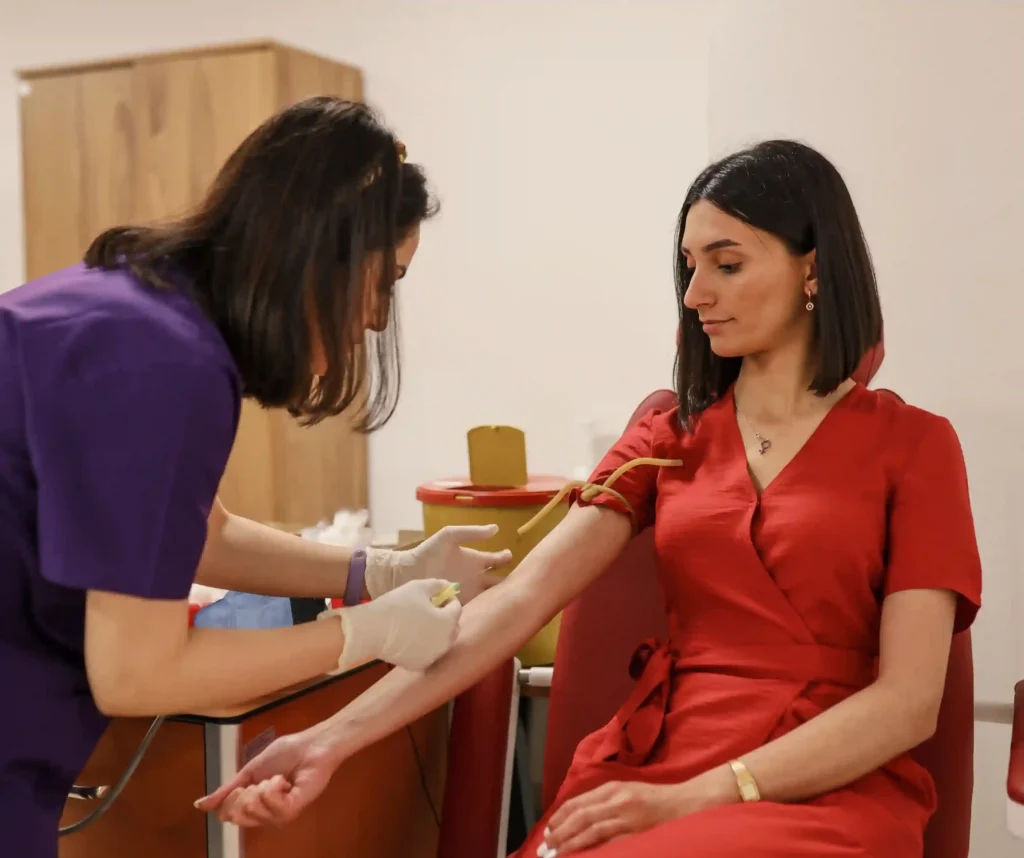
Blood is drawn shortly after you arrive, run in our laboratory here, and read alongside your EKG by the physician treating you. A second sample follows a few hours later, and the two together give an answer that neither could give alone.
A 12-lead tracing runs within minutes of arrival. It shows the present moment, which the blood test cannot.
A standard draw from the arm. If an IV line is already in place, the sample is usually taken from that instead.
The sample is analyzed here in the building. Results come back in minutes rather than going to an outside lab.
Your rhythm, blood pressure and oxygen are watched throughout, so any change is caught as it happens.
A second sample a few hours later reveals the trend. This is the step that catches what a single early result misses.
You are told what the numbers mean in plain language, what has been ruled out, and what happens next.
Results in minutes. Sending cardiac samples across town and waiting on a callback is not how this should work.
Nobody should feel kept here without reason. The trend is the point, and we say so up front.
Kidney function, recent exercise, rhythm and history all shape what a given value actually means for you.
If your heart is cleared, we keep looking until we can tell you what did cause the symptoms.
Anyone whose symptoms could plausibly involve the heart. That is a deliberately wide net, because the conditions this test catches do not always announce themselves as chest pain.
Chest discomfort of any description. Pressure, tightness, squeezing, burning, or a weight on the chest. The words people use vary enormously, and none of them rules a cardiac cause in or out on their own.
Symptoms above the waist that arrive together. Jaw ache, arm heaviness, upper back pain, or shoulder discomfort accompanied by sweating, nausea, or breathlessness. This combination is common and frequently dismissed.
Breathlessness with no obvious explanation. Particularly when it comes on with exertion and eases with rest, and most particularly in someone who has not previously been short of breath.
Unusual fatigue in women and older adults. A cardiac event can present as overwhelming tiredness with very little chest pain at all. It is one of the most under-recognized presentations we see.
People living with diabetes. Years of altered nerve signaling can blunt the pain that would otherwise warn someone, so the threshold for testing is deliberately lower.
Anyone with an abnormal EKG or a serious rhythm disturbance. The tracing raises the question and the blood test helps answer whether muscle has been affected.
If you are wondering whether your symptoms qualify, that uncertainty is itself a reason to be assessed. Being told your heart is fine after proper testing is a good outcome, and it is one we deliver far more often than the alternative.
Cardiac enzyme testing is billed as part of an emergency visit rather than as a standalone lab fee, along with the EKG and any imaging your physician orders. We bill most major private insurance plans and file the claim for you. Arlington ER is out-of-network for all private plans, but under the federal No Surprises Act an emergency visit is still processed at your in-network cost-sharing. Both EKG & the enzyme test run through our on-site lab, so the result comes back during your visit rather than days later.
There is one line on the bill that generates more questions than any other here, so here it is in advance: the second draw appears as a separate charge. Two entries for what patients think of as one test looks like an error, and it is not. Each sample is a distinct test run at a distinct time, and the comparison between them is the entire diagnostic value.
Put plainly, the repeat is not a duplicate of the first. It is the test that catches what the first one could not have shown yet. Refusing it to avoid the second charge is how a genuine cardiac event goes home undetected, which is a far more expensive outcome by any measure.
The federal No Surprises Act protects patients from surprise bills for emergency care. Our Patient Billing Advocates will walk through your Explanation of Benefits line by line, and our Financial Support and Care Relief Program can reduce or remove out-of-pocket costs for those who qualify. Details are on our Billing Disclosure page.
For billing questions: 817-973-7406 or info@arlingtoner.com
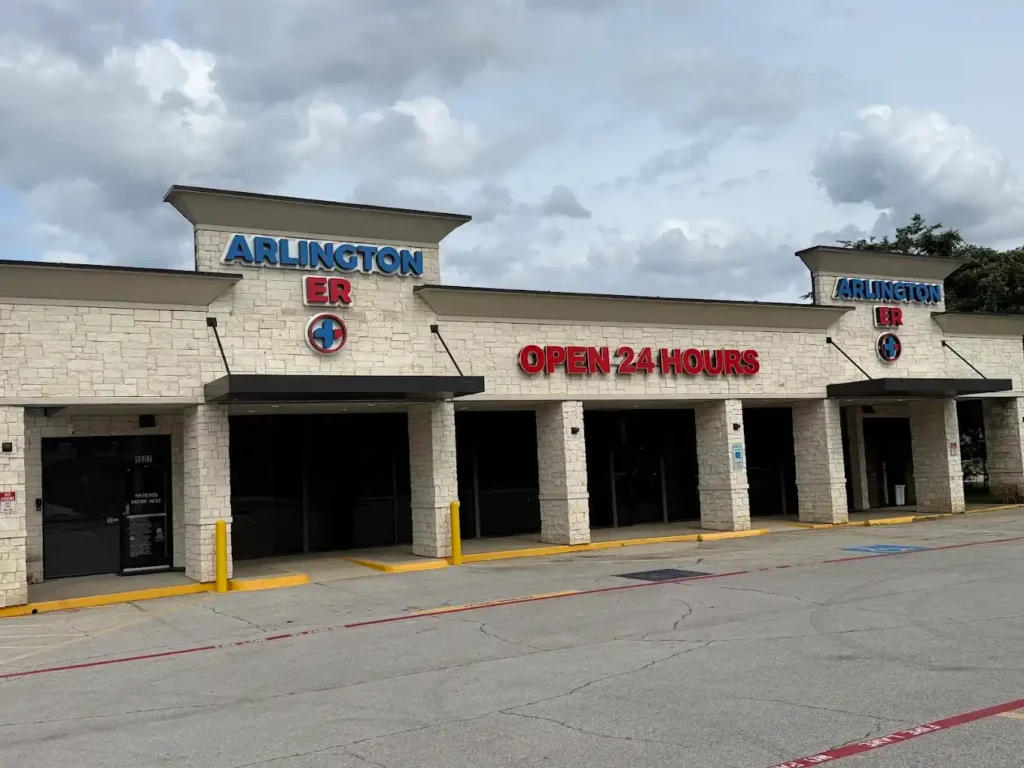
Arlington ER serves Arlington, Texas from 1607 S. Bowen Rd., on the west side of Bowen just south of Pioneer Parkway. Parking is directly outside the entrance, so there is no garage to cross at the worst possible moment.
We are minutes from central Arlington and the Parks Mall, and an easy drive from Dalworthington Gardens, Kennedale, Grand Prairie, and Mansfield. From I-20, exit at Bowen Road and head north. From Highway 303 or Pioneer Parkway, turn south onto Bowen and we are on your right. Our Contact Us page covers the rest.
For active chest symptoms, call 911 rather than driving. We are open every hour of every day, holidays included, with no appointment or referral required.
If you are having chest symptoms, the testing that settles it is a few minutes away and running around the clock. Call 911 if the symptoms are severe. If they are milder but will not leave your mind, walk in and let us finish the question properly.
Not as a standalone service. A physician orders it as part of evaluating symptoms, because the result only means something alongside your EKG, history and examination. Come in and be assessed.
Usually a few hours, and your physician sets the exact interval based on when your symptoms started. That gap is what allows a rising trend to become visible.
No. An EKG can look entirely normal during a cardiac event, particularly early on. The two tests answer different questions, which is exactly why they are run together.
Your physician looks at how high, how fast it is moving, and what else fits. Some raised results lead to urgent cardiac transfer; others point toward a cause unrelated to blocked arteries.
No. Eating does not affect the result, and you should never delay coming in for chest symptoms on account of having just eaten. Come as you are.
No. Cholesterol testing estimates long-term risk over years. This test detects heart muscle injury happening now. Different purposes entirely, and one cannot substitute for the other.
Yes, on request at discharge. We send results to your cardiologist or primary care physician and give you a copy, which is worth keeping since future results are read against this one.
A few minutes. We sit on S. Bowen Rd. just south of Pioneer Parkway, between north and south Arlington. The postal address reads Pantego, a small town enclosed within Arlington.
Medically reviewed by Rahman Mohammed, MD | Last Updated: September 23, 2026