
Head injuries are unusually good at looking fine. Someone takes a knock on the field or clips a cabinet door, insists they are alright, and everyone moves on. Hours later the headache is worse and nobody can say whether that is normal.
Our concussion emergency room in Arlington answers that question properly, with a physician assessment and a CT scanner on site if the examination raises anything worth ruling out. Walk in at any hour, no appointment and no referral needed.
The signs of a concussion are headache, confusion or feeling dazed, dizziness, nausea, sensitivity to light and noise, blurred vision, and trouble remembering what happened. They can appear immediately or creep in over several hours, which is what catches people out.
Not all of them show up together, and some are easier for other people to notice than for the person themselves. A partner who says you keep asking the same question is describing a concussion symptom just as clearly as a headache would.
These are the symptoms of the concussion itself. The next section covers a different and more urgent list: the signs that something more serious may be happening inside the skull.
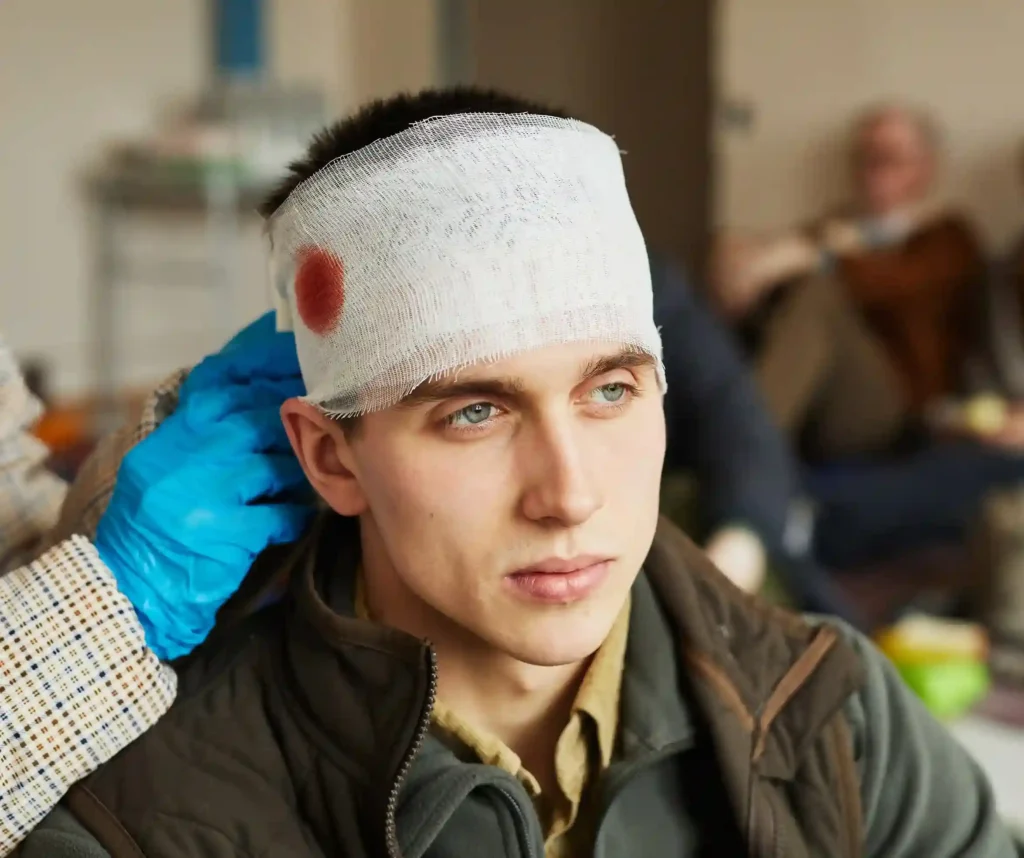

Go to the ER immediately for a head injury with repeated vomiting, a headache that keeps worsening, confusion that deepens, one pupil larger than the other, weakness down one side, a seizure, clear fluid from the nose or ears, or any loss of consciousness. These point to bleeding inside the skull.
That list is deliberately different from the concussion symptoms above. A concussion is an injury to how the brain functions and it typically settles with rest. Bleeding inside the skull is a structural problem that gets worse with time, and the two can start out looking identical in the first hour.
What separates them is direction of travel. Concussion symptoms tend to hold steady or slowly ease. Anything that is getting worse hour by hour needs looking at tonight, not tomorrow.
Two groups deserve a lower threshold: anyone taking blood-thinning treatment, and older adults, because both can bleed slowly after a knock that seemed minor at the time. If either applies, come in even when the injury looked trivial.
Yes, and it is by far the more common way it happens. Most concussions involve no loss of consciousness at all. Being knocked out is neither required for the diagnosis nor a reliable measure of how serious the injury is.
This single misunderstanding sends more people home untreated than any other. Someone gets up right away, walks off the field, holds a normal conversation, and everyone concludes it cannot have been a concussion because they never went out. The brain does not work that way.
The same myth attaches to a visible injury. There is often no cut, no bruise, and nothing to see afterwards. A concussion is a disturbance in how the brain is functioning, not damage you can photograph, and a completely unmarked head tells you nothing about what happened inside it.
Nor does the force have to be dramatic. A fall from standing height, a car stopping suddenly, or a knock against a low doorframe are all more than enough. The brain does not need the impact to look impressive.
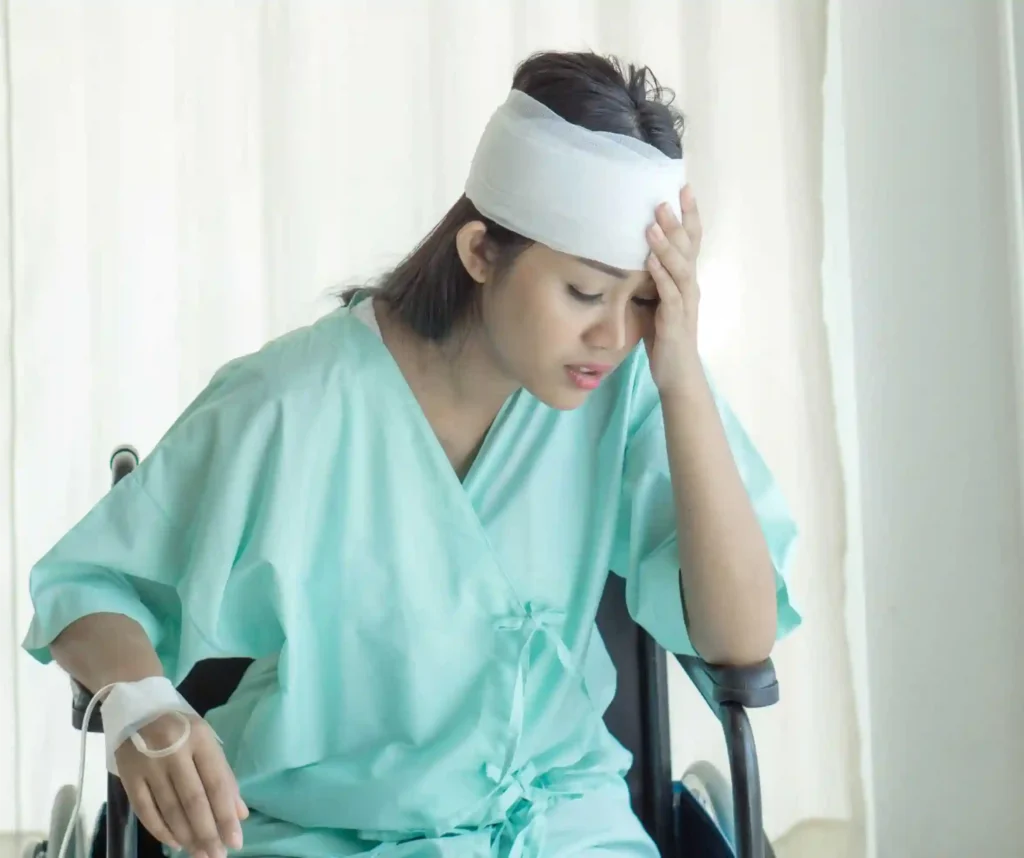
The first few hours matter more than people realize, and most of the mistakes come from wanting to carry on as normal.
| Do this | Never do this |
|---|---|
| Stop the activity right away | Return to play or the game that day |
| Have someone stay with them for 24 hours | Leave them alone to sleep it off |
| Write down the time and how it happened | Rely on their account if memory is patchy |
| Rest from screens, reading, and noise | Push through work to keep the day going |
| Watch for symptoms getting worse | Assume feeling fine at first means all clear |
| Come in if anything is worsening | Drive yourself while dizzy or foggy |
On sleep: it is safe for someone with a concussion to sleep, and the old advice about keeping them awake all night has been retired. What matters is that somebody is nearby and able to check they can be roused normally.
The return-to-play line is the one that carries the most weight. A second knock before the first has healed is far more dangerous than either would have been alone, which is why no sport is worth finishing the match for.
Your physician takes a careful account of the injury, runs a structured neurological examination, decides whether imaging is warranted, watches for any change while you are here, and sends you home with clear written instructions on what to watch for and when to return.
The mechanism matters. A fall from height and a knock on the field carry different risks, so we ask for the details.
A structured check of memory, balance, coordination, eye movement, strength and reflexes, scored so changes show up.
If the examination raises concern about bleeding, our on-site CT scanner answers it in minutes rather than days.
Some head injuries earn a period of watching in the department, because how symptoms move over an hour is itself information.
You leave with a printed list of warning signs, so nobody has to remember a conversation held while concussed.
Clear guidance on school, work, screens and sport, and a referral onward if symptoms are likely to linger.
No. Most concussions do not need imaging at all. A CT scan looks for bleeding and fractures, and a straightforward concussion shows neither, so a normal scan is exactly what you would expect and it does not confirm or exclude the concussion itself.
That surprises people, who often arrive expecting the scan to be the whole point of the visit. The diagnosis is made from the history and the examination. Imaging answers a narrower and more urgent question: is there bleeding that needs acting on tonight?
Your physician weighs specific features when deciding: age, whether consciousness was lost, repeated vomiting, worsening headache, seizure, a dangerous mechanism such as a fall from height, blood-thinning treatment, and signs of a skull fracture. Where those are absent and the examination is normal, a scan usually adds radiation without adding an answer. Our CT imaging page covers how we make that call.
Where any of them are present, the scanner is here and the answer takes minutes. What we will not do is scan simply because it feels reassuring. Being told your examination is normal and no imaging is warranted is a good outcome, not a corner cut.
Whoever saw it happen often holds details the patient cannot recall. We ask them directly rather than working around them.
We scan on clinical grounds, not to reassure. A normal exam with no risk features rarely needs radiation.
Older adults and anyone on blood-thinning treatment can bleed slowly after a minor knock. They get scanned more readily.
Written warning signs, and honest guidance on sport, school and screens. Recovery advice is part of the treatment.
Most adults recover within two weeks and most children within four, though a meaningful minority take longer. Recovery is rarely a straight line, and a good day followed by a bad one is normal rather than a setback.
The pattern usually goes like this. The first few days are the worst, with headache, fogginess and tiredness dominating. Then the symptoms start reappearing only when you push, showing up after a long screen session or a noisy room rather than sitting there constantly. That shift is progress even though it can feel like relapse.
Complete rest in a dark room for a week is out-of-date advice and tends to slow people down. Current thinking favors a day or two of genuine rest, then a careful return to light activity that stops short of provoking symptoms. Gentle movement generally helps.
Children and teenagers usually need longer than adults, and returning to school before they are ready often backfires. A phased return, with shorter days and reduced screen work, gets them back faster than pushing through.
If symptoms are still significant beyond a few weeks, that is worth a specialist review rather than more waiting. Persistent symptoms respond to targeted rehabilitation, and there is no prize for enduring them quietly.
A head injury visit is billed as an emergency visit, plus a CT scan only if your physician orders one. We bill most major private insurance plans and file the claim for you. Arlington ER is out-of-network for all private plans, but under the federal No Surprises Act an emergency visit is still processed at your in-network cost-sharing, so your share depends on your deductible and coinsurance.
Head injuries carry a billing quirk that catches families out, so here it is in advance. Concussion is one of the few conditions where a second visit is genuinely appropriate: if symptoms worsen over the following days, you should come back, and that return visit is billed as a new emergency visit. It is not a duplicate charge and it is not an error. Knowing that in advance stops people staying home with worsening symptoms because they think they have already paid for this.
Sports injuries add a second wrinkle. School and league insurance sometimes covers athletic injuries separately from family health insurance, and the two claims are filed differently. Tell our registration team it happened during organized sport and they will point you at the right process rather than leaving you to discover it later.
The federal No Surprises Act protects patients from surprise bills for emergency care. Our Patient Billing Advocates will go through your Explanation of Benefits with you, and our Financial Support and Care Relief Program can reduce or remove out-of-pocket costs for those who qualify. See our Billing Disclosure page for the full picture.
For billing questions: 817-973-7406 or info@arlingtoner.com
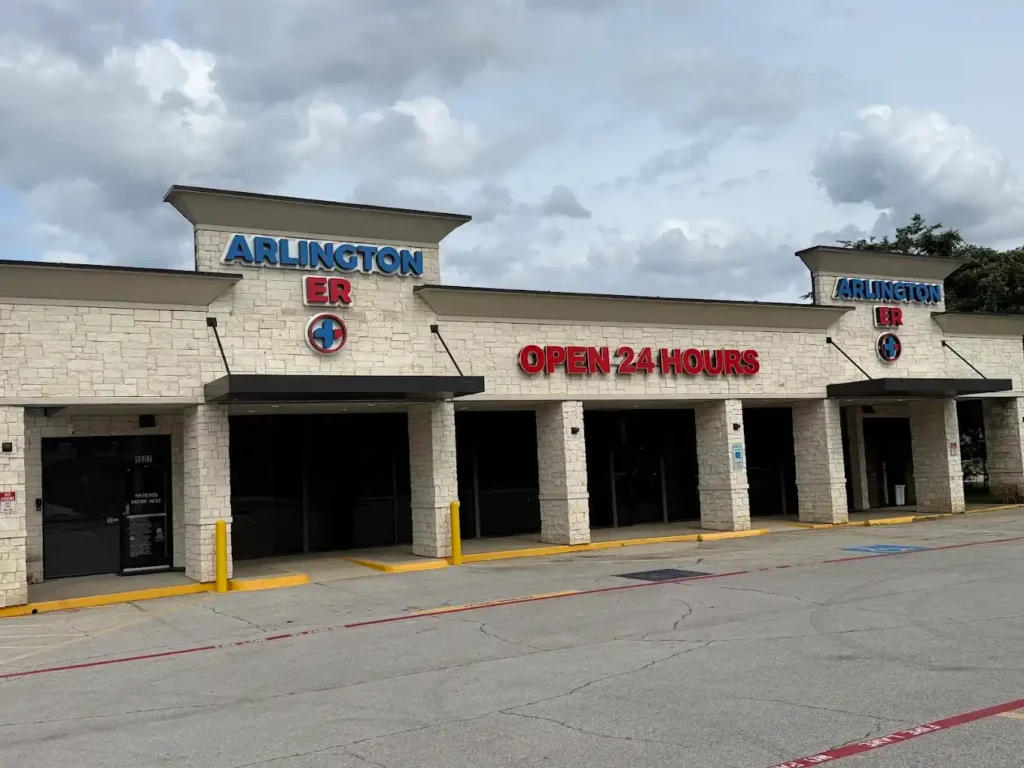
Arlington ER serves Arlington, Texas from 1607 S. Bowen Rd., on the west side of Bowen just south of Pioneer Parkway. Parking is directly outside the entrance, and the lighting inside can be dimmed if bright light is bothering you.
We are minutes from central Arlington and the Parks Mall, and a short drive from Dalworthington Gardens, Kennedale, Grand Prairie, and Mansfield, which makes us a straightforward stop straight from a field or a gym. From I-20, exit at Bowen Road and head north. From Highway 303 or Pioneer Parkway, turn south onto Bowen and we are on your right. Our Contact Us page has the rest.
Please do not drive yourself if you are dizzy or foggy. We are open every hour of every day, holidays included, with no appointment or referral required.
A concussed brain is not well placed to judge its own condition. If you saw the knock and something seems off, trust that over the reassurance you are being given. Walk in and let a physician settle it properly.
Yes. The old advice about keeping someone awake all night has been retired. What matters is that another adult is nearby and can check they rouse normally and behave as expected.
Straight away if there is vomiting, confusion, a worsening headache, or any loss of consciousness. Otherwise the same day is sensible, since symptoms often develop over the first few hours.
School usually resumes before sport, often on a shortened day. Contact sport waits until symptoms have fully cleared, because a second knock too soon is the genuinely dangerous scenario.
A photo ID and insurance card if handy, and ideally whoever witnessed the injury. Their account of what happened is often the single most useful thing you can bring.
Come in. Delayed symptoms are common with concussion, and they are also how slow bleeding announces itself. A return visit is entirely appropriate and we would rather see you again.
Yes. Ask before you leave and we will provide written documentation of the visit and any activity restrictions, which schools and coaches generally require before clearing a return.
Yes. Ask at discharge and we send records to your primary care physician or pediatrician, and hand you a copy so any follow-up never waits on paperwork arriving somewhere.
A few minutes. We are on S. Bowen Rd. just south of Pioneer Parkway, which makes us a direct stop from most Arlington schools and sports fields. The postal address reads Pantego, a small town enclosed within Arlington.
Medically reviewed by Rahman Mohammed, MD | Last Updated: August 22, 2026