
There is a point where drinking water stops working. Once someone cannot keep fluids down, or has lost more than they can replace, sipping from a glass is no longer a match for the problem.
Arlington ER provides IV fluids and hydration therapy around the clock, delivered by an emergency team that also looks for the reason you became dehydrated in the first place. No appointment, no referral, and on-site testing if your physician needs to know what else is going on.
You need IV fluids when you cannot keep liquids down, when you have been losing fluid faster than you can drink it back, or when dehydration has already reached the point of dizziness, confusion, or a racing heart. At that stage drinking is too slow to catch up.
The distinction is simple once you see it. Mild dehydration is a supply problem, and drinking solves it. What brings people here is a delivery problem: the stomach is rejecting everything, or the losses are outrunning anything a glass can replace.
Confusion and drowsiness are the ones to act on immediately. By the time dehydration is affecting how someone thinks, it has stopped being a matter of comfort.
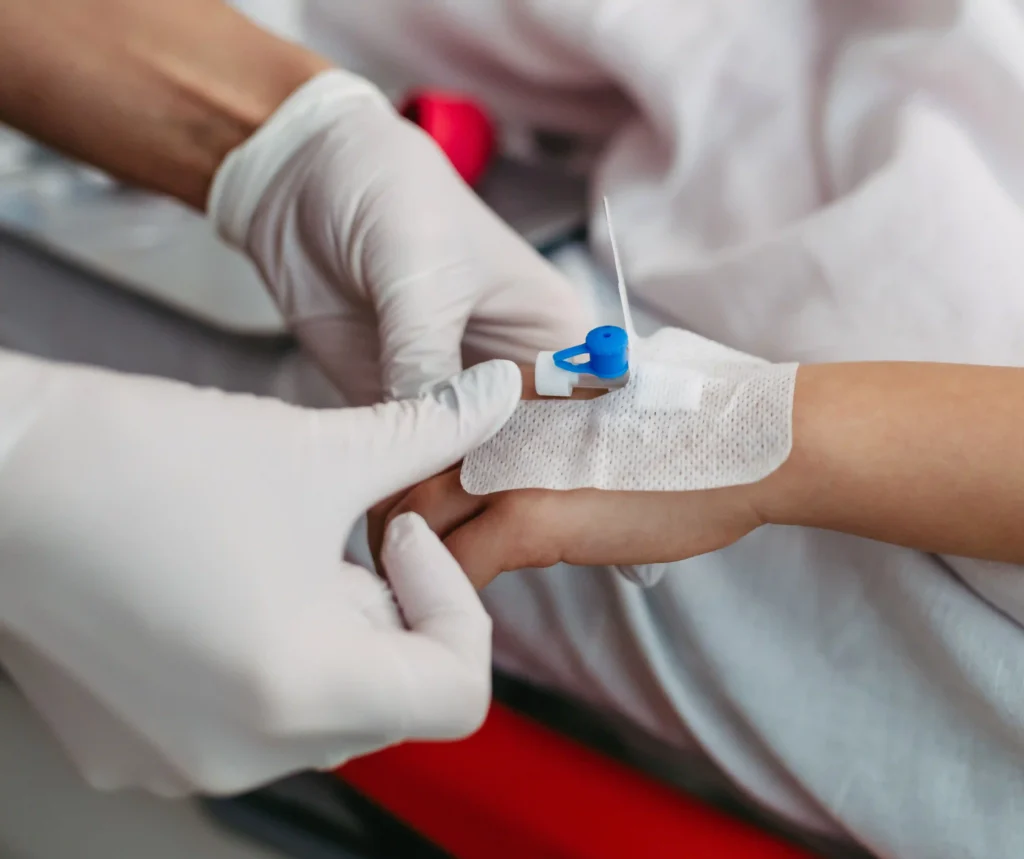

IV hydration therapy delivers sterile fluid and electrolytes directly into a vein through a small tube in your arm. Because it bypasses the stomach entirely, it works whether or not you can keep anything down, and the body absorbs all of it rather than a fraction.
A thin catheter goes into a vein, usually at the inside of the elbow or the back of the hand. Fluid runs from a bag through a line and into the bloodstream at a rate your physician sets. You stay awake and comfortable throughout, and most people are on their phone within a few minutes of it starting.
What goes into the bag depends on what you have lost. Someone dehydrated from a stomach illness has lost a different mix from someone who collapsed working outdoors in August, and the on-site laboratory tells your physician which it is rather than leaving it to guesswork.
Most people notice a difference within the first twenty to thirty minutes, and a typical bag runs over roughly an hour. The improvement builds steadily rather than arriving all at once, and the headache usually eases before the tiredness does.
The speed comes from the route. Anything you drink has to be absorbed through the stomach and intestines, which takes time even when it works, and takes forever when you are nauseated. Fluid into a vein is already where the body needs it.
How many bags you need depends on how far behind you started. Someone mildly dry after a long shift outdoors may need one. Someone who has been unable to keep water down since yesterday may need more, and your physician will reassess between bags rather than committing to a number at the start.
We would rather set an honest expectation than a flattering one. If you arrive severely dehydrated, you should plan on a few hours here, not twenty minutes.

Young children, older adults, and anyone with a stomach illness that has lasted more than a day. These three groups dehydrate faster and show it later, which is a difficult combination.
Young children. A small body has a small reserve, and a child can go from playing to seriously dehydrated within a day of vomiting. Fewer wet diapers, no tears when crying, and unusual sleepiness are the signs worth acting on. Our pediatric emergency room handles this every week.
Older adults. The sense of thirst dulls with age, so an older person can be significantly dehydrated without ever feeling thirsty. Confusion is often the first sign a family notices, and it is easy to mistake for something else entirely.
Anyone with a stomach illness past the one-day mark. Vomiting and diarrhea together drain fluid from both ends faster than drinking can replace it, and this is the single most common reason people need IV fluids here. Kidney stone pain that causes persistent vomiting does the same thing.
People who work or exercise outdoors in Texas summers. Heat illness arrives faster than most people expect, and the point where you stop sweating is the point to stop everything and get help.
Anyone with a fever that will not settle. A high temperature burns through fluid quietly, which is why fever and dehydration so often turn up together.
A few small things make the visit faster and safer. The right-hand column is where good intentions usually go wrong.
| Do this | Never do this |
|---|---|
| Note when you last kept fluid down | Guess at it later from memory |
| Keep sipping small amounts if you can | Force large volumes while nauseated |
| Wear a short sleeve or something loose | Arrive in a tight sleeve you cannot roll up |
| Tell us about kidney or heart conditions | Leave out history because it seems unrelated |
| Bring someone who can drive you home | Drive yourself while faint or lightheaded |
| Come in if a child has stopped drinking | Wait overnight to see if it improves |
Please do not skip that fourth row. Existing kidney or heart conditions change how quickly fluid can safely be given, and it is the one detail that genuinely alters the plan.
Your physician assesses how dehydrated you actually are, places the IV line, runs bloodwork to see what you have lost, starts the fluid at a rate matched to you, monitors how you respond, and looks for the underlying cause before you leave. The cause matters as much as the fluid.
A physician checks pulse, blood pressure, and how you look and respond, which together show how far behind you are.
A small catheter is placed in a vein in the arm or hand. It takes under a minute and stays comfortable once set.
Our laboratory shows exactly which electrolytes are low and how the kidneys are coping. Results come back here in minutes.
The mix and the rate are set for your situation, then adjusted as your numbers and your color improve.
Heart rate and blood pressure are watched while the fluid runs, so the response guides the plan rather than a fixed recipe.
Fluid treats the dehydration. Finding what caused it is what stops you being back here next week.
Yes, and the difference is worth understanding before you choose. A wellness drip lounge gives fluid. An emergency room gives fluid and asks why you needed it, with a physician, a laboratory, and imaging in the same building if the answer turns out to matter.
For a healthy adult who is simply run down after a long weekend, a drip bar is a reasonable choice and we will say so plainly. We are not trying to talk anyone into an emergency room they do not need.
The picture changes when dehydration is a symptom rather than the whole story. Persistent vomiting, a fever that will not break, severe abdominal pain, chest discomfort, confusion, or a young child who has stopped drinking are all situations where the fluid is the easy part and the diagnosis is the point. Those belong here, where a physician can act on what the bloodwork shows.
The honest test is this: if you know exactly why you are dehydrated and you are otherwise well, hydration alone may be enough. If you do not know why, or something else feels wrong alongside it, come to an emergency room. Guessing is the expensive option.
What you get is based on what your bloodwork shows you have lost, not on a standard mix given to everyone.
Rehydrating someone without finding out why they dehydrated just sends the same person back in a few days.
Fluid is not harmless in every patient. Existing heart or kidney conditions change the safe rate, and we ask before we start.
If mild dehydration will settle with rest and fluids at home, we tell you that rather than keeping you here.
An IV fluids visit is billed as an emergency visit plus the laboratory work your physician orders. We bill most major private insurance plans and file the claim for you. Arlington ER is out-of-network for all private plans, but under the federal No Surprises Act an emergency visit is still processed at your in-network cost-sharing, so your share comes down to your own deductible and coinsurance rather than a flat price.
Hydration raises a billing question no other service here does, so it is worth being direct about it. Wellness drip lounges advertise a single flat fee, and an emergency room does not work that way. What you are paying for here is different: a physician assessment, laboratory testing, monitoring, and the ability to act immediately if the bloodwork shows something serious. If all you need is fluid and you are otherwise well, a flat-fee service will cost you less, and we would rather you knew that from this page than discovered it from a bill.
What an emergency room buys you is the alternative outcome. When dehydration turns out to be the surface of an infection, an obstruction, or a kidney problem, having a physician and a laboratory in the room is what changes the day. That is the trade, stated plainly.
The federal No Surprises Act protects patients from surprise bills for emergency care. Our Patient Billing Advocates will go through your Explanation of Benefits with you, and our Financial Support and Care Relief Program can reduce or remove out-of-pocket costs for patients who qualify. Details are on our Billing Disclosure page.
Food poisoning and the flu are the two we see most, and both settle quickly once fluids are running.
For billing questions: 817-973-7406 or info@arlingtoner.com
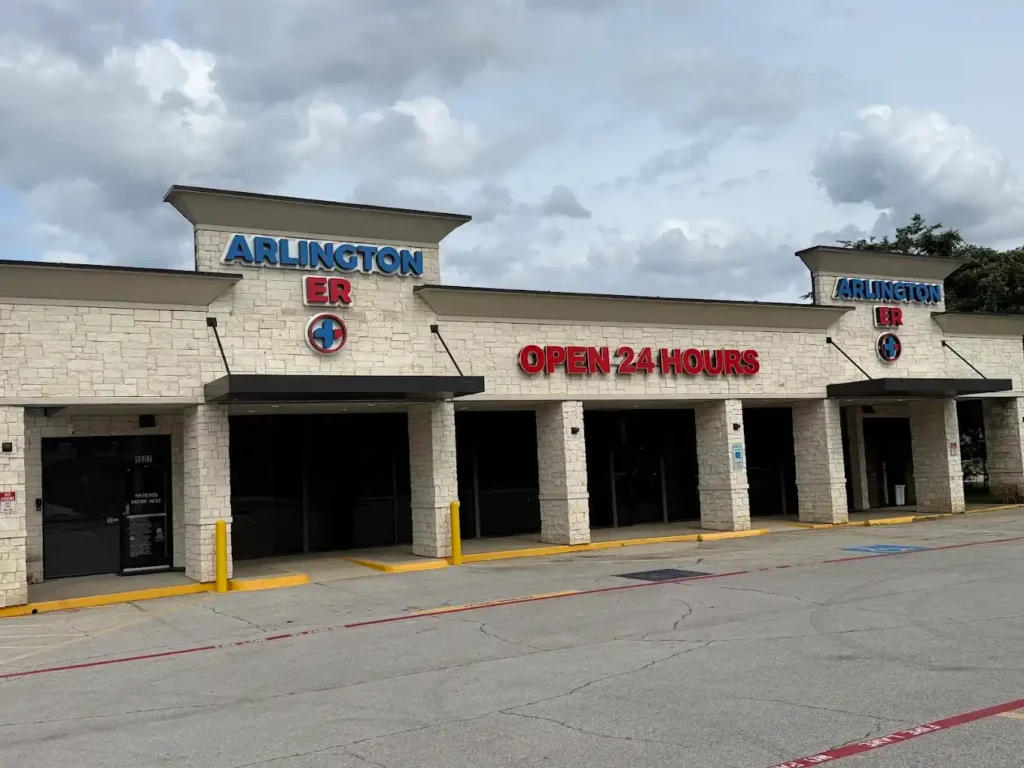
Arlington ER serves Arlington, Texas from 1607 S. Bowen Rd., on the west side of Bowen just south of Pioneer Parkway. Parking is directly outside the door, which matters when you are lightheaded and a long walk from a garage is the last thing you need.
We are minutes from central Arlington and the Parks Mall, and a straightforward drive from Dalworthington Gardens, Kennedale, Grand Prairie, and Mansfield. From I-20, exit at Bowen Road and head north. From Highway 303 or Pioneer Parkway, turn south onto Bowen and we are on your right. Our Contact Us page has everything else you might need.
If you feel faint, please have someone drive you. We are open every hour of every day, holidays included, and no appointment or referral is required.
If nothing is staying down, if you feel faint standing up, or if a child has stopped drinking altogether, stop waiting it out. Walk in and let us catch you up properly, and find out what caused it while we are at it.
No. Arlington ER is walk-in only and open every hour of every day, holidays included. Come whenever you need us, without calling ahead and without a referral from anyone.
Plan on one to three hours for most visits. A single bag runs about an hour, and the rest depends on your bloodwork and whether your physician wants to look further into the cause.
There is a brief sting when the line goes in, lasting a second or two. After that most people forget it is there. Tell your nurse if you are anxious about needles and they will talk you through it.
Yes. We treat infants through teenagers, with fluid volumes calculated for their weight and closer monitoring throughout. Children dehydrate quickly, so please do not wait it out overnight.
Most major private plans cover emergency care, and we file the claim for you. What you owe depends on your deductible and coinsurance. Our billing team will walk you through it afterwards.
Usually yes, and most people feel considerably better than when they arrived. If you were faint on arrival or are still unsteady, we will ask you to arrange a lift home instead.
A photo ID and your insurance card if they are to hand, and a note of any kidney or heart conditions. If you have none of it with you, come anyway. We never delay care over paperwork.
Yes, the majority of the people we rehydrate are Arlington residents. Our postal address reads Pantego, a small town surrounded on all sides by Arlington, and we sit on S. Bowen Rd. a few minutes from the centre of town.
Medically reviewed by Rahman Mohammed, MD | Last Updated: September 23, 2026