
Kidney stone pain has a reputation, and it earns it. It arrives without warning, builds into something that folds grown adults in half, and leaves people pacing the floor at three in the morning wondering whether this is normal or an emergency.
Our kidney stone emergency room in Arlington settles that question with an on-site CT scan, the test that shows the stone’s size and exactly where it is sitting, read here in minutes. We ease the pain, rule out the one dangerous complication, and tell you plainly whether this will pass at home or needs a specialist.
Go to the ER for a kidney stone when the pain comes with a fever or chills, when you cannot keep fluids down, when the pain is too severe to bear or will not settle, when there is blood in your urine, or when you have only one working kidney. Any of these turns a painful stone into an emergency.
Most kidney stones, on their own, are not dangerous. They are agonizing, but they pass. The reason to come in is not usually the stone itself, it is the small set of situations where a stone stops being a waiting game and starts being a medical emergency.
The fever is the one to memorize. Everything else on this list is about comfort and certainty. The fever is about safety.
If you are pregnant and think you may have a stone, come in regardless of how mild it feels. Imaging and treatment both need handling differently, and that is not a decision to make at home.
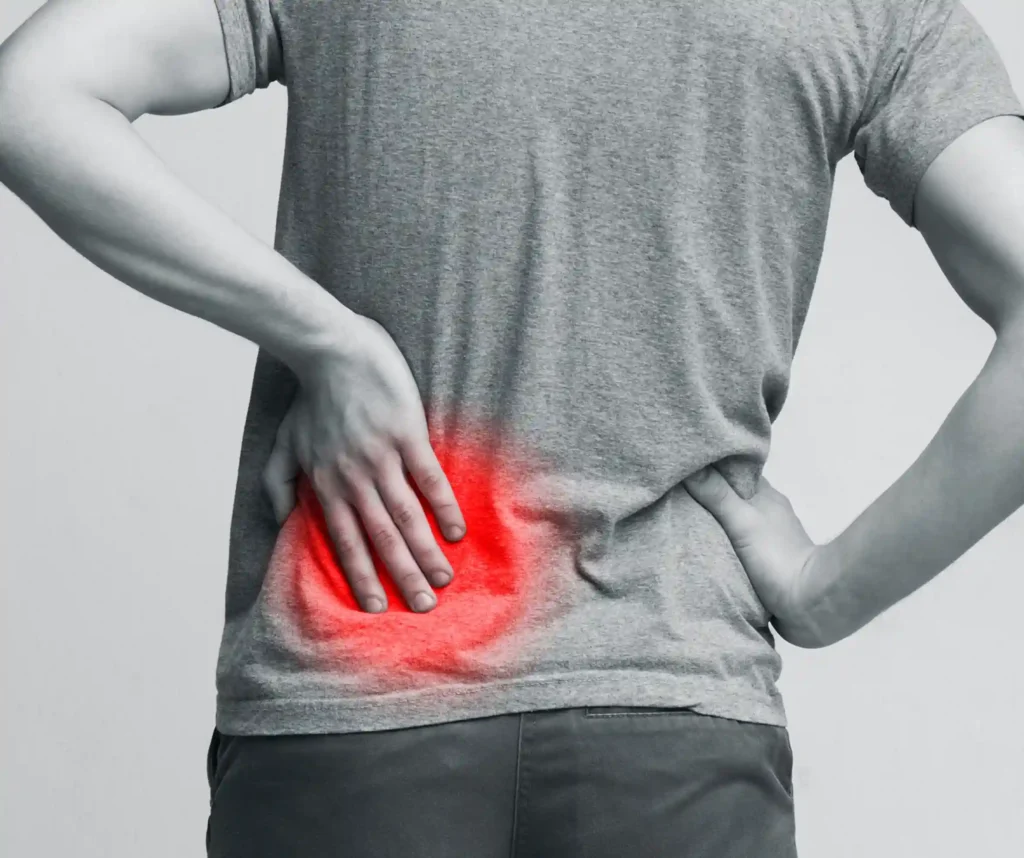
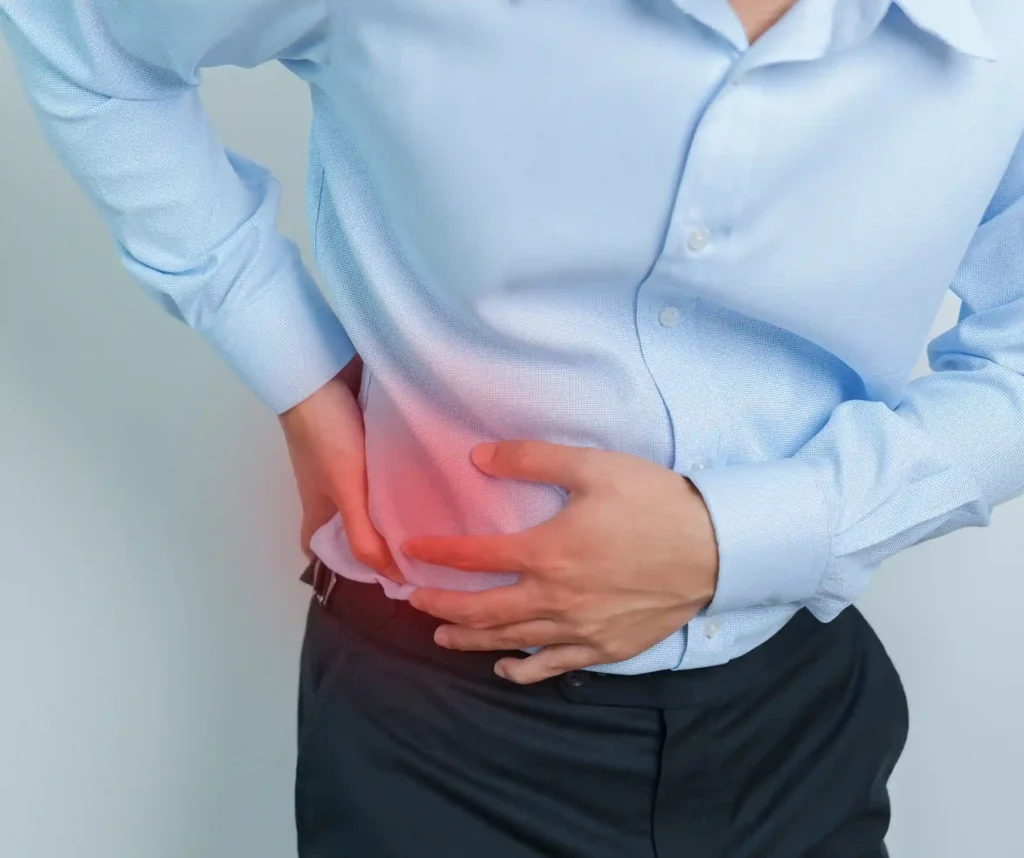
Kidney stone pain classically starts in the side or the back, just below the ribs, then travels down and around toward the lower abdomen and groin as the stone moves. It comes in waves rather than staying steady, and the waves can be severe enough to cause nausea and vomiting.
The most telling feature is that you cannot find a position that helps. With most kinds of abdominal pain, people curl up and go still because holding one position eases it. A kidney stone does the opposite. Sufferers pace, shift, and change position constantly because nothing works, and that restlessness is one of the things that points a physician toward a stone before any scan.
Other signs travel with it: a frequent, urgent need to urinate that produces very little, a burning feeling when you do, and urine that looks pink, red, or brown. Not everyone gets all of these, and a smaller stone can produce a duller ache that people mistake for a pulled muscle for a day or two before it sharpens.
A fever alongside a kidney stone can mean an infection has built up behind the blockage, trapped where the body cannot clear it. That combination can turn serious within hours, and it is the single reason a kidney stone is ever a true emergency rather than a painful wait.
Here is the mechanism, in plain terms. A stone lodged in the tube between kidney and bladder acts like a dam. If bacteria are present, they multiply behind that dam with nowhere to drain, and the pressure can push the infection back into the kidney and then into the bloodstream. Once it reaches the bloodstream it can affect the whole body, and at that point every hour matters.
The treatment for that situation is not something that can wait for a clinic to open. It needs the blockage relieved and the infection addressed urgently, which is precisely the kind of care an emergency room is built to start at any hour.
This is why we tell people to watch the thermometer as closely as the pain. Severe pain alone is miserable but usually safe. Severe pain with a fever is the version that brings you in tonight, not tomorrow.

A few simple things help before you arrive, and a few common instincts make it harder. The second column is where people go wrong.
| Do this | Never do this |
|---|---|
| Note when the pain started and where it began | Assume it will pass if you also have a fever |
| Keep sipping water if you are not vomiting | Force large amounts of fluid while nauseated |
| Check your temperature and keep checking it | Ignore chills, shaking, or feeling hot |
| Urinate into a container so any stone is caught | Flush a stone you have passed before we see it |
| Come in if the pain is unbearable or has a fever | Wait out severe pain hoping it settles by morning |
| Bring a list of any past stones and their outcome | Drive yourself if the pain makes that unsafe |
That fourth row surprises people, but a stone you have already passed is genuinely useful. If you can catch it, bring it. Knowing what a stone is made of changes the advice for preventing the next one, and the next one is far more likely once you have had a first.
Your physician works to ease the pain, confirms the stone with an on-site CT scan, checks your urine and blood for infection, gives fluids through a vein, and then tells you plainly whether this stone will pass at home or needs a urologist. These steps happen quickly and in the same building.
Kidney stone pain is treated as urgent. Easing it comes early, before the rest of the workup gets underway.
A CT shows the stone's exact size and position, the detail that decides whether it can pass on its own.
On-site testing checks for infection and how the kidneys are coping. Results return here in minutes.
IV fluids help when nausea has left you unable to drink, and support the kidneys while the stone moves.
The one dangerous complication is checked for directly, because a blocked, infected kidney cannot wait.
You leave knowing the stone's size, whether it will pass at home, and exactly when to see a urologist.
A small stone low down usually passes. A larger one, or one high up, is a different conversation. The CT settles it.
No one is sent home with a stone until we are satisfied there is no infection building behind it.
The majority of stones we see will pass on their own with time and fluids. We tell you honestly when yours is one of them.
A stone too large to pass, or one causing a blockage, needs a specialist. We say so plainly and coordinate the referral.
A kidney stone visit is billed as an emergency visit plus the CT scan and the urine and blood testing your physician orders. We bill most major private insurance plans and file the claim for you. Arlington ER is out-of-network for all private plans, but under the federal No Surprises Act an emergency visit is still processed at your in-network cost-sharing, so what you owe comes down to your own deductible and coinsurance rather than a fixed price.
Kidney stones carry one cost worth understanding in advance: the CT scan is usually the largest single line on the bill, and it is also the one test that cannot be skipped. It is what tells your physician the stone’s size and location, and that single measurement decides whether you go home to wait it out or need a specialist. Paying for imaging that sends you home relieved is a better outcome than guessing.
If the stone turns out to need a urologist, that specialist and any later procedure are billed separately by them, not by us. We will tell you during your visit whether that looks likely, so nothing on the follow-up paperwork comes as a surprise.
The federal No Surprises Act protects patients from surprise bills for emergency care. Our Patient Billing Advocates will go through your Explanation of Benefits line by line, and our Financial Support and Care Relief Program can reduce or remove out-of-pocket costs for patients who qualify. Full details are on our Billing Disclosure page. Nobody is asked about payment before being seen.
Severe kidney stone pain, and any stone with a fever, belongs in an emergency room rather than urgent care. Most urgent care clinics do not have CT scanning, which is the test that actually measures the stone, and they cannot manage an infected, blocked kidney if that is what is happening.
There is a narrower, honest exception. A mild ache that you already know is a small stone, in someone with no fever who is keeping fluids down comfortably, can reasonably be watched at home with advice from your own doctor. Plenty of stones announce themselves gently and pass over a few days with nothing more than patience and water.
But the moment the pain becomes severe, the moment a fever appears, the moment vomiting stops you drinking, or the moment you simply cannot tell how bad this is, that is an emergency room visit. The stone that needed a scan and the stone that passed on its own feel identical for the first hour, and only one of them is safe to wait out.
Come in when in doubt. Being told a small stone will pass, after a scan confirms it, is a good afternoon. Sitting at home through an infection is not.
For billing questions: 817-973-7406 or info@arlingtoner.com
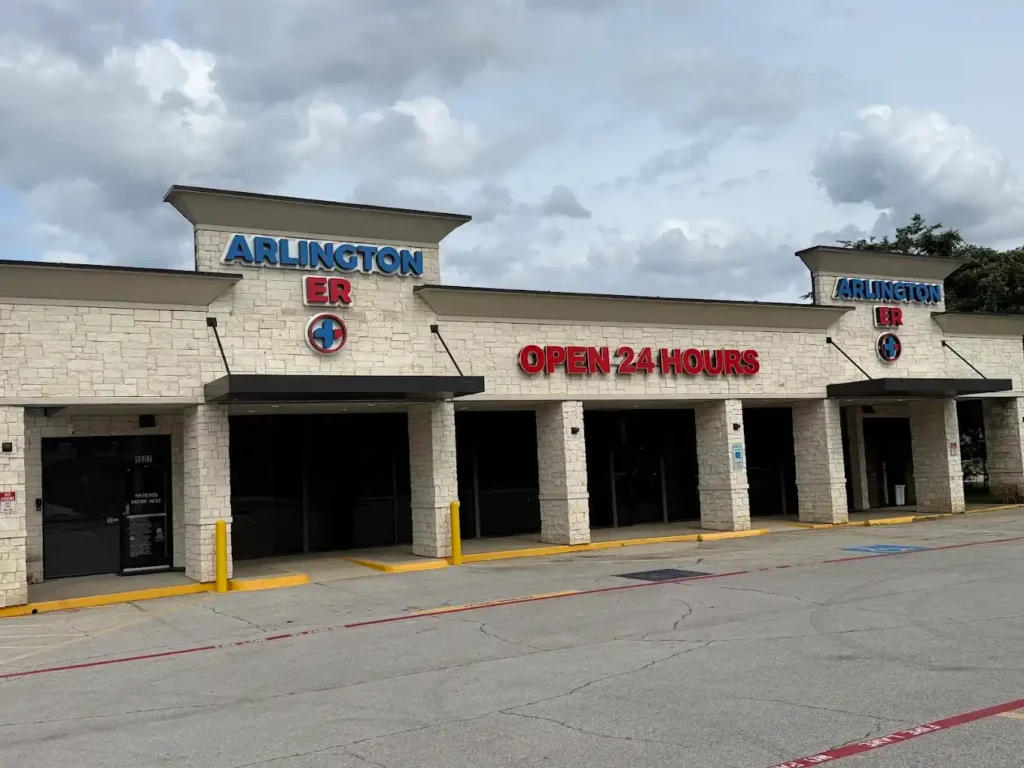
Arlington ER serves Arlington, Texas from 1607 S. Bowen Rd., on the west side of Bowen just south of Pioneer Parkway. Parking sits directly outside the entrance, which matters when the pain makes a long walk from a garage unthinkable.
We are minutes from central Arlington and the Parks Mall, and an easy run from Dalworthington Gardens, Kennedale, Grand Prairie, and Mansfield. From I-20, exit at Bowen Road and head north. From Highway 303 or Pioneer Parkway, turn south onto Bowen and we are on your right. If you would rather speak to someone before setting off, our Contact Us page has everything you need.
We are open every hour of every day, holidays included, and no appointment or referral is ever required.
Kidney stone pain is one of the few things that genuinely lives up to its reputation. Walk in, let us ease it, scan the stone, and leave knowing exactly what happens next. If you have a fever with the pain, do not wait until morning.
It depends heavily on the stone’s size and where it sits. Small stones low in the tract often pass within days, while larger ones can take weeks or may not pass at all. The CT scan is what lets your physician give you a realistic timeframe.
A CT is the most accurate way to confirm a stone and measure it exactly. That measurement decides whether the stone can pass on its own or needs a specialist, so it is not a test the workup can skip.
Neither. Arlington ER is walk-in only, open every hour of every day including holidays. Arrive whenever the pain brings you in, without calling ahead and without a referral.
Yes, if you can. Urinate through a fine strainer or into a clear container and watch for a small solid fragment. Knowing what the stone is made of shapes the advice for preventing the next one.
Yes, and often. Once you have had one stone, your chance of another over the following years is significant. That is exactly why identifying what your stone was made of is worth the effort.
A photo ID and your insurance card if you have them to hand, plus any stone you have managed to catch. If you do not have paperwork with you, come in anyway. We never delay care over it.
Yes. Ask at discharge and we will send your scan and results to your primary care physician or urologist, and give you a copy to take with you so the follow-up never waits on paperwork.
Both, in practice. Our postal address is Pantego, a small town enclaved entirely within Arlington, and we sit on S. Bowen Rd. a few minutes from central Arlington. Most of our patients are Arlington residents.
Medically reviewed by Rahman Mohammed, MD | Last Updated: August 22, 2026