
The fall is over in a second. What follows is an hour of trying to decide whether this is a hospital problem or an ice-pack-and-wait-until-Monday problem, usually while the swelling makes the case for you.
Our broken bone emergency room takes the guesswork out of it with digital X-ray on site, read here by a board-certified physician within minutes. You leave knowing whether it is fractured, properly splinted if it is, and clear on exactly who you are seeing next.
You cannot know without an X-ray. Sprains often swell more dramatically and hurt more than fractures, and plenty of broken bones still bear weight. Neither the level of pain nor the ability to move the limb reliably separates one from the other.
The old advice about being unable to move it is not much help. Some fractures allow near-normal movement, particularly in the smaller bones of the hand and foot. Meanwhile a badly torn ligament can leave a joint completely unusable for days. The severity of what you feel says very little about what the bone is doing underneath.
An X-ray settles it in a couple of minutes, and it is the only thing that does. If you are weighing this up, that is your answer: the question cannot be resolved from the sofa.
Any of these means come immediately rather than waiting to see how the night goes. For a suspected hip, spine, or neck injury, call 911 and do not move the person.
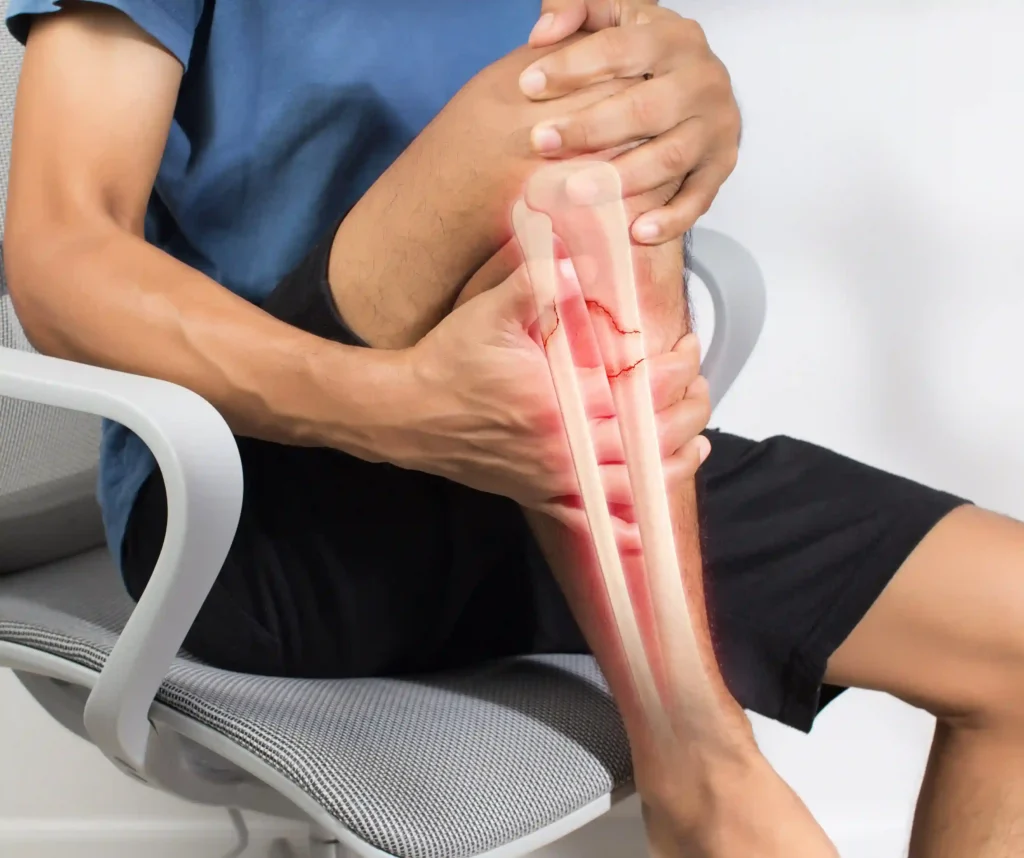
The ankle is one of the most commonly broken bones, and it is also one of the hardest to judge at home. A bad sprain and a real fracture look almost identical in the first hour. Both swell, both bruise, and both hurt enough to stop you walking. Pain level tells you very little about which one you have.
There is one check that is more useful than the rest. Try to put weight on it and take four steps. If you cannot, or if pressing on the bony knob on either side of the ankle produces sharp, specific pain, an X-ray is the only way to settle it.
Until you are seen, keep weight off it, keep it raised above the level of your heart, and apply ice over a cloth for twenty minutes at a time. Do not try to walk it off, and do not straighten an ankle that looks bent or turned. If the foot is pale, cold, or numb, or if the joint is clearly out of shape, that needs attention right away rather than in the morning.
We X-ray ankles on site and a board-certified emergency physician reads the images during your visit. If it is broken, we splint it that night and send you out with the images and a plan for the orthopedic follow-up. If it turns out to be a sprain, you leave knowing that for certain instead of guessing for a week

Hairline cracks, stress fractures, growth plate injuries in children, and hip fractures in older adults are the ones most often missed. Each can leave someone walking and functioning well enough to convince themselves nothing is broken.
The dramatic break, bent at an angle nobody wants to look at, is the easy one. Most of what comes through the door is quieter than that.
A hairline crack can leave the bone looking almost intact while still needing weeks of protection to heal properly. Stress fractures build slowly out of repetition rather than a single moment, which is why runners and new gym members turn up puzzled that nothing actually happened. In children, bones are softer and often bend and split on one side rather than snapping cleanly through.
The one worth taking most seriously is the hip. In older adults, particularly after what looked like a minor fall, a hip can fracture while the person still manages to stand and shuffle a few steps. Walking is not proof that the bone is whole, and that single assumption delays a great many hip diagnoses by days.
Bone begins knitting itself back together almost immediately, and it does so in whatever position you leave it. A fracture left misaligned over a weekend starts healing crooked, and correcting it afterwards is a considerably bigger undertaking than getting it right the first time.
Joints are least forgiving of all. A break that runs into a joint surface and is not properly realigned can leave stiffness and arthritis that outlast the injury by decades. The difference between a good result and a permanent limitation is often measured in the first day or two.
Swelling works against you as well. The longer a limb swells unsupported, the harder it becomes to splint comfortably, and in a small number of cases pressure builds inside the tissue to a degree that becomes an emergency in its own right.
None of this is meant to alarm you. It is simply why a couple of days of waiting costs more than the visit would have, and why we are open at two in the morning on a Sunday.

Support the limb exactly as it lies, ice it over a cloth, keep it raised, and take off any rings or watches before the swelling starts. A few minutes of sensible handling makes the visit shorter and the injury easier to treat.
| Do this | Never do this |
|---|---|
| Support the limb in the position you found it | Straighten a limb that looks bent |
| Cover an open wound with a clean cloth | Push a protruding bone back under the skin |
| Improvise a splint for a drive over a few minutes | Bind it so tightly that fingers or toes go numb |
| Ice over a cloth, twenty minutes at a time | Put ice directly against bare skin |
| Remove rings, bracelets, and watches now | Leave jewelry on and hope the swelling holds off |
| Keep the limb raised above heart level | Eat or drink before you have been seen |
Two of those need a word of explanation. Jewelry comes off easily now and may have to be cut off within the hour, because hands and wrists swell faster than anyone expects. And skipping food matters because if the bone needs realigning during your visit, an empty stomach keeps every option open rather than adding a wait. Small sips of water are fine.
Your physician examines circulation and sensation below the injury, takes digital X-rays on site, reads them here, realigns the bone if it has shifted, applies a splint that allows for swelling, and sets out who you follow up with. Everything happens in one building, so nobody is sent across town for imaging and told to come back.
Vitals, a quick account of how it happened, and the limb supported and raised before anything else begins.
Your physician checks circulation, sensation, and movement below the injury before any imaging is ordered.
Images taken from several angles here in the building, usually within minutes of the examination finishing.
A board-certified emergency physician reviews the images here. Complex injuries may add a CT for detail.
Displaced bones are guided back into position and held in a splint that leaves room for swelling.
You leave knowing the diagnosis, who you are following up with, and roughly how long this will take.
Some cracks stay invisible for a week or more. If the exam says fracture, we treat it as one and arrange a repeat.
A limb swells for days after a break. Casting too early traps that swelling, so a splint that adjusts comes first.
Growing bones bend where adult bones snap, and growth plates need care that a standard reading can miss.
Some breaks need an orthopedic surgeon. You will hear that plainly here, along with who to see and how soon.
A fracture visit is billed as an emergency visit plus imaging and the splint applied during your stay. We bill most major private insurance plans and file the claim for you. Arlington ER is out-of-network for all private plans, but under the federal No Surprises Act an emergency visit is still processed at your in-network cost-sharing, so what you owe comes down to your own deductible and coinsurance rather than a fixed price anyone could quote at the door.
Fractures carry one billing quirk worth knowing in advance, because it catches people out. The splint we apply is part of your emergency visit. The cast that replaces it a week or two later is not. That follow-up happens in an orthopedic office and is billed by that office as a separate encounter, along with any repeat X-rays taken there. Two bills for one broken wrist is normal and does not mean anyone has charged you twice.
If a fracture eventually needs surgical repair, that is a third provider again. We will tell you plainly during your visit whether that looks likely, so the paperwork does not arrive as a surprise weeks later.
The federal No Surprises Act protects patients from surprise bills for emergency care. Our Patient Billing Advocates will go through your Explanation of Benefits line by line, and our Financial Support and Care Relief Program can reduce or remove out-of-pocket costs for patients who qualify. Full details are on our Billing Disclosure page. Nobody is asked about payment before being treated.
Urgent care can handle a minor finger or toe injury, but a suspected broken bone in a wrist, ankle, arm, leg, hip, or ribs belongs in an emergency room. Most urgent care clinics have basic X-ray at best, cannot realign a displaced bone, and will send you on to an ER anyway, which costs you a second visit and a second bill.
The honest exceptions are worth naming. A stubbed toe that still bends normally, a minor jammed finger, or a mild ankle roll you can walk on comfortably within an hour will often settle with rest, ice, and elevation. Those are reasonable to watch at home for a day and mention to your own doctor if they are not improving.
We would rather say that plainly than pretend every knock needs an emergency room. Soreness after a heavy session at the gym, a bruised shin, or a finger that hurts but grips normally are usually exactly what they look like.
Here is where that stops. Anything deformed, anything with numbness or a limb turning pale, any open wound over the injury, any suspected hip, spine, or neck injury, and any injury in a child who will not use the limb belongs here today. So does anything that has not clearly improved after two or three days, because that is often how a hairline fracture announces itself.
And if you simply cannot settle because part of you is not convinced, come in. Nobody here will make you feel foolish for arriving with a bad sprain. We see that outcome constantly and it is a good afternoon’s work.
For billing questions: 817-973-7406 or info@arlingtoner.com
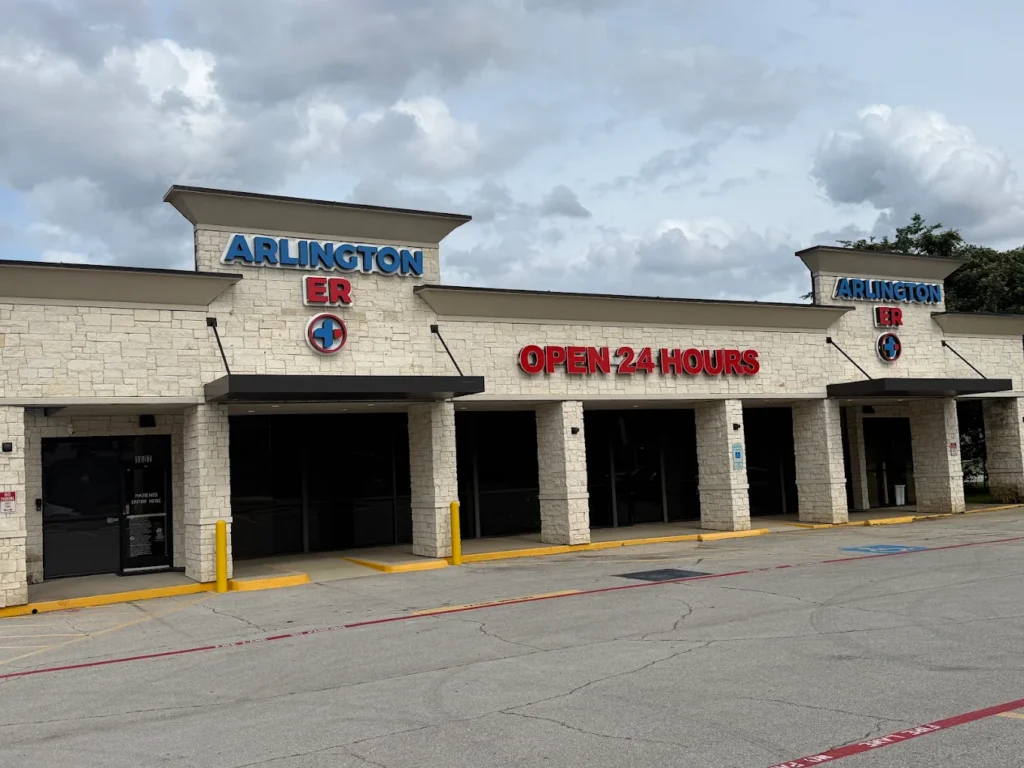
Arlington ER is at 1607 S. Bowen Rd. in Pantego, on the west side of Bowen just south of Pioneer Parkway. Parking sits directly outside the entrance, which matters a great deal when someone is on crutches or carrying a child who cannot walk.
We are minutes from central Arlington and the Parks Mall area, and an easy run from Dalworthington Gardens, Kennedale, Grand Prairie, and Mansfield. From I-20, exit at Bowen Road and head north. From Highway 303 or Pioneer Parkway, turn south onto Bowen and we are on your right. If you would rather speak to someone before setting off, our Contact Us page has everything you need.
We are open every hour of every day, holidays included, and no appointment or referral is ever required.
Waiting for the swelling to settle before deciding is the one approach that reliably makes things harder. Walk in, get the X-ray, and find out in minutes whether this needs a splint or just an ice pack and reassurance.
Yes, and you should go without waiting to see whether it improves overnight. A broken ankle cannot be told apart from a severe sprain without an X-ray, and a fracture that is left unsupported starts healing in whatever position the bone is sitting in. Walking on it makes that worse. Urgent care clinics often have limited imaging and cannot splint a displaced fracture, so many ankle injuries get sent on to an emergency room anyway. Coming straight here saves you the second visit. We have digital X-ray on site and read it during your visit, so you get an answer the same night rather than a referral.
Yes. Hairline and stress fractures can stay hidden on an early X-ray. If the examination points to a break, we splint it and arrange repeat imaging in about a week, when the healing line becomes visible.
We apply a splint rather than a cast. Limbs swell for days after a break, and a rigid cast applied too early becomes dangerously tight. Casting happens at your follow-up appointment.
An open fracture is one where the skin is broken over the injury, giving bacteria a direct path to the bone. It carries a real infection risk and needs treatment without delay.
Yes. Children’s bones are softer and often bend or split on one side instead of snapping through. Growth plate injuries also need careful reading, since they can affect later growth.
A straightforward fracture is usually assessed, imaged, and splinted within a couple of hours. A break that needs realigning takes longer, since we monitor you afterwards and repeat the X-ray.
For a minor finger or toe injury, possibly. Anything deformed, open, numb, or involving a hip, spine, or major limb bone belongs in an emergency room with CT on site.
Often not, particularly with an arm splint or any injury needing realignment. Bring someone with you if you can, and ask us before you set off home rather than after.
Yes. Your images and report go to whichever specialist you follow up with, and you get a copy to take with you so the appointment never depends on paperwork arriving in time.
Medically reviewed by Rahman Mohammed, MD | Last Updated: September 23, 2026