Burns are the injury people misjudge most often, and they misjudge it in both directions. A small burn that hurts ferociously often needs nothing. A larger one that barely hurts can be the serious one.
Pain is a poor guide here, because a burn deep enough to damage the nerve endings stops sending the signal.
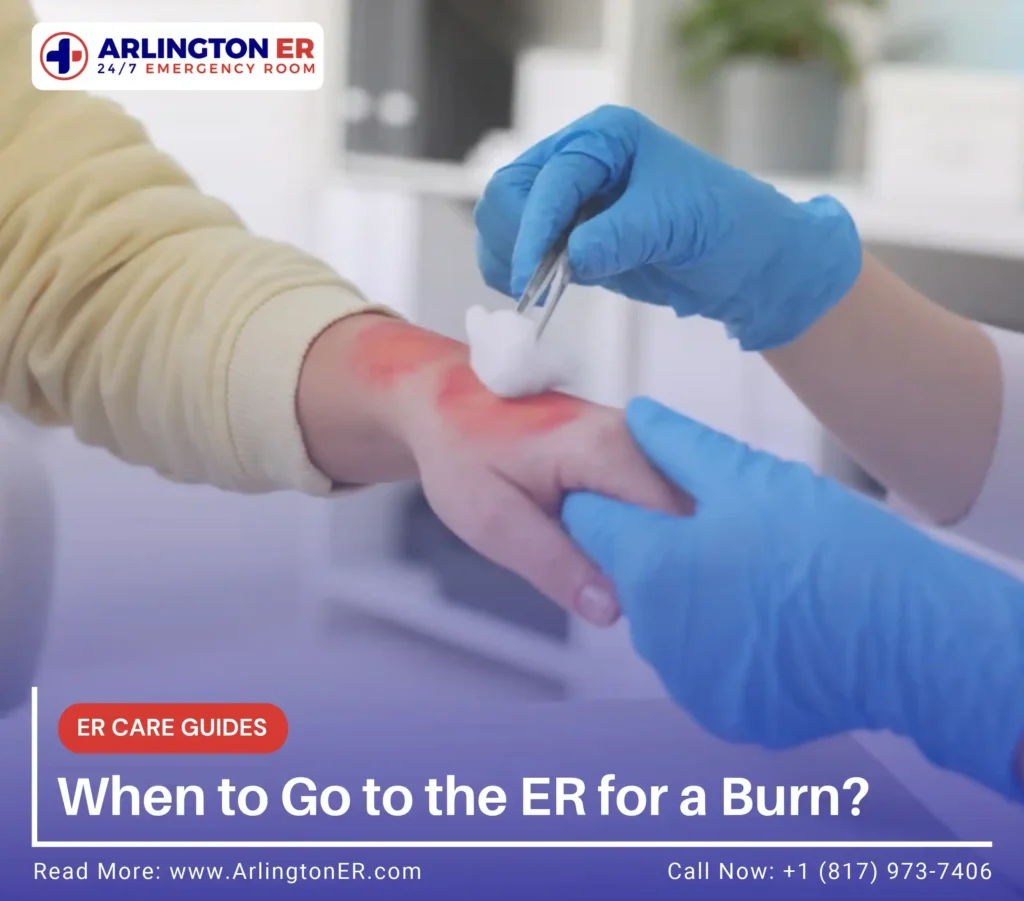
When should you go to the ER for a burn?
Size and location decide it. A burn wider than about three inches, or one sitting on a hand, foot, face, groin or across a joint, should be looked at whatever it feels like. So should any burn that looks white, leathery, charred, or oddly numb in the middle.
The rest of the list:
- Any burn that goes right around a finger, toe, arm or leg
- Chemical or electrical burns, including a shock that left only a small mark
- Burns on a baby, a young child or an older adult, where thinner skin means deeper damage from the same heat
- Smoke or steam breathed in, or singed nose hair, a hoarse voice or a cough after a fire
- Blisters covering an area bigger than the palm of your hand
- Increasing redness, swelling, oozing or fever two or three days later
How do you tell how deep a burn is?
By what the surface looks like rather than how much it stings. A burn that’s red, dry and sore with no blisters is superficial and heals in under a week. Blisters with a wet, shiny, intensely painful base go deeper and take two or three weeks.
The one to take seriously looks almost calm. White, waxy or brown leather, dry, and not very painful at all. That combination means the burn reached the layer where the nerves live. People routinely downplay these because they don’t hurt, and that’s precisely why they get missed.
Which burns heal fine at home?
Most kitchen burns, and that’s worth saying plainly. A red, unblistered burn smaller than your palm, away from hands, face and joints, needs cool running water and time, not a visit anywhere. Nothing we do shortens it.
The first ten minutes are where you can genuinely change the outcome. Cool running water for a full twenty minutes, as soon as possible, and it still helps up to three hours later. Not ice, which deepens the injury, and not butter or toothpaste or anything else that traps heat against the skin.
Leave blisters alone. The roof of a blister is a sterile dressing your body made, and popping it opens a door for infection. Take off rings, watches and anything tight near the burn before the swelling arrives, because it comes on faster than you’d think.
What happens at the ER for a burn?
The burn is cooled, cleaned and measured, which is the part that actually decides what comes next. Depth and the percentage of skin involved determine whether it can be dressed and sent home or needs onward care, and that assessment is hard to do from a photograph.
A larger burn also leaks fluid steadily, which is why IV hydration therapy is often started early rather than once someone looks unwell. Arlington ER provides burn treatment at any hour without an appointment, and a burn on a child is seen here rather than being sent on to find a pediatric department.
Why does a burn on the hand matter more?
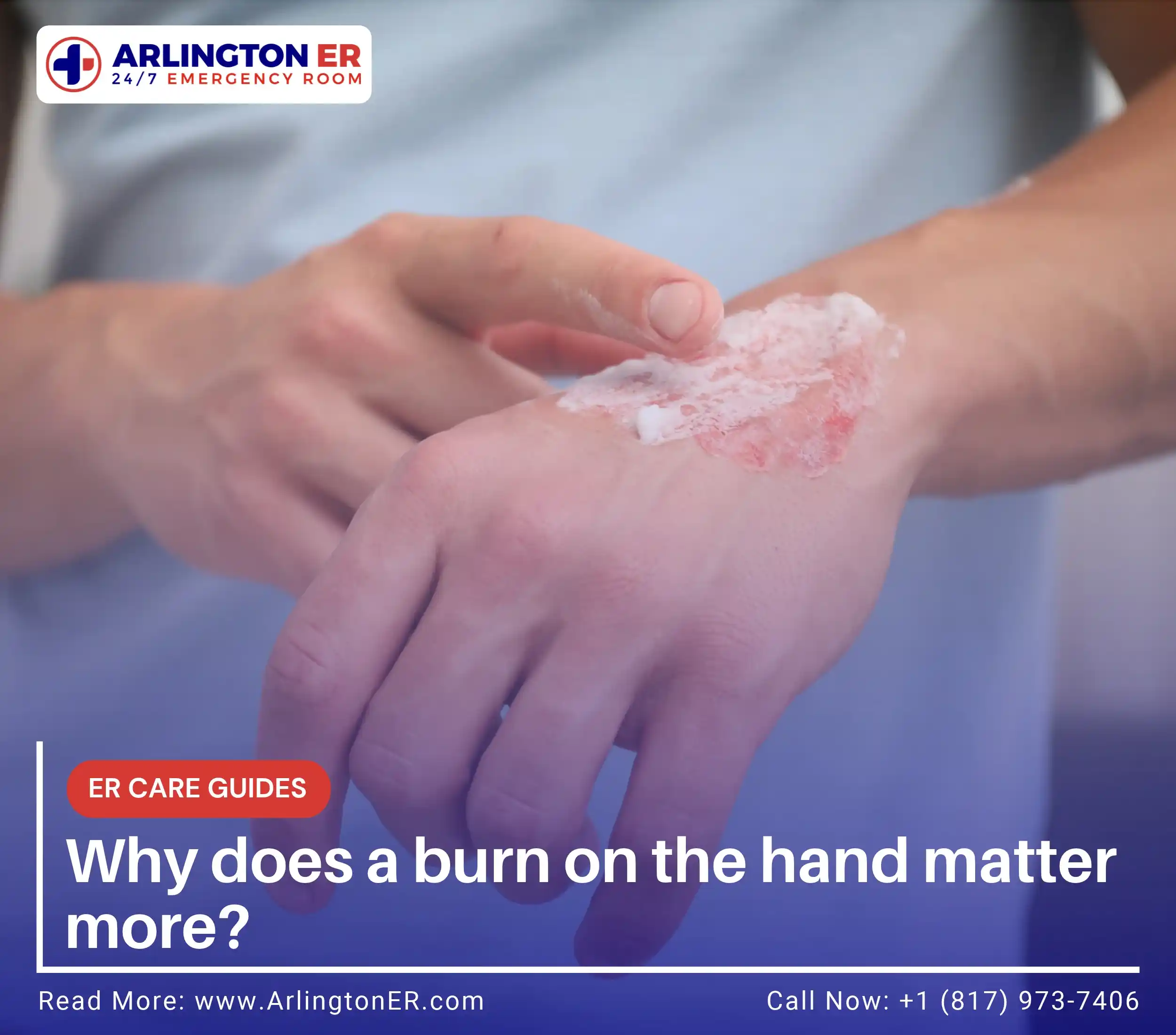
Because of what heals, not how much tissue is lost. Skin over a knuckle has to stretch for the joint to work, and scar tissue doesn’t stretch. A burn across the back of a hand can heal completely and still leave a finger that won’t straighten.
The same logic covers feet, faces, the groin and anywhere a joint bends. These get a lower threshold for being seen, and dressing them correctly in the first days is what protects movement later. A deep burn that also split the skin may need closing as well, the same way emergency care for cuts does.
Frequently Asked Questions
No. Ice constricts the blood supply to skin that’s already injured and can turn a shallow burn into a deeper one. Cool running water for twenty minutes is what helps, and tap temperature is right. Cold enough to soothe, not cold enough to hurt.
It gets worse instead of better after day two or three. Spreading redness beyond the original edge, new swelling, a smell, cloudy fluid or a fever are all reasons to have it looked at. A burn should be improving by then, not changing character.
Not necessarily, and it’s the thing to pay attention to. Numbness in the middle of a burn usually means it reached the nerve endings, which makes it deeper rather than milder. A painless white or leathery patch should be seen even if it’s small.
Most needs only shade, fluids and time. Come in if blisters cover a large area, or if there’s dizziness, confusion, a headache with nausea, or a fever, which point to heat illness rather than to the skin. MedlinePlus covers home care.
Yes, even when the mark looks trivial. Current travels through tissue you can’t see, so the visible injury is a poor guide to what happened underneath, and the heart rhythm is worth checking afterward. The NIH explains why the entry wound understates it.