
Carbon monoxide poisoning symptoms look almost exactly like the flu. Headache, nausea, tiredness, dizziness, a dull ache behind the eyes. There’s one difference that matters more than any other, and it’s the one people miss at two in the morning when they’re trying to decide whether to go back to bed: carbon monoxide doesn’t cause a fever.
That single detail has saved lives, and not knowing it has cost them. Carbon monoxide is colorless, has no smell, and gives no warning before it takes effect. By the time someone feels unwell enough to worry, they’ve usually been breathing it for hours.
What Carbon Monoxide Does to Your Body
Carbon monoxide binds to the hemoglobin in your blood roughly 200 times more readily than oxygen does. Once it takes those spaces, your red blood cells keep circulating, but they’re carrying the wrong thing. Your lungs work, your heart pumps, and your tissues still starve.
That’s why the early carbon monoxide poisoning symptoms feel so vague. Your brain and your heart use more oxygen than anything else in your body, so they notice the shortfall first. A headache and a foggy, slowed-down feeling are the earliest complaints, and both are easy to blame on a long day.
It also explains why the damage isn’t always over when the exposure ends. Longer or heavier exposures can leave problems with memory, concentration and mood that show up days or weeks later, which is a large part of why we take even a mild exposure seriously.
Carbon Monoxide Poisoning Symptoms, in the Order They Appear
Most people notice these roughly in sequence, though a heavy exposure can skip straight to the later ones.
- Headache, usually dull and across the whole head rather than one spot
- Nausea, sometimes with vomiting
- Dizziness or a floaty, unsteady feeling
- Tiredness that seems out of proportion to the day
- Trouble concentrating, or a sense that thinking is harder than it should be
- Shortness of breath, particularly with any exertion
- Blurred vision
- Chest pain, more likely in someone with existing heart disease
- Confusion, weakness, fainting, or a seizure in severe cases
You’ve probably read that carbon monoxide turns the skin cherry red. It can, but almost never early, and its absence proves nothing. It’s a late and unreliable sign, and waiting for it is a bad plan.
Four Signs It’s Carbon Monoxide, Not the Flu
These four questions separate carbon monoxide poisoning from a viral illness better than the symptom list does, because the symptoms themselves overlap so heavily.
Is there a fever?
Carbon monoxide poisoning doesn’t cause one. Influenza usually does. If everyone feels terrible and nobody is running a temperature, that’s worth paying attention to. A thermometer is the cheapest diagnostic tool in the house.
Is everyone sick at once?
Viruses move through a household over days, one person at a time. Carbon monoxide affects everyone breathing the same air on the same evening. If four people got ill within the same few hours, something in the building is the more likely explanation.
Is the dog sick too?
Pets are smaller, so they’re affected sooner and more severely. A dog or cat that’s lethargic, unsteady or vomiting alongside the humans is one of the more reliable warnings you’ll get, and it often comes first.
Do you feel better when you leave?
This is the clearest signal of all. If the headache lifts an hour after you go out and returns when you come home, the problem is the house rather than a virus. People often notice this without registering what it means.
Common Sources of Carbon Monoxide in the Home
Anything that burns fuel can produce carbon monoxide when it’s faulty, blocked or running somewhere it shouldn’t be. In north Texas the risk climbs from late autumn onward, because that’s when furnaces come back on after months of sitting idle.
- Furnaces and gas heaters, especially the first cold night of the season
- Water heaters and gas stoves with poor ventilation
- Blocked or cracked chimneys and flues
- Portable generators, which cause deaths after every ice storm
- Charcoal grills used indoors or in a garage
- A car left running in an attached garage, even with the door open
Generators deserve their own line. After a winter storm knocks the power out, people run them in garages and on covered patios to keep them dry. A running generator needs to be well away from the building and pointed away from every window and door, with no exceptions for weather.
Who Is Most at Risk
The same exposure affects people differently, and some are hurt at levels others would shrug off.
Children breathe faster relative to their size, so they take in more of it in less time. Older adults and anyone with heart or lung disease have less reserve to lose. Pregnancy carries its own risk, because carbon monoxide crosses the placenta and the fetus clears it more slowly than the mother does. In every one of those groups, a mild exposure deserves a real evaluation rather than a wait-and-see.
What to Do If You Suspect Carbon Monoxide
If you suspect carbon monoxide, get outside first and ask questions afterward. Don’t open windows and stay put, don’t go looking for the source, and don’t go back in for belongings.
- Get everyone out into fresh air, pets included
- Call 911 from outside if anyone is confused, drowsy, unsteady or unresponsive
- Call the fire department or your gas utility to find the source
- Don’t go back inside until someone with a meter says it’s safe
If everyone is alert and walking, come straight to Arlington ER. If anyone has fainted, had a seizure, is confused, or is pregnant, call 911 rather than driving.
How Carbon Monoxide Poisoning Is Diagnosed
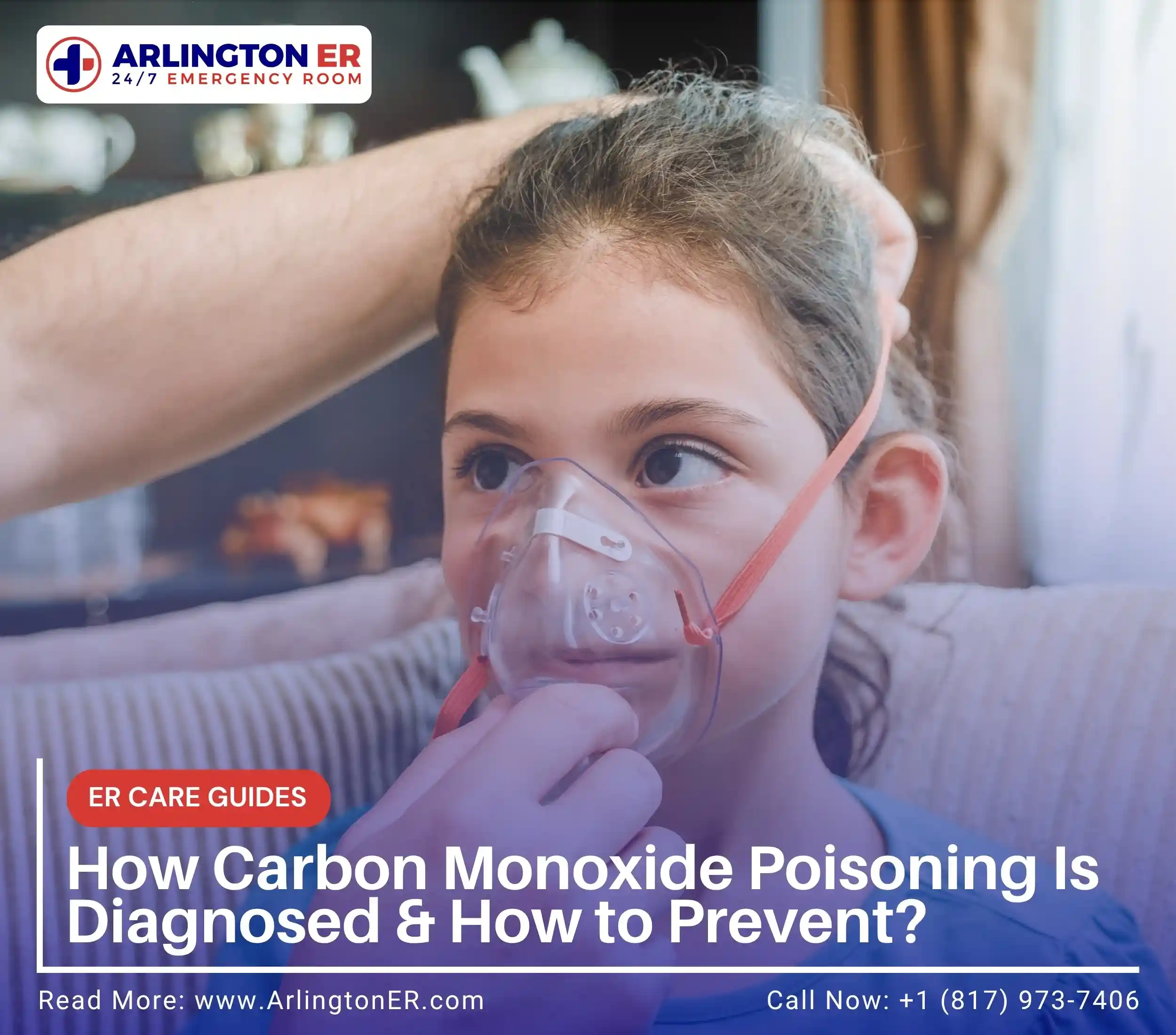
A blood test settles it. We measure the percentage of your hemoglobin that carbon monoxide has taken over, and that number tells us both whether you were exposed and how heavily. Our lab is inside the building, so the result comes back during your visit rather than after it.
Timing matters, which is the practical reason not to wait until morning. The level falls once you’re breathing clean air, so a delayed test can look reassuring even after a serious exposure. Treatment is oxygen, given at high flow to push the carbon monoxide off your red cells faster than fresh air alone would.
Depending on how you present, we may also check heart rhythm and cardiac markers through our emergency lab testing, because the heart is one of the organs that suffers first when oxygen delivery drops.
How to Prevent Carbon Monoxide Poisoning
Detectors are the whole answer, and they’re inexpensive. The CDC recommends one on every level of the home and near sleeping areas, which is where a night-time leak does its damage.
- Test the detectors you have, and replace the batteries
- Check the manufacture date on the back, because most units expire after five to seven years and quietly stop protecting you
- Have the furnace serviced before the first cold night, not after
- Keep chimneys and vents clear of nests and debris
- Never run a generator, grill or camp stove inside, in a garage, or under a covered patio
If an alarm sounds, treat it as real every time. Get out, then call. A detector going off with nobody feeling unwell is the system working exactly as intended. More on carbon monoxide and how it behaves indoors is worth ten minutes before winter.
Frequently Asked Questions
Yes, and that’s what makes it dangerous. Headache, nausea, dizziness and fatigue appear in both. The difference is fever: carbon monoxide poisoning doesn’t cause one, and influenza usually does.
It depends on the concentration. A heavy leak can cause symptoms within minutes, while a small one may take hours and gets blamed on tiredness. Both need evaluation.
Yes. Feeling better in fresh air confirms the exposure rather than ruling it out, and the blood level falls quickly once you leave, so testing sooner gives a truer picture.
Yes, and that’s the most common way it kills. A sleeping person never notices the early headache, so the exposure continues until they can’t wake up. This is why detectors near bedrooms matter.
Yes. Carbon monoxide crosses the placenta, and fetal blood clears it more slowly than the mother’s does. Any suspected exposure during pregnancy should be evaluated, even if symptoms seem mild.