
By the time heat stroke is happening, the person having it is usually the last to know. Confusion is one of the symptoms, so the judgment you would normally use to decide whether to get help is the thing that has already gone. It is almost always somebody else who makes the call.
Our heat stroke treatment in Arlington starts cooling immediately and runs blood work on site to see what the heat has done to the kidneys and the muscle. If someone is confused, has stopped sweating, or will not wake properly, call 911 rather than driving them.
This is the distinction that matters, and it is simpler than most people expect. Heat exhaustion is the body struggling and still coping. Heat stroke is the body having stopped coping.
The deciding sign is not the temperature reading, which is rarely available at the roadside. It is whether the person is behaving normally. Confusion, slurred speech, stumbling, aggression that is out of character, or any loss of consciousness moves this out of heat exhaustion entirely.
Any one of those is a reason to get the person cooled and seen now, not to wait and see whether they improve.

If you are standing over someone in a parking lot in August, this is the comparison worth having in your head.
| Heat exhaustion | Heat stroke | |
| Mental state | Tired, miserable, but makes sense | Confused, strange, drowsy or unconscious |
| Skin | Pale, cool, heavily sweating | Often hot and dry, sometimes still sweating |
| Core temperature | Raised but under 104F | Usually above 104F |
| Response to rest and shade | Improves within half an hour | Does not improve, or gets worse |
| What it needs | Cooling, rest, fluids by mouth | Rapid active cooling and emergency assessment |
One common and dangerous belief is that hot dry skin is required for heat stroke. In exertional heat stroke, the kind that happens to athletes and outdoor workers, the person is often still drenched in sweat. Do not use sweating to rule it out.

Cooling started immediately matters more than anything that happens later. The damage heat stroke does is a function of how high the core temperature went and how long it stayed there, so minutes count in a way they do not for most emergencies.
Get the person out of the sun and into shade or air conditioning. Remove outer clothing. Wet the skin with any water available and keep air moving over them, with a fan, a magazine, anything. Cold packs under the arms, at the sides of the neck and in the groin target the large vessels close to the surface.
If they are alert and able to swallow safely, cool drinks are reasonable. If they are confused, drowsy or vomiting, give nothing by mouth. Someone who cannot protect their own airway can inhale what you give them.
Do not wait to see whether cooling works before deciding to get help. Start cooling and arrange to be seen at the same time. The two are not alternatives, and the cooling done in the first ten minutes is often the most valuable cooling that happens all day.
One thing to avoid is wrapping someone in wet towels and leaving them. A soaked towel with no air moving over it becomes an insulating layer that holds heat in rather than drawing it out. Water on the skin only cools while it is evaporating, so moving air matters as much as the water does.
The priority is lowering core temperature and finding out what the heat has already affected.
Measured properly rather than estimated, because surface readings understate what is happening internally.
Started immediately and continued until the core temperature is down, not until the person feels better.
Given by vein where needed, with blood pressure and heart rhythm watched throughout.
Kidney function, salts and muscle breakdown markers, which is where heat stroke does its quiet damage.
Monitored continuously, because salt disturbances from heat affect the rhythm directly.
Arranged to a hospital bed when ongoing intensive monitoring is required, with the work already done.
Risk is not evenly spread, and the people most affected are rarely the ones who feel most at risk.
Outdoor workers top the list. Roofers, road crews, landscapers and warehouse staff accumulate heat over a shift rather than in one event, and the dangerous day is often the second or third hot day in a row rather than the first.
Athletes and anyone training in the afternoon are next, because exertional heat stroke can develop in a fit young person within an hour. Fitness is not protection.
Older adults are at risk at rest, inside, without doing anything strenuous at all. The sense of thirst dulls with age, and some long term conditions blunt the body response to heat. A house without working air conditioning during a Texas heat wave is a genuine hazard for someone in their eighties.
Infants and young children heat up several times faster than adults for their size, and cannot remove themselves from the heat or say clearly what is wrong. A child left in a parked car is the extreme case, and the interior of a car reaches dangerous temperatures far faster than most people believe, even with windows cracked and even on a mild day.
Alcohol has a similar effect over a day spent drinking outdoors, which is why a good number of cases arrive from outdoor events and tailgates rather than from work sites. Certain long term conditions also reduce the ability to sweat or to respond to heat, which is a conversation worth having with your own doctor before summer rather than during it.
Humidity deserves its own mention, because it is what makes North Texas heat more dangerous than the thermometer suggests. Sweat only cools you when it evaporates, and in humid air it evaporates poorly. A humid 95F afternoon can be harder on the body than a dry 105F one, and people routinely misjudge that.
Confusion, slurred speech, strange behavior or drowsiness. This is the single most important sign and it overrides everything else.
Half an hour in the shade with fluids should help. If it does not, the body is no longer regulating itself.
Both groups deteriorate faster and show it later. Lower your threshold considerably for either.
Someone who goes down while working or training in heat needs assessment, even if they get back up and insist they are fine.
This is the part that gets underestimated. Heat stroke is not an event you simply recover from once you cool down.
The kidneys are often affected, particularly when muscle has broken down during exertion and released its contents into the bloodstream. That process can injure the kidneys over the following days, which is why bloodwork at the visit matters even in someone who looks much better after cooling.
The brain is the other concern. Prolonged high core temperature can leave lasting difficulties with memory, coordination and balance. How long the temperature stayed elevated is the main factor, which is the whole argument for cooling early rather than waiting.
There is also a lasting change in heat tolerance. Someone who has had heat stroke once is more susceptible afterwards, sometimes for months, and needs to be more careful the following summer than they were before.
The liver and the clotting system can be affected in severe cases too, which is another reason bloodwork is done even when someone has cooled and perked up. None of that is visible from the outside, and the person often feels well enough to want to leave before the results are back.
This is the honest reason heat stroke is treated more seriously than patients usually expect. The recovery that happens in the first hour is real but incomplete, and the organs that take the damage announce it over the following days rather than at the time.

Most heat stroke is preventable, and the measures are unglamorous.
Drink before you are thirsty. Thirst lags behind actual fluid loss, and by the time it registers you are already behind. For long outdoor work, water alone may not be enough, because what is lost in sweat includes salts as well as water.
Build up gradually. The body does acclimatize to heat, but it takes one to two weeks of progressive exposure. The highest risk days are the first few of a heat wave and the first few days back after time off.
Schedule the hardest work for early morning. Between late morning and late afternoon, the combination of air temperature and direct sun is where most cases come from.
Watch each other. The person developing heat stroke is the least able to notice it, because the earliest thing affected is judgment. On a crew, someone else spotting it is the realistic safeguard.
Clothing makes a measurable difference. Loose, light colored and breathable beats tight and dark, and a wide brimmed hat does more than a cap because it shades the neck. For anyone working in protective gear that cannot come off, the only real control is shorter work periods and longer breaks.
Finally, check the car. Every summer brings cases involving children and pets left in parked vehicles, and the recurring theme is that the adult did not intend to leave them and did not expect the interior to heat as fast as it did. A reminder placed where you will see it on the way out is worth more than confidence that it could never happen to you.
Heat exhaustion often can. Someone who got too hot, feels wrung out and queasy, is sweating heavily and starts improving within half an hour of shade, rest and fluids is recovering the way they should. That person does not need an emergency room, and watching them at home is reasonable.
Heat stroke is a different thing with a different answer, and it is the one case on this site where urgent care is not an option at any level. Confusion, strange behavior, skin that has gone hot and dry, collapse or a seizure in the heat means the body has stopped regulating its own temperature. Cooling has to start immediately and the organs have to be checked afterwards.
The practical line between them is the head, not the thermometer. Somebody who is miserable but making sense is usually in the first group. Somebody who is confused, slurring, unusually aggressive or hard to rouse is in the second, and that person should be brought in by 911 rather than driven.
We welcome all private insurance plans, and we bill your insurance directly. A heat illness visit varies with severity, since cooling and observation is a different visit from one involving fluids by vein and laboratory testing.
If the illness happened at work, say so at check in. It does not change the care you receive, but it changes how the visit is recorded, and that is far easier to arrange at the time than to correct later. Our published charges are available on our billing page. Other conditions we treat are listed on our emergency services page.
Arlington ER treats heat illness around the clock at 1607 S Bowen Rd in Pantego, minutes from central Arlington and straight off Bowen. No appointment and no referral are needed, and cooling starts on arrival rather than after a wait.
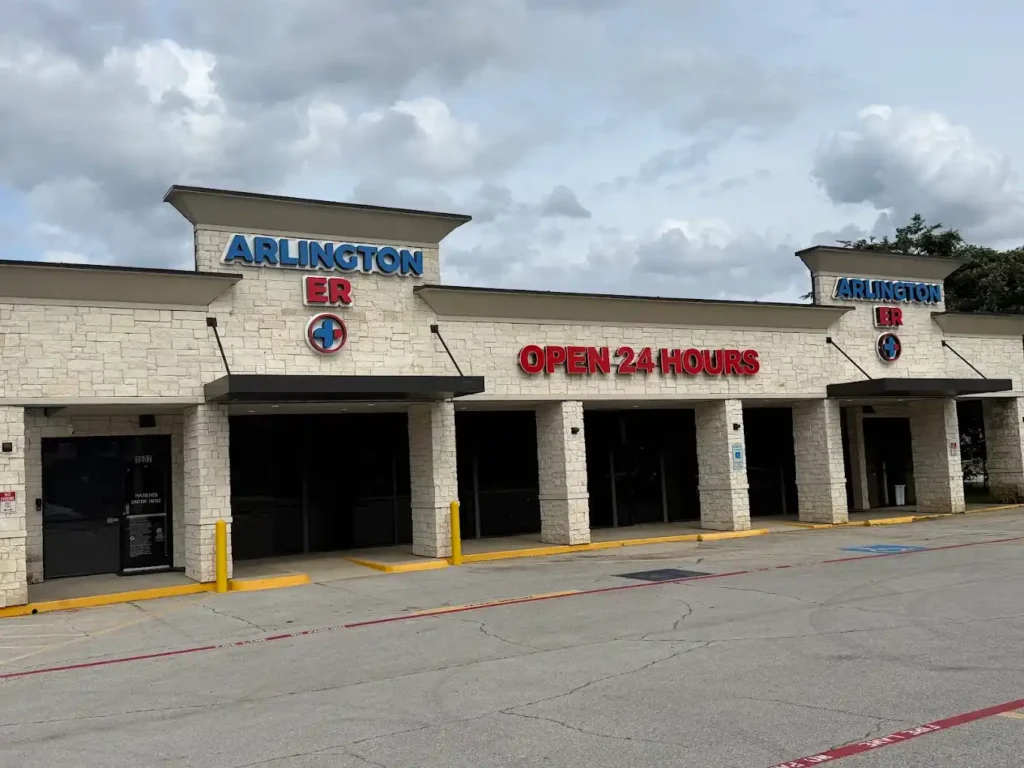
If someone is confused, stumbling or will not wake properly after time in the heat, start cooling them and get them here. How fast the temperature comes down decides how much damage is left behind.
A core temperature above 104F alongside a change in mental state is the usual definition. In practice nobody has a reliable reading at the scene, so confusion or collapse after heat exposure should be treated as heat stroke until proven otherwise.
Hot dry skin is classic but not required. In exertional heat stroke, the kind that affects workers and athletes, the person is often still sweating heavily. Never use the presence of sweat to rule it out.
Simple cases improve within a day or two once cooled, but tiredness and poor heat tolerance can last weeks. Where the kidneys or muscles were affected, recovery takes considerably longer and needs follow-up bloodwork.
Rapid cooling is the priority and cold water immersion is effective for exertional heat stroke in a fit adult. It is not appropriate for everyone, particularly older adults. If you are unsure, wet the skin, keep air moving, and apply cold packs to the neck, armpits and groin.
Yes, and it regularly does. Older adults in homes without working air conditioning during a Texas heat wave are among the most affected groups, without doing anything strenuous at all.
It is not an emergency in the way heat stroke is, but it is the stage before it. Someone with heat exhaustion who is not improving after thirty minutes of shade, rest and fluids should be seen.
Medically reviewed by Rahman Mohammed, MD | Last Updated: October 28, 2026