
The shoulder goes, and you know immediately that this is not a pulled muscle. The arm is being held against the body by its owner because any other position is unbearable, the shape at the top of the arm is wrong, and nobody in the room wants to touch it.
Our dislocation treatment in Arlington confirms the position with digital X-ray on site before anything is moved, puts the joint back under proper pain control, and images it again afterwards to prove it is seated. You leave with the joint supported and a clear plan for the follow up.
Often it is both, and that is the reason not to pull on it. A joint can come out of its socket and take a piece of bone with it, and the two injuries look identical from the outside. The shape is wrong either way.
What tells them apart is an image, which is why the first thing that happens here is a picture rather than a maneuver. Certain findings raise the chance that bone is involved, and those are worth knowing before anyone touches the limb.
Any of those is a reason to be seen rather than managed at home. A dislocation with a fracture through it is a different repair from a clean one, and finding that out after the joint has been forced back is the worst order to find it out in.
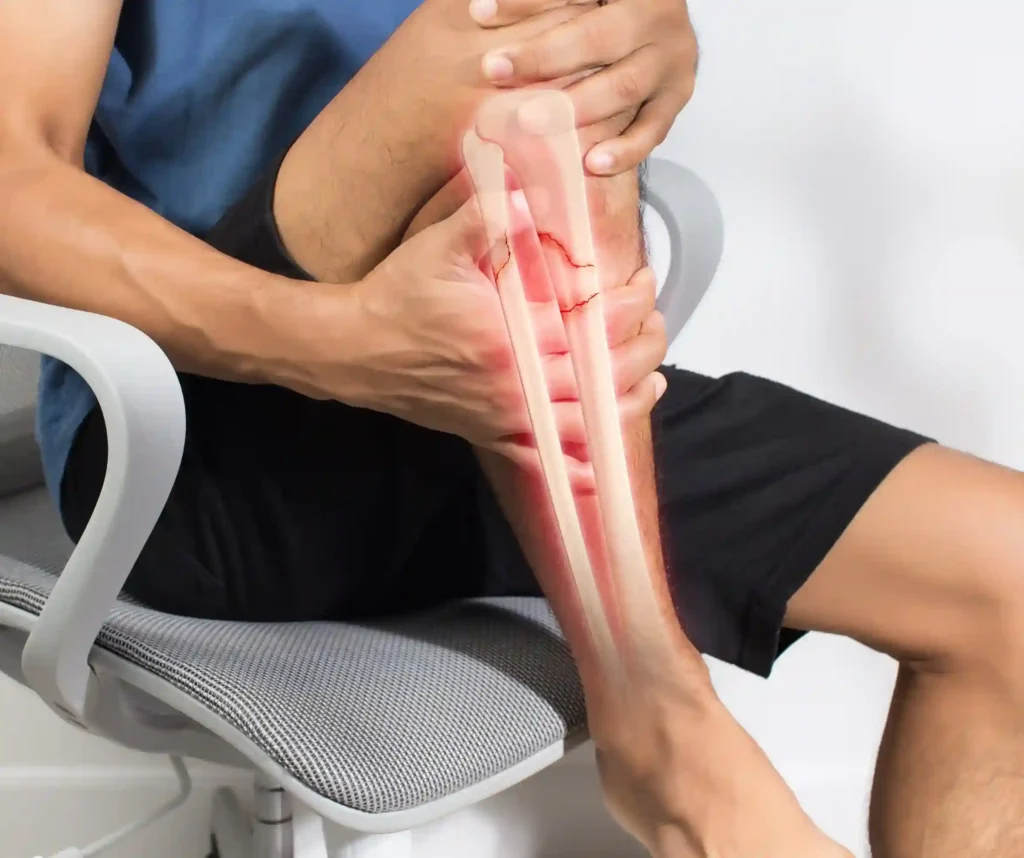
Some joints trade stability for range of movement, and those are the ones that come out. The shoulder is the clearest example, which is why it accounts for most of what we see.
| Joint | How it usually happens | What it looks like | Usual urgency |
| Shoulder | Fall on an outstretched arm, or a tackle | Arm held against the body, squared off shape at the top | Same day, always |
| Finger | Caught in a ball, a door or clothing | Obvious bend at one knuckle, cannot straighten | Same day |
| Kneecap | Twisting on a planted foot | Kneecap sitting to the outside, knee locked bent | Same day, often relocates on its own |
| Elbow | Fall onto the hand with the arm straight | Visible step at the back of the elbow, held bent | Immediate |
| Hip | High force, almost always a vehicle collision | Leg shortened and rotated, cannot move it | Immediate, call 911 |
| Ankle | Severe twist, usually with a fracture | Foot pointing the wrong way relative to the leg | Immediate, call 911 |
A kneecap that has already slipped back into place on the way in still deserves an image, because the act of relocating often chips bone off the back of it. The pain settling is not the same as the injury being finished.
The order matters more than the speed. Picture first, then relocation, then a second picture, then support.
A film of the joint as it sits now, so any fracture through it is known about before it is handled.
Sensation, movement and pulses below the joint, recorded before and after, because that comparison is what matters.
The joint goes back when you are comfortable enough for the muscles to let go. Fighting a tense muscle is how injuries get worse.
A controlled maneuver by a physician, not force. Most joints go back easily once the surrounding muscle has relaxed.
A second film proving the joint is properly seated, which is the only way to know rather than assume.
A sling, splint or brace suited to the joint, plus who you are seeing next and when.
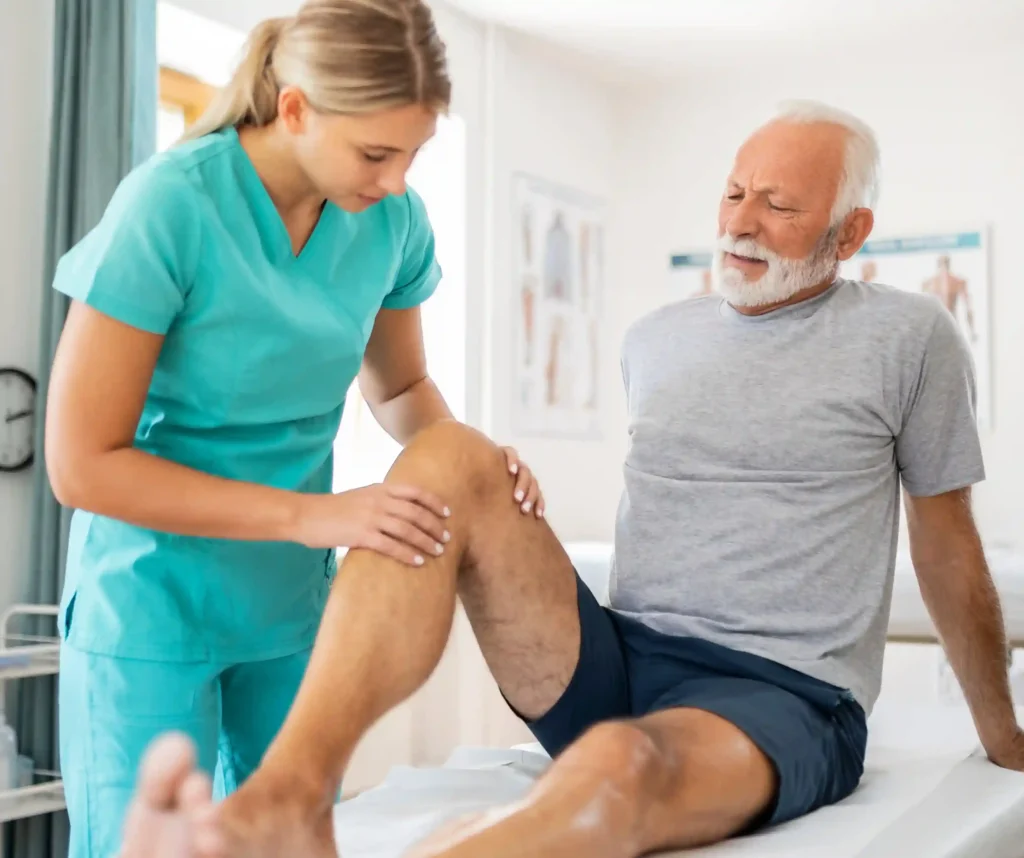
Because you cannot see what you are moving it past. The internet is full of people relocating their own shoulders and it works often enough to look reasonable, which is exactly what makes it a bad idea to copy.
A joint that is out of position sits next to nerves and blood vessels that are already stretched. Forcing it changes a stretched nerve into a torn one, and turns a crack in the bone into a displaced fracture that then needs fixing rather than resting.
There is also the problem of not knowing when you have finished. A shoulder can feel better and still be sitting wrong, and the longer it stays wrong the harder it becomes to correct. The second digital X-ray is the part a home attempt can never include.
A hand or foot that is cold, white or dusky below the joint means blood flow is affected. This is the most urgent sign there is.
Pins and needles, dead patches of skin, or fingers and toes that will not work means a nerve is under pressure.
These take real force and carry the highest risk to the blood supply. Call 911 rather than driving.
An open wound over a dislocated joint puts the joint space itself at risk and needs cleaning as well as relocating.
Not usually, and it is worth being straight about why rather than simply saying no. Putting a joint back safely needs an image before and after, pain control strong enough for the muscle to release, and somebody able to manage it if the first attempt does not work. Most urgent care centers have none of those three.
There are cases where the honest answer is that you do not need an emergency room at all. A finger that popped out and went straight back in, moves normally, has full sensation and is simply sore is reasonable to raise with your own doctor in the next day or two. So is a kneecap that relocated itself and is now walking, provided the knee is stable and you can take weight.
What changes that answer is any loss of sensation, a joint that will not move through its normal range, swelling that is still climbing after a few hours, or a joint that keeps coming out. Those belong here rather than in a waiting list, and a repeatedly dislocating joint in particular tends to mean something structural that imaging will show and reassurance will not.
If you are weighing it up at two in the morning, the practical point is that we are open and the imaging is in the building. Other injuries we see are listed on our emergency services page.
The relocation is the quick part. What takes time is the stretched capsule and the torn soft tissue around it, which is what decides whether the joint stays in next time.
A first shoulder dislocation is usually supported for a short period and then moved deliberately, because a shoulder left still for too long stiffens in a way that is harder to fix than the original injury. Most people have comfortable everyday movement back within a few weeks and full confidence in it considerably later.
Fingers settle fastest, often within two to three weeks, though the knuckle may stay visibly thicker for months. Kneecaps and elbows sit in between. Age matters more than most people expect: a first dislocation under twenty five carries a much higher chance of it happening again, which is why that group is usually sent on for a specialist opinion rather than discharged and forgotten.
The question people ask next is whether the joint will ever feel normal again, and for most first time dislocations the honest answer is yes, provided the early movement work gets done. The joint that gives trouble later is usually the one that was protected for too long out of caution, or the one that was never looked at again after the day it went back in.
Stiffness in the first fortnight is expected and is not a sign that something is wrong. A joint that is still losing range at six weeks, or that feels as though it is about to slip when you reach above your head, is a different matter and is worth raising rather than waiting out.
Children dislocate less and fracture more, for the same reason they sprain less. Growing bone has growth plates that give way before the ligaments around them do, so the force that dislocates an adult joint tends to injure the bone in a child.
The exception is the elbow in toddlers, where a sudden pull on a straight arm slips a bone out of position at the elbow. The child stops using the arm and holds it slightly bent, often without much crying, which is why it gets mistaken for a sore wrist. It is corrected quickly once recognized.
Any child who will not use a limb after an injury is worth having looked at, even when the limb looks normal and the child seems comfortable. Our pediatric emergency room is open through the night, which is when these tend to happen.

We welcome all private insurance plans and we bill your insurance directly. A dislocation visit is usually more involved than a simple injury check, because it includes imaging before and after, the relocation itself, and the support you leave wearing.
That is worth knowing in advance for a different reason than cost. A joint that has been relocated almost always needs a follow up appointment with someone who deals with that joint, and arranging that while you are here is far easier than chasing it afterwards. Our published charges are on our billing page, and if you are uninsured or paying yourself it is worth asking at check in rather than when you leave.
Take the images with you when you go to that follow up. The before and after films are what the specialist actually wants to see, and having them in hand saves repeating the imaging somewhere else a week later.
Arlington ER treats dislocations around the clock at 1607 S Bowen Rd in Pantego, minutes from central Arlington and straight off Bowen. No appointment and no referral are needed, the imaging happens in the building rather than on another day, and if the picture shows a fracture through the joint we go straight to our broken bone pathway without sending you elsewhere first.
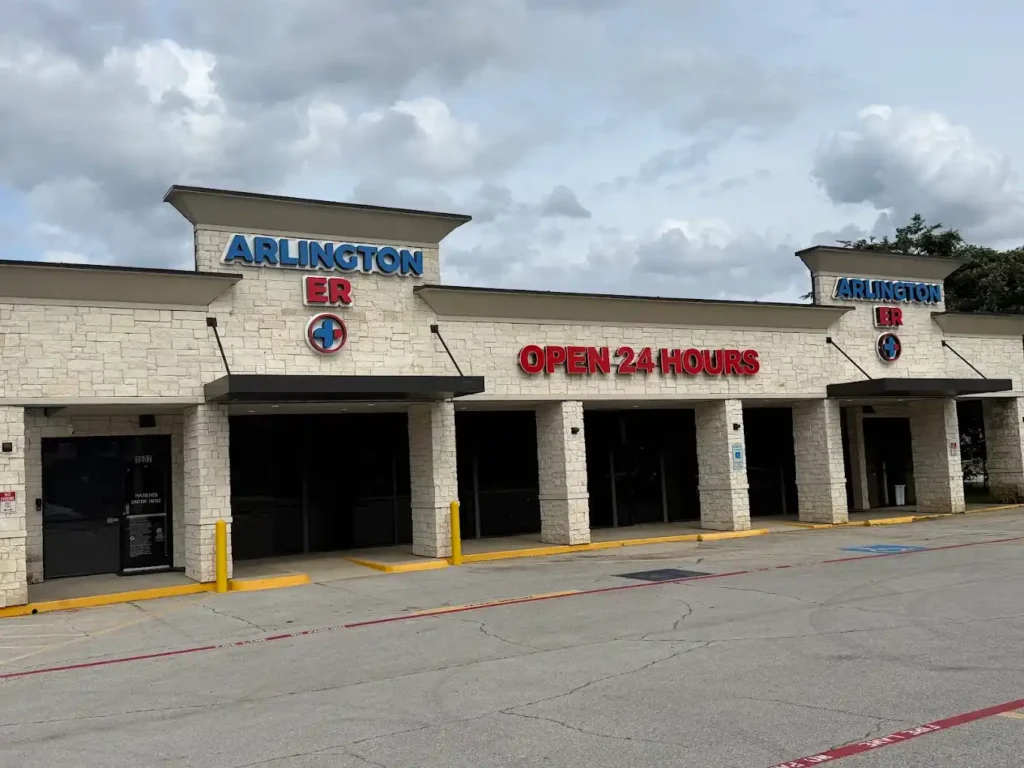
A joint out of its socket needs an image before anyone touches it and another one afterwards. We are open every hour of every day and both of those happen here.
The arm is usually held tight against the body, the rounded shape at the top of the arm looks squared off, and the shoulder will not move rather than moving painfully. An image confirms it and also shows whether any bone came away with it.
Less than you expect, because the joint goes back once you are comfortable enough for the surrounding muscle to relax. Relief is usually immediate once it is seated. Fighting a tense muscle is what hurts.
Kneecaps often do, and fingers sometimes do. That is not a reason to skip being seen, because relocating frequently chips bone on the way past and the joint can be left unstable.
Because a joint can feel better and still be sitting slightly wrong, and a relocation can cause a fracture that was not there before. The second image is the only way to know rather than assume.
Support the limb in whatever position is least painful, do not try to straighten it, and do not eat or drink in case sedation is needed. If the hand or foot is cold, pale or numb, call 911 instead of driving.
It can, particularly after a first shoulder dislocation under the age of twenty five. That is why younger patients are usually referred on for a specialist opinion rather than simply discharged once the joint is back.
Medically reviewed by Rahman Mohammed, MD | Last Updated: October 25, 2026