
Eyes do not tolerate delay. Some eye emergencies cause severe pain and some cause none at all, and it is the painless ones that most often cost people their sight because nobody hurried.
If a chemical has splashed into an eye, start rinsing now and read this afterward. Arlington ER assesses eye injuries around the clock.
Any chemical splash, any change in vision, any object that struck the eye at speed, and any pain that will not settle. Eyes have very little tolerance for waiting, and damage often becomes permanent within hours.
The signs below all mean today, not tomorrow, and several of them mean now.
Grinding, hammering, using a string trimmer and other power tools deserve a special mention. A fragment traveling at speed can enter the eye and leave almost no mark, and the eye may feel nearly normal afterward. If you were doing any of those and something hit your eye, be seen even if it feels fine.

Rinse first. Call second. This is one of the very few emergencies where doing something yourself, immediately, matters more than getting to a hospital quickly.
Hold the eye open under a steady stream of clean lukewarm water and rinse for at least twenty minutes by a clock. Aim the water so it runs from the inner corner outward, away from the other eye. It will be uncomfortable and you will want to stop long before twenty minutes. Do not.
| Do this | Never do this |
|---|---|
| Rinse immediately, before calling anyone | Look up the chemical before you start rinsing |
| Keep going for at least twenty minutes | Stop early because it feels better |
| Hold the eyelids open with your fingers | Let the eye squeeze shut and rinse the lid only |
| Remove contact lenses if they come out easily | Try to neutralize an acid with an alkali or the reverse |
| Bring the container or a photo of the label | Rub the eye at any point |
| Keep rinsing on the way in if someone can drive | Drive yourself with an eye you cannot open |
Alkalis are far more dangerous than acids to an eye, and they are the ones under most kitchen sinks: oven cleaner, drain cleaner, bleach, wet cement and plaster dust. Acids tend to burn the surface and stop. Alkalis keep penetrating deeper for as long as they remain in contact, which is exactly why the length of the rinse decides the outcome.
Never try to neutralize one with the other. The reaction produces heat and adds a thermal burn to a chemical one, on tissue that was already injured.
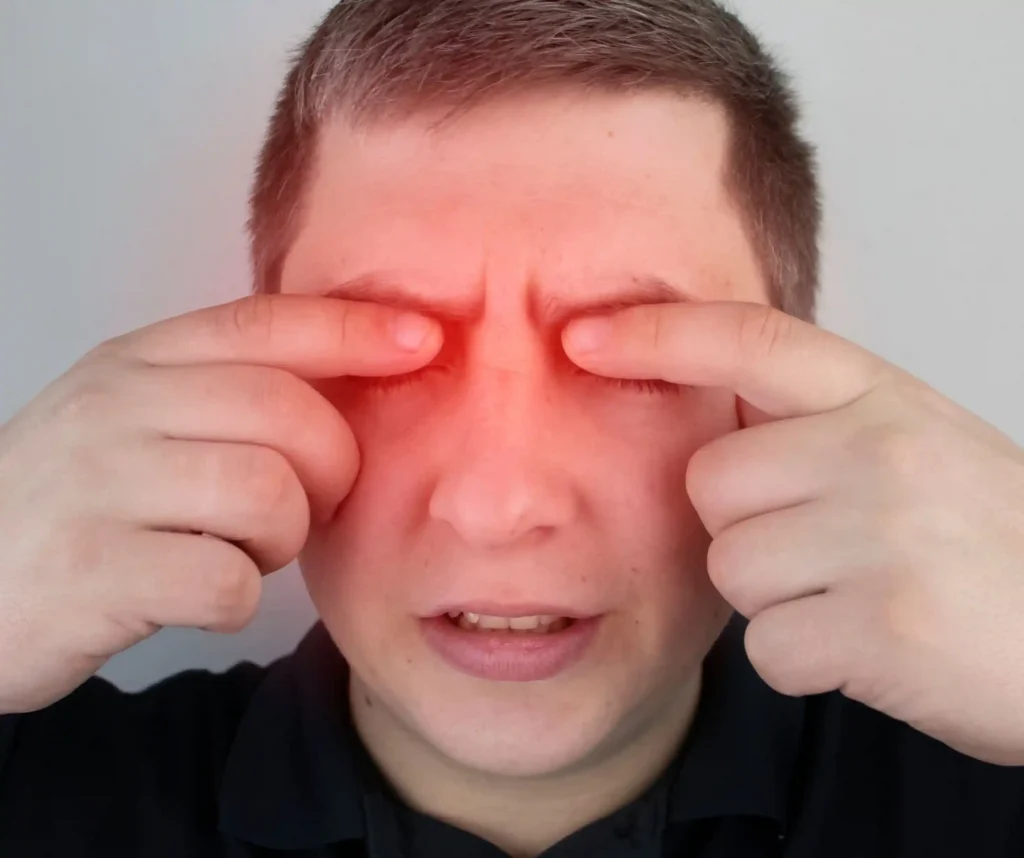
Yes, and those are the emergencies people wait longest on. Pain is what usually drives someone to seek help, so a painless problem gets postponed until morning, and mornings are frequently too late for an eye.
A retina detaching causes no pain at all. It announces itself as a sudden shower of new floaters, flashes of light at the edge of vision, or a shadow or curtain creeping across the field of sight. Reattached quickly, vision is usually saved. Left for days, the loss can be permanent.
A blocked artery in the retina is painless too, and causes sudden loss of vision in one eye like a light switching off. It is a stroke of the eye, needs treating within hours, and often signals that a stroke elsewhere is coming.
Painless double vision, or a droopy eyelid appearing suddenly, is also on this list, because those can point to problems with the nerves or blood vessels behind the eye.
The rule worth remembering is simple: any sudden change in vision is an emergency whether it hurts or not. If your sight has changed today and you are hesitating because there is no pain, that hesitation is the risk.
Because rubbing drags a gritty particle across the clear front surface of the eye, and because anything embedded may be the only thing holding the eye closed around it.
The clear window at the front of the eye is astonishingly thin and it is what you see through. A speck of metal or grit pressed against it and moved sideways by rubbing turns a tiny mark into a long scratch. If that scratch heals across the center of your vision, it can leave a permanent blur.
Rubbing is close to a reflex when an eye is irritated, so the practical advice is to give your hands something else to do. Blink instead, which lets tears carry loose particles toward the corner naturally, and let someone else drive you in.
Anything embedded must stay exactly where it is. An object that has penetrated the eye is partly sealing the wound it made. Pulling it out can release pressure suddenly and let the contents of the eye escape, which is unrecoverable. Cover the eye loosely with a paper cup taped in place if you have one, so nothing touches the object, and come in.
Do not patch a chemical injury or bandage tightly over any eye injury. Pressure is the thing to avoid. Loose covering only.
Measure the vision first, make the eye comfortable enough to examine, find what is there, and decide whether this needs an eye specialist tonight or can be managed here.
Each eye tested separately before anything else. It is the single most important measurement and the baseline everything is judged against.
Rinsing continues here, with the acidity checked and rechecked until the eye returns to normal.
Numbing drops let a painful eye be opened and examined properly, including under the upper lid where particles hide.
A harmless dye and a blue light make scratches on the surface glow, revealing damage invisible to the naked eye.
CT when a fragment may be inside the eye or the bones around it are broken, which imaging finds and examination cannot.
Some eye emergencies need an ophthalmologist the same night. We identify those and arrange it rather than delay.
When a lens wearer has a red, painful eye, it is treated as an infection of the clear front surface until proven otherwise. In contact lens wearers that infection can move fast and can scar the eye permanently within days.
Take the lens out and leave it out. Then come in the same day if there is pain, redness, light sensitivity, discharge, or blurred vision. Do not put a lens back in to get through work, and do not wait to see whether it settles overnight.
Sleeping in lenses is the single biggest risk factor, followed by swimming or showering in them and topping up old solution rather than replacing it. Tap water is the specific thing to avoid, because it contains an organism that causes a rare but devastating infection.
A lens that has moved and seems lost is almost always still under the upper lid rather than behind the eye, which is anatomically impossible. It cannot get past the back of the socket. Pull the upper lid gently outward and look upward, or come in and someone will find it in under a minute.
Bring your lens case and solution with you if there is any suspicion of infection. What has been growing in the case is often what is growing in the eye.
Irrigation starts at the door and continues while everything else happens. Nothing waits for registration.
So any later change can be measured against a real number rather than a memory of how things looked.
A metal fragment inside the eye cannot be seen or felt reliably. Imaging is the only way to be sure, and it is here.
A detaching retina or a blocked retinal artery needs an ophthalmologist within hours. We arrange it, not delay it.
An eye visit is billed as an emergency visit plus examination, and imaging if a fragment or fracture needs excluding. Most eye visits are at the simpler end, because the examination itself answers the question.
The distinctive cost point here is one nobody expects: a serious eye emergency is often the cheapest visit and the most valuable one. Rinsing a chemical splash properly, or recognizing a detaching retina and getting you to a specialist tonight, involves very little equipment and can be the difference between keeping and losing the sight in that eye.
Set against a lifetime of monocular vision, this is the clearest cost-benefit case on the entire site, and it is worth saying plainly to anyone hesitating at the door.
Where cost genuinely does come in is the follow-up. Eye injuries frequently need an ophthalmologist afterward, and that specialist visit is separate from ours. Ask before you leave what follow-up is expected so it is not a surprise.
Please do not use an ER for a mild case of everyday conjunctivitis with no pain and no vision change. Your own physician can handle it for far less. If there is pain, light sensitivity, or any change in sight, that is a different situation entirely and belongs here.
The federal No Surprises Act protects patients from surprise bills for emergency care. Our Financial Support and Care Relief Program can substantially reduce out-of-pocket costs for those who qualify, and our Billing Disclosure page sets out the detail.
A cut to the eyelid or the skin around the eye may also need stitches, placed carefully so the lid still closes properly.
For billing questions: 817-973-7406 or info@arlingtoner.com
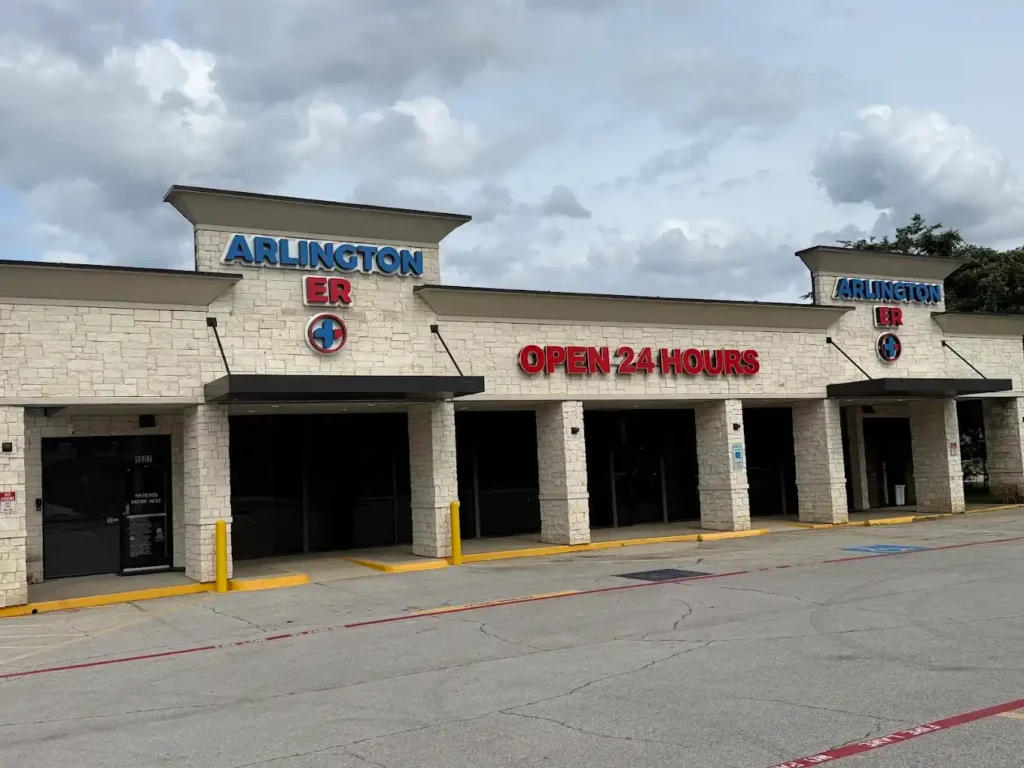
Arlington ER serves Arlington, Texas from 1607 S. Bowen Rd., on the west side of Bowen just south of Pioneer Parkway. Parking is directly outside the entrance, which matters when someone else has had to drive you.
We are minutes from central Arlington and the Parks Mall, and a short drive from Dalworthington Gardens, Kennedale, Grand Prairie, and Mansfield. From I-20, exit at Bowen Road and head north. From Highway 303 or Pioneer Parkway, turn south onto Bowen and we are on your right. Our Contact Us page has anything else you need.
Never drive yourself with an eye you cannot open or vision you cannot trust. If a chemical is involved, keep rinsing on the way in. We are open every hour of every day with no appointment needed.
Twenty minutes under running water before you do anything else, then come in and we will finish the job. And remember the other rule: any sudden change in vision is an emergency whether it hurts or not. Open 24/7, no appointment needed.
Most surface scratches heal within twenty-four to seventy-two hours, which is remarkably fast. Pain that is worsening after two days, or vision that is not improving, means it should be looked at again.
No. It is anatomically impossible, because the lining of the eyelid connects to the eye itself and closes off the space. A missing lens is almost always folded under the upper lid, and takes seconds to find.
A flat red patch on the white, with normal vision and no pain, is usually a harmless burst vessel that clears over two weeks. Blood collecting in front of the colored part of the eye is entirely different and needs urgent assessment.
No, and this one matters. Repeated numbing drops stop the surface healing and can cause serious permanent damage. They are used once here so the eye can be examined, never sent home for ongoing relief.
Come in today rather than waiting further. A retina that has started to detach can often be saved if treated quickly, and the window is measured in days, not weeks. Yesterday is still worth acting on now.
Yes, if the pain is severe. Welding flash is a genuine burn to the eye surface from ultraviolet light, and it characteristically appears six to twelve hours later, often waking people in the night. It is very painful and very treatable.
Yes, if there is double vision, numbness in the cheek, an eye that will not move fully, or any change in sight. Those suggest a fracture of the thin bone beneath the eye. Bruising alone, with normal vision, usually does not.
Often yes. Many eye injuries need a follow-up with an ophthalmologist to confirm healing, and some need one the same night. We will tell you which applies and arrange it before you leave.
Medically reviewed by Rahman Mohammed, MD | Last Updated: September 23, 2026